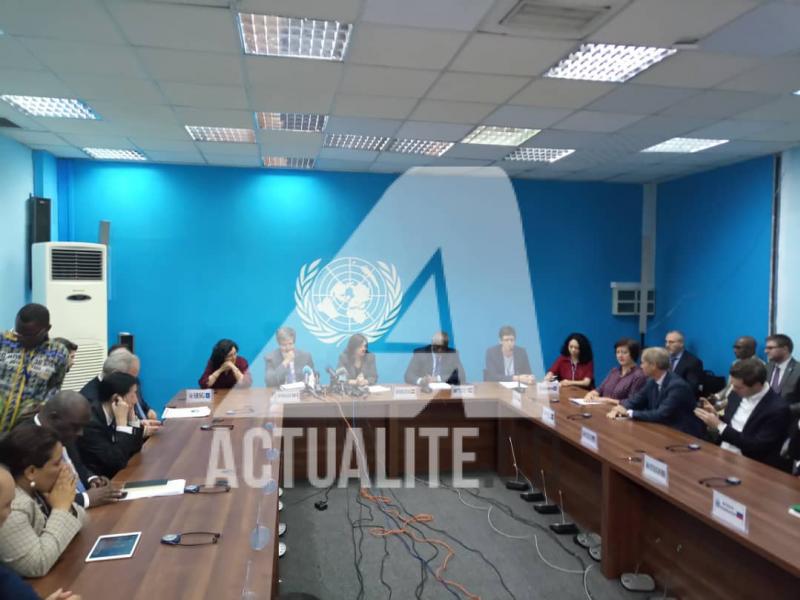
The Democratic Republic of the Congo (DRC) is taking center stage at the United Nations this month, leveraging its presidency of the UN Security Council to spotlight a critical issue: the governance of natural resources. On Monday, July 13, Kinshasa convened a high-level Arria-formula meeting in New York to address the nexus between resource exploitation and conflict prevention—a prelude to a landmark debate scheduled for July 22 under the theme “Natural Resource Governance: The Bedrock of Peace, Security, and Prosperity.”
The Congolese Ministry of Foreign Affairs, led by Thérèse Kayikwamba Wagner, has framed this initiative as a response to what it calls a “normative gap” in the global framework governing natural resources in conflict zones. Existing mechanisms—such as mineral traceability, corporate due diligence, and conflict financing controls—are deemed fragmented and insufficient. Kinshasa is advocating for a more integrated international approach that aligns resource governance with conflict prevention and international security priorities.
This diplomatic push redefines natural resources not merely as economic assets but as strategic pillars for peace and security. The DRC’s initiative aims to ensure these resources are managed sustainably, equitably, and shielded from exploitation by armed groups or predatory actors. The upcoming July 22 debate, chaired by President Félix Tshisekedi, seeks to rally global consensus on embedding resource governance into the UN Security Council’s core agenda.
France aligns with Kinshasa’s vision
Paris has thrown its full diplomatic weight behind the DRC’s efforts. Jérôme Bonnafont, France’s Permanent Representative to the UN, articulated France’s stance in a statement emphasizing the need to protect natural resources from abuse and diversion for malicious purposes. Bonnafont underscored France’s commitment to supporting the DRC’s call for stronger, more coherent international initiatives to ensure these resources serve as catalysts for sustainable development rather than conflict drivers.
« Natural resources must be leveraged for equitable, sustainable development that benefits the populations and countries that host them. They must be shielded from predators and misuse for harmful ends. France fully supports the DRC’s objective to reinforce and harmonize international initiatives aimed at responsible resource governance. We are ready to actively contribute to the Security Council’s work in the lead-up to next week’s high-level debate,» Bonnafont declared.
Diplomatic momentum amid persistent challenges
The DRC’s presidency has set an ambitious diplomatic agenda, following a July 8 briefing on conflict-related sexual violence chaired by Prime Minister Judith Suminwa Tuluka. That session highlighted the human toll of wartime economies and the urgent need to bolster prevention, survivor protection, and accountability mechanisms.
Yet, the DRC’s diplomatic strides contrast with the entrenched realities on the ground. Strategic partnerships—such as the DRC-US critical minerals deal and the Kinshasa-Washington accord with Kigali—have done little to ease tensions. The agreement, which includes measures for the gradual withdrawal of Rwandan forces from Congolese soil and the neutralization of armed groups like the FDLR, remains fragile. Meanwhile, the AFC/M23 rebellion, accused by Kinshasa and the UN of receiving Rwandan support, continues to control key cities in North and South Kivu, including Goma and Bukavu, perpetuating cycles of violence.
The Doha Process, facilitated by Qatar to mediate between Kinshasa and the AFC/M23, has stalled, leaving the peace process in limbo. This disconnect between diplomatic progress and ground realities underscores the complexity of resolving the DRC’s multifaceted crises.
As the July 22 debate approaches, the international community faces a pivotal moment: will the UN Security Council translate words into action, or will the DRC’s bold diplomatic offensive remain a symbolic gesture in the face of ongoing conflict?