why Gabon’s fight against high cost of living won’t succeed in supermarkets
Libreville — Since the rise of living costs began dominating public discourse, Gabon has witnessed an escalating debate over economic sustainability. For years, the nation has grappled with the consequences of soaring prices that erode household purchasing power and strain household budgets.
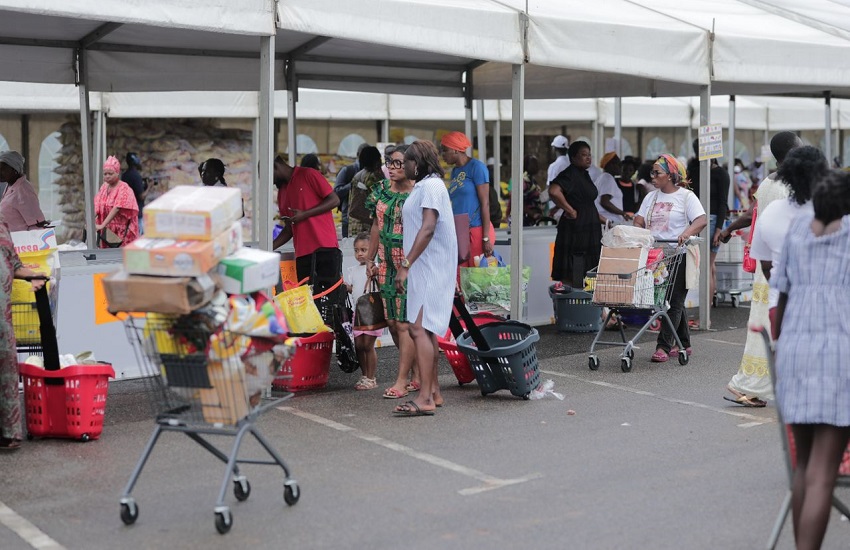
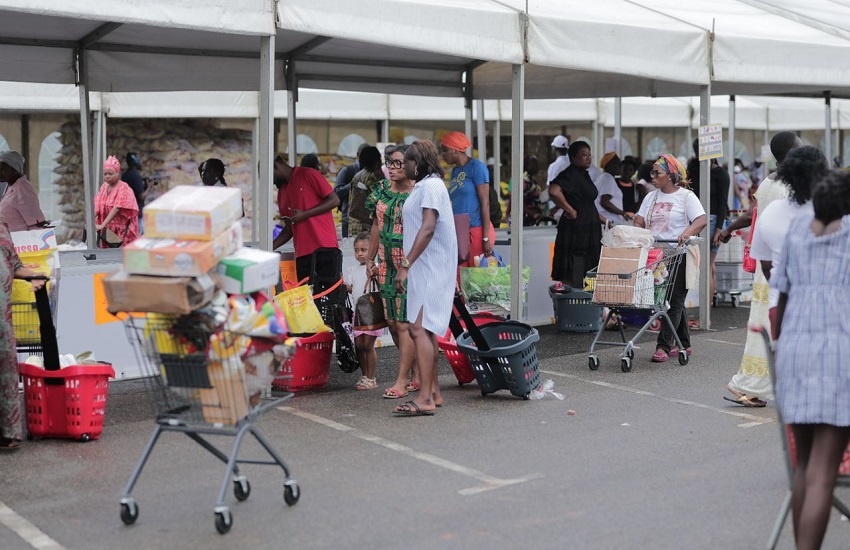
In response, authorities have rolled out an array of measures—price controls, tax exemptions, subsidies, special commercial promotions, and even large-scale markets organized by the Gabonese Central Purchasing Agency (CEAG). These initiatives reflect a legitimate effort to safeguard citizens’ purchasing power, yet they have not fundamentally altered the underlying economic reality.
Why do prices remain stubbornly high despite repeated interventions? The answer may lie beyond mere pricing mechanisms. What if the root cause of Gabon’s high cost of living isn’t primarily about prices at all, but about insufficient wealth creation within the national economy?
When price reduction policies hit their limits
Short-term measures to lower prices do offer immediate relief to vulnerable populations. Programs like those implemented by the CEAG provide temporary access to essential goods at reduced rates, addressing urgent social needs. Yet, such interventions are inherently limited.
After each promotional campaign concludes, consumers return to traditional retail channels only to face the same economic pressures. Prices rebound because the fundamental drivers of cost—inflation, import dependency, and structural inefficiencies—remain unchanged. This pattern confirms that administrative fixes alone cannot resolve a systemic issue.
This does not imply that these measures are ineffective. Rather, they address symptoms rather than causes. The true challenge lies in understanding why prices remain structurally high and why administrative solutions fail to deliver lasting results.
High cost of living exposes structural weaknesses in production
Public debates often focus on consumers, but the origins of high prices often lie upstream—in the structure of production and distribution. An economy heavily reliant on imports becomes vulnerable to global market fluctuations, shipping costs, logistical bottlenecks, and supply chain disruptions. Every increase in international costs eventually trickles down to local consumers.
From this perspective, the issue of high living costs transcends mere pricing. It becomes a question of economic model. A country that imports most of its food imports inflation. A nation that exports raw materials without local processing also exports potential jobs, future income, and purchasing power. In this light, the fight against high prices is not just about affordability—it is about economic transformation.
Produce, process, employ
The path forward may lie in accelerating Gabon’s productive transformation. The country possesses significant assets: vast forestry resources, mineral wealth, agricultural potential, a strategic geographic position, and relative institutional stability. Yet much of this potential wealth leaves the country in raw form, only to be processed and re-exported with added value.
Local processing of raw materials is more than an industrial ambition—it is a direct lever in the fight against high living costs. Each factory established generates employment. Each job creates income. Each income strengthens purchasing power. Each unit of purchasing power supports consumption and stimulates the broader economy. The same logic applies to agriculture and livestock.
Boosting local agricultural production, modernizing food supply chains, promoting poultry farming, and supporting agro-industrial development can reduce the country’s dependence on food imports. Beyond lowering certain costs, these sectors offer unparalleled potential to create sustainable employment opportunities.
The future of Gabon’s fight against high living costs may be decided not only in supermarket aisles but on farms, in processing plants, and in industrial zones.
Building a strong middle class
For decades, public policy has focused on controlling prices. Perhaps the time has come to shift the debate toward income generation. A society does not thrive simply because prices are artificially suppressed. It thrives when the majority of citizens earn stable incomes that allow them to access essential goods and services, invest in education, plan for the future, and participate fully in the economy.
Expanding the middle class is one of Gabon’s most strategic objectives. A dynamic middle class fosters economic and social stability. It drives domestic demand, encourages private investment, and nurtures a vibrant national entrepreneurial ecosystem.
The real battle against high living costs may therefore be the creation of productive jobs and sustainable incomes. In this context, purchasing power should no longer be viewed as a consequence of growth—it should become one of its primary goals.
The challenge of economic transparency
This transformation requires modernizing governance tools. Digitizing price monitoring offers a promising reform. With digital technologies, it becomes possible to track price movements in real time across the country, identify abnormal price gaps, strengthen competition, and assess the real impact of public policies.
Economic data can become a powerful regulatory instrument. It enables a shift from perception-based management to fact-based governance. In an era where citizens demand greater transparency, this evolution could restore trust among consumers, businesses, and public authorities.
The debate over high living costs extends far beyond Gabon’s borders. Across Africa, governments face the same equation: How can they protect populations without trapping their economies in a cycle of endless subsidies and price corrections? Gabon has the opportunity to offer an original response to this challenge.
By maintaining social support mechanisms while accelerating local processing of raw materials, agricultural development, livestock expansion, industrialization, job creation, digital market integration, and middle-class growth, the country can gradually shift the fight against high living costs from one of compensation to one of transformation.
The question is no longer how long the state can continue lowering certain prices. The real question is how many Gabonese will be able to live dignified lives tomorrow on the basis of stable incomes derived from a value-creating economy—without relying permanently on corrective mechanisms to preserve their purchasing power.
This is the dividing line between an economy that manages consequences and one that addresses causes. And it may be where a sustainable solution to high living costs finally lies.