The future of Africa’s economy could be carved from the ground beneath its feet. At a landmark gathering in Abidjan, ministers from mineral-rich African nations and global development partners laid out a bold plan: turning the continent’s vast reserves of critical minerals into engines of economic growth, industrial progress, and social transformation. The focus? Local value creation, sustainable financing, and the rise of regional supply chains to meet surging global demand.
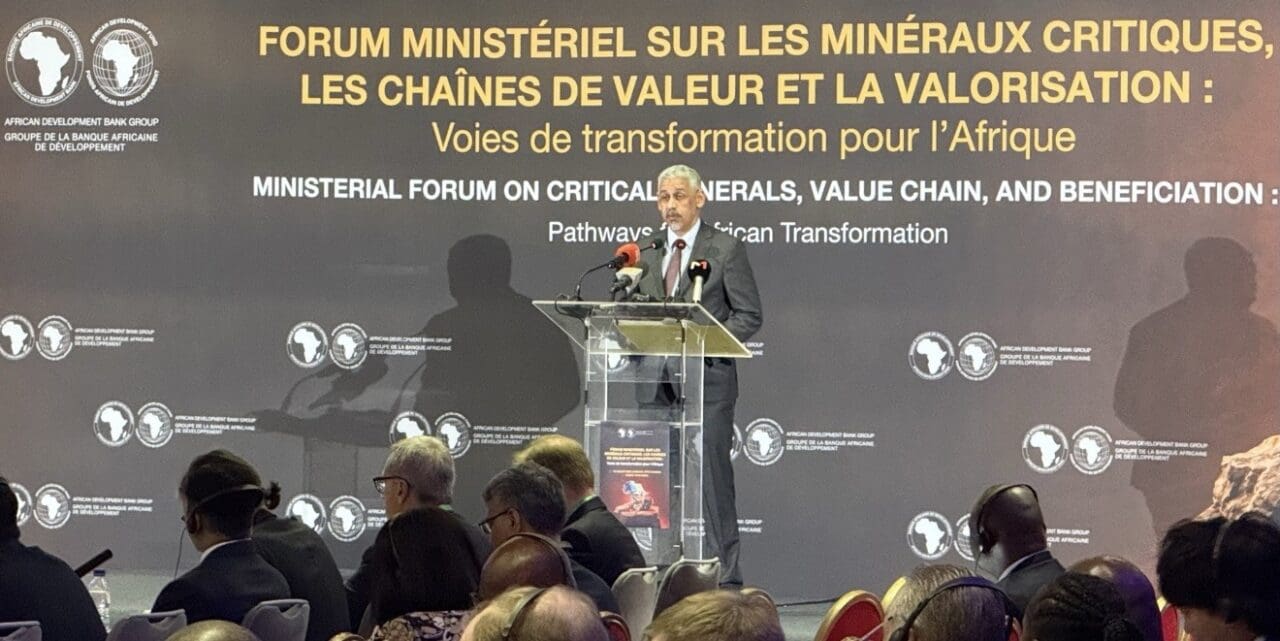
On a pivotal Friday, leaders converged in Côte d’Ivoire’s economic capital to redefine Africa’s role in the global resource economy. The ministerial conference brought together ministers of Mines, Energy, Industry, Green Economy, and Natural Resources, alongside representatives from the African Union Commission, the African Continental Free Trade Area (AfCFTA) secretariat, the United Nations Economic Commission for Africa, regional development banks, financial institutions, and international investors.
Abidjan’s blueprint for a mineral-powered Africa
The overarching goal is unmistakable: harness the continent’s untapped mineral wealth—estimated at a staggering $29.5 trillion—to fuel inclusive, sustainable development. No longer content with exporting raw materials, African nations are pushing for a fundamental shift in how these resources are managed, processed, and monetized.
A paradigm shift in resource governance
Opening the conference, the President of the African Development Bank (AfDB), Sidi Ould Tah, called for nothing short of a revolution in Africa’s approach to natural resource management. “This isn’t just another meeting. It’s about rewriting the rules of engagement,” he stated. “We must transition from selling our minerals cheaply to building the industries that turn them into prosperity for our people.”
Tah emphasized two pillars of this transformation: local processing of raw materials to capture greater value and a radical overhaul of Africa’s development financing architecture. “Africa hosts over 100 development finance institutions, yet their combined balance sheets represent only 1% of global development finance. We need to consolidate, recapitalize, and re-energize these institutions to unlock the capital needed for infrastructure and industrialization.”
For Tah, resilient infrastructure and homegrown industries aren’t optional—they’re essential to maximizing the benefits of Africa’s mineral wealth.
Côte d’Ivoire’s bold mineral strategy
The Ivorian Minister of Mines, Petroleum, and Energy, Mamadou Sangafowa-Coulibaly, underscored the need for continental solidarity. “No single country can go it alone. Our minerals must become the foundation of shared prosperity,” he asserted. “We need regional value chains that lift all boats.”
Highlighting Côte d’Ivoire’s vast potential, Sangafowa-Coulibaly revealed that three-quarters of the country’s landmass is believed to hold critical minerals. This geological advantage is central to President Alassane Ouattara’s vision of elevating Côte d’Ivoire to upper-middle-income status by 2030. To achieve this, Abidjan has unveiled a sweeping 2026–2040 Mineral and Energy Resource Strategy, backed by a 38 trillion CFA franc investment plan—88% of which is expected to come from private sector participation.
The stakes: Africa’s minerals and the global energy transition
Africa isn’t just sitting on mineral reserves—it holds 30% of the world’s critical minerals essential for the energy transition. Think cobalt, lithium, graphite, rare earths, platinum group metals, copper, manganese, and nickel. The continent’s mineral wealth is valued at nearly $29.5 trillion—more than eight times its annual GDP and nearly 20% of global resources. Yet, $8.6 trillion of this treasure remains untapped.
Meanwhile, global demand is exploding. By 2040, demand for platinum group metals could surge by over 1,000%, lithium by 842%, and copper by 88% compared to 2023 levels. The electric vehicle and battery supply chain alone could grow from $7 trillion in 2030 to a mind-boggling $59 trillion by 2050.
Why this moment is Africa’s to lose—and win
This isn’t just another commodity cycle. It’s a once-in-a-generation opportunity. African leaders are determined to break free from the extractive model of the past. Their strategy? Move up the value chain. Instead of shipping raw minerals overseas, they aim to build smelters, refineries, battery factories, and electric vehicle assembly plants right here on the continent. The goal: create jobs, spur innovation, and ensure that Africa’s mineral wealth translates into lasting prosperity.
The message from Abidjan is clear: Africa’s minerals are not just a resource—they’re a pathway to economic sovereignty, industrial might, and a sustainable future for millions.