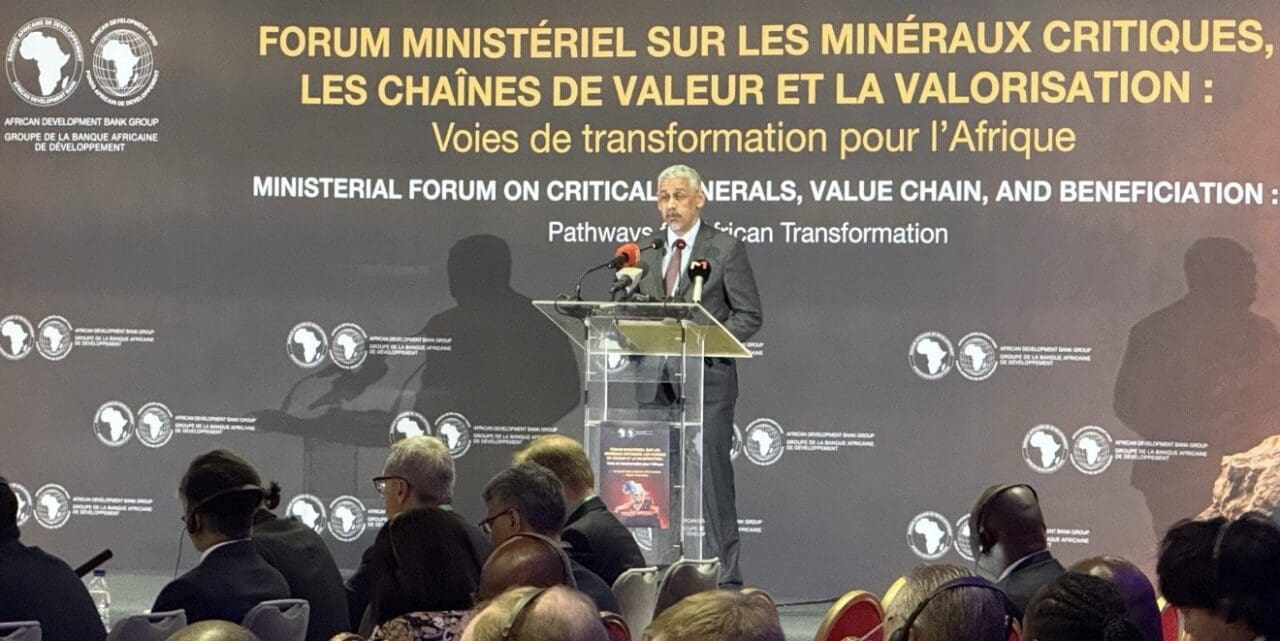
A landmark gathering of African nations and global partners in Abidjan has set the stage for a bold new chapter in the continent’s economic future. Ministers from mineral-rich African countries joined forces with development partners to chart a strategic roadmap for transforming the continent’s vast critical mineral reserves into engines of inclusive growth, industrialization, and sustainable development.
At the ministerial conference held in early July, delegates emphasized three core priorities: maximizing local value creation, securing equitable financing for development, and building robust regional value chains to meet surging global demand for essential minerals.
Abidjan hosts historic talks on Africa’s resource sovereignty
The two-day forum brought together key stakeholders, including ministers of Mines, Energy, Industry, Green Economy, and Natural Resources, alongside representatives from the African Union Commission, the African Continental Free Trade Area (AfCFTA) Secretariat, the United Nations Economic Commission for Africa, regional development banks, financial institutions, and international investors.
The overriding consensus? Africa must seize control of its mineral wealth—not just as a source of raw exports, but as the foundation for a new industrial and economic paradigm.
Redefining Africa’s role in the global mineral economy
Opening the conference, the President of the African Development Bank (AfDB), Sidi Ould Tah, delivered a powerful call for systemic reform. “This gathering marks a turning point,” he declared. “We are here to dismantle old structures that have kept Africa on the sidelines of its own resource wealth—and to build a new partnership that puts our people first.”
His message was clear: Africa’s future prosperity depends on shifting from exporting unprocessed minerals to developing high-value industries at home. He also highlighted the urgent need to strengthen Africa’s development finance institutions, noting that while the continent hosts over 100 such bodies, their combined assets represent less than 1% of global development finance assets. “We must consolidate these institutions, increase their capital, and align their strategies with our industrial ambitions,” he stressed.
Stressing the importance of resilient infrastructure and local processing hubs, he outlined a vision where Africa not only supplies raw materials but also manufactures the technologies of tomorrow—from electric vehicle batteries to renewable energy systems.
Côte d’Ivoire charts a bold path forward
The Ivorian delegation, led by Minister of Mines, Petroleum and Energy Mamadou Sangafowa-Coulibaly, underscored the need for continental solidarity. “No single country can unlock the full potential of its mineral wealth alone,” he said. “We must collaborate to build integrated regional supply chains that create jobs, boost innovation, and spread prosperity across borders.”
Highlighting Côte d’Ivoire’s vast untapped potential, he revealed that nearly three-quarters of the country’s territory sits atop critical mineral deposits. This natural endowment is central to President Alassane Ouattara’s vision to elevate Côte d’Ivoire to upper-middle-income status by 2030.
To achieve this, Abidjan is rolling out a comprehensive Mineral and Energy Resource Strategy for 2026–2040, backed by a 38 trillion CFA franc investment plan—88% of which is expected from private sector participation. The strategy aims to catalyze downstream industries, from mineral processing to renewable energy manufacturing, positioning Côte d’Ivoire as a regional industrial hub.
Why Africa’s minerals are the key to the global energy transition
The stakes couldn’t be higher. Africa holds an estimated 30% of the world’s reserves of minerals critical to the energy transition, including cobalt, lithium, graphite, rare earths, platinum group metals, copper, manganese, and nickel. The total value of these resources is estimated at $29.5 trillion—over eight times the continent’s annual GDP and nearly 20% of global mineral wealth. Of this, $8.6 trillion remains untapped.
Meanwhile, global demand for these minerals is projected to skyrocket by 2040. Platinum group metals could see demand surge by over 1,000%, lithium by 842%, and copper by 88% compared to 2023 levels. This explosive growth is being driven by the rapid expansion of clean energy technologies, electric vehicles, and digital infrastructure.
The potential economic ripple effect is staggering. The value of the electric vehicle and battery supply chain alone is projected to leap from $7 trillion in 2030 to $59 trillion by 2050. Africa, with its mineral endowment and strategic location, is uniquely positioned to become a central player in this transformation.
From raw export to industrial powerhouse: Africa’s moment has arrived
This is more than an economic opportunity—it’s a historic imperative. African leaders are determined to break free from the colonial-era model of exporting raw materials only to import finished goods at a premium. Their goal? To leverage critical minerals as the backbone of a new industrial revolution—one that creates millions of jobs, fosters innovation, and ensures shared prosperity.
The Abidjan conference marks the beginning of a new era: one where Africa not only supplies the world but also shapes its future. By investing in local processing, strengthening regional trade, and reforming financial systems, the continent is poised to turn its mineral wealth into lasting development—and to lead the global shift toward a sustainable, equitable economy.