A costly shift in military partnerships
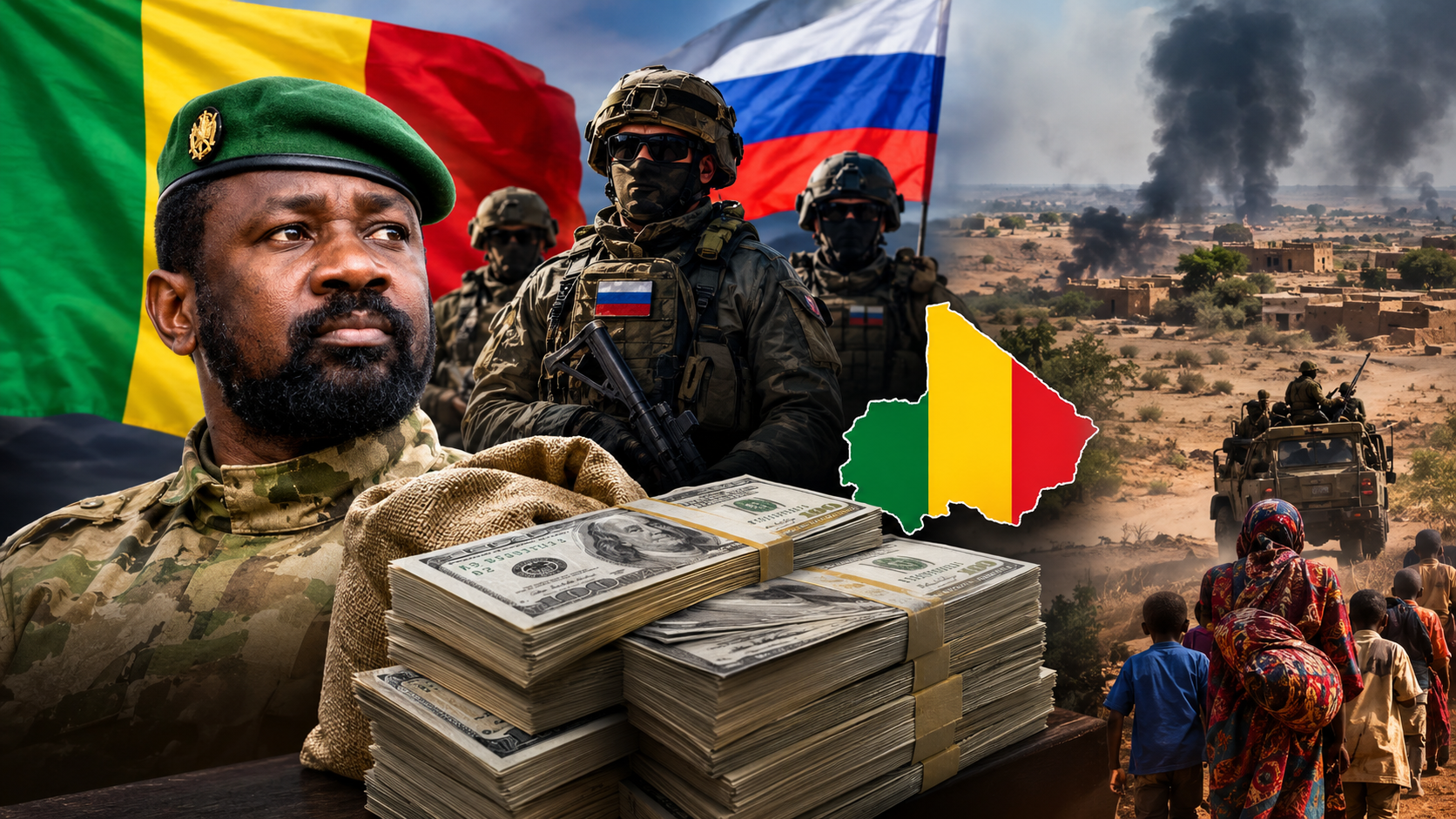
The Malian government has committed nearly a billion dollars to its partnership with Russian paramilitary forces, first affiliated with Wagner and now operating under the Africa Corps banner. At an estimated monthly cost of $10,000 per fighter, this arrangement has become one of the most expensive security collaborations in the country’s recent history. For Malian authorities, the critical question now is whether this investment has delivered tangible benefits to justify such unprecedented spending.
The promise of greater sovereignty through a new alliance
By distancing itself from Western partners, particularly France, Mali’s transitional government framed its alignment with Moscow as a path to reclaim national sovereignty and strengthen its military capabilities. The transition’s leadership argued that this strategic pivot would restore state authority across the country and improve security for citizens. Yet the true measure of success lies not in diplomatic realignments but in measurable outcomes on the ground.
What defines an effective security strategy?
An effective security strategy cannot be measured by rhetoric or the origin of military partners alone. Instead, it must demonstrate clear results: reduced armed attacks, protected civilian populations, secure transportation routes, restored public services in threatened areas, and the gradual reassertion of state control. These benchmarks remain essential in evaluating whether Mali’s billion-dollar investment has yielded a decisive advantage.
The weight of a billion-dollar commitment
The nearly $1 billion allocated to this military partnership represents funds that could otherwise have been directed toward infrastructure, healthcare, education, or economic development in vulnerable regions. While no military strategy can instantly defeat an insurgency, the scale of this expenditure demands accountability. Citizens have the right to know whether the investment has produced tangible improvements in security, or if the funds have simply sustained a costly status quo.
Security experts emphasize that while foreign forces can provide critical operational support, they cannot substitute for a self-sufficient national army. Mali’s long-term stability depends on building a capable, well-equipped, and autonomous military force one that can secure reclaimed territories and maintain public safety without perpetual reliance on external actors.
From Wagner to Africa Corps: a change in name, not necessarily in impact
The rebranding of Russian forces from Wagner to Africa Corps reflects a shift in organizational structure, but it does not inherently signal progress in Mali’s security landscape. The transition’s leadership must demonstrate whether this evolution has led to improved coordination with Malian troops, enhanced intelligence capabilities, more effective protection of local communities, and a measurable decline in armed threats.
Equally important is the question of strategic autonomy. If Mali’s security remains critically dependent on foreign fighters regardless of their affiliation the government’s commitment to national sovereignty becomes undermined. True sovereignty is not merely the freedom to choose allies but the ability to evaluate results transparently and adjust policies accordingly.
The political stakes of unmet expectations
For Mali’s transitional authorities, the pivot toward Russia was presented as a bold step toward independence and a rejection of past dependencies. However, public accountability is essential when such a significant shift in policy is implemented. Citizens deserve clarity on the actual costs, operational scope, and outcomes of this military cooperation.
A government that justifies its decisions through appeals to sovereignty must also subject those choices to rigorous scrutiny. The absence of transparent reporting on results amidst such substantial financial commitments risks eroding public trust. When rhetoric outpaces measurable progress, strategic decisions risk becoming a liability rather than an asset.
The ultimate test: the safety and dignity of the Malian people
The harshest judgment of any security strategy comes not from political speeches but from the lived experiences of ordinary Malians. Families in conflict-affected areas, merchants relying on safe transport routes, farmers attempting to cultivate their land, and displaced individuals seeking to return home all deserve tangible improvements in their daily lives.
Mali’s military partnership with Russia must ultimately be evaluated by its impact on these lives. If attacks persist, communities remain vulnerable, and state presence fails to strengthen, the justification for this billion-dollar investment weakens considerably. No military alliance, regardless of its scale, can claim success if it does not deliver real security for the population it pledges to protect.
The need for verified data and accountable governance
To conduct a definitive assessment, Mali requires comprehensive, verifiable data on expenditures, troop numbers, contract durations, operational activities, and before-and-after security trends. While the figure of nearly $1 billion captures attention, its true meaning can only be understood within a clear financial and chronological framework. Transparency is not optional it is foundational to responsible governance.
From investment to accountability: the path forward
Mali stands at a crossroads. The decision to entrust national security to a foreign military partner represents a pivotal moment in the country’s modern history. Yet the value of this partnership cannot be measured in rhetoric or diplomatic shifts alone. It must be proven through results: stabilized territories, protected civilians, and a durable improvement in safety for all Malians.
The greatest failure would be to allow this costly gamble to continue without demanding answers. A billion dollars is not merely a financial challenge it is a moral and strategic obligation to the Malian people. Their security and future must remain the ultimate judge of whether this partnership has brought the turning point the nation desperately needs.
By Ramatou Soumana — Journalist