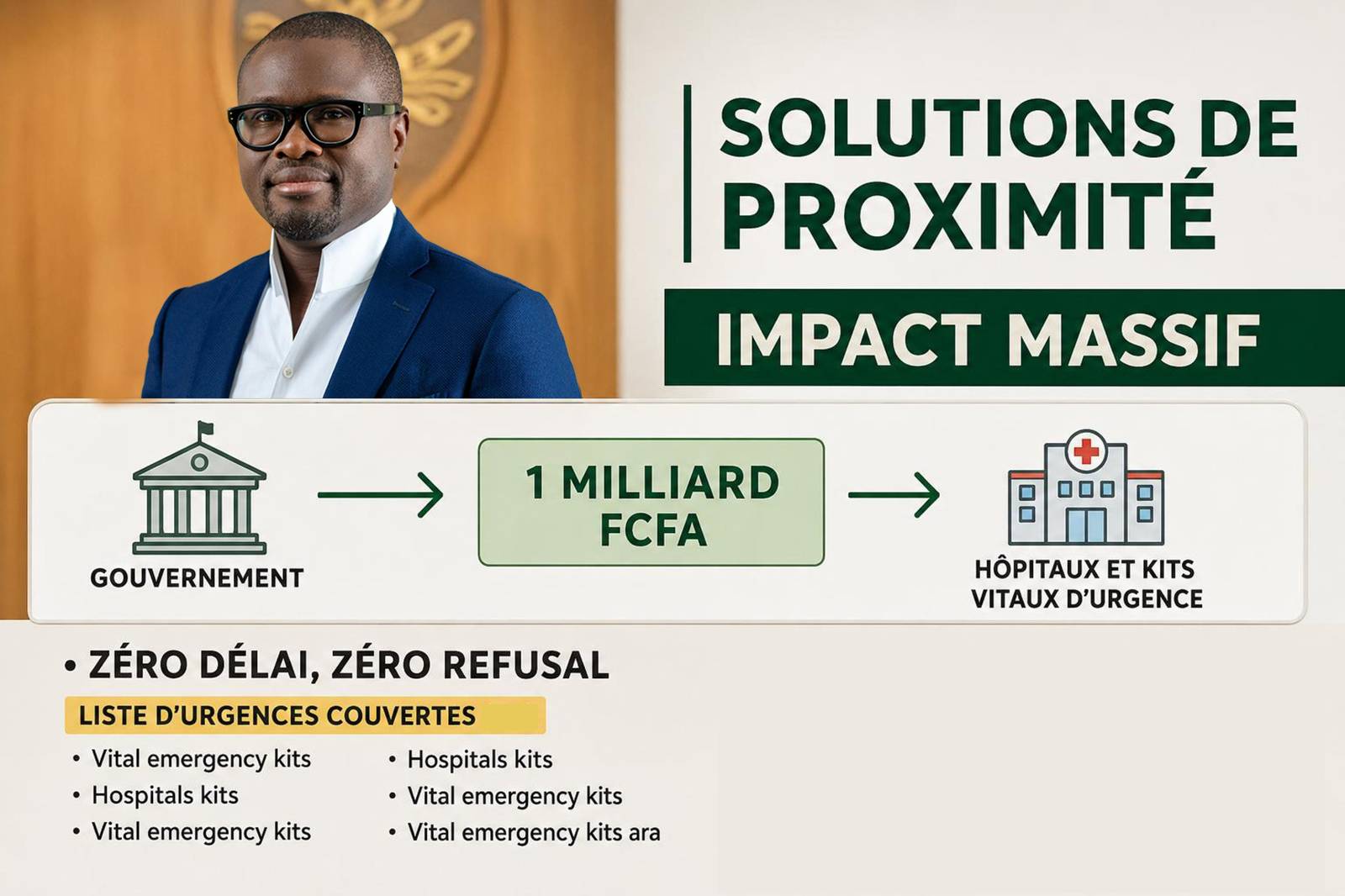
The President of the Republic, Romuald Wadagni, has taken a decisive step toward equitable healthcare by releasing a one-billion-CFA-franc allocation to public health facilities. This unprecedented funding, announced on June 3, 2026, ensures that emergency care is provided without financial barriers, fundamentally transforming the way urgent medical cases are handled across Benin.
Immediate relief for families in crisis
Under the new policy, often summarized by the principle “Treat first, discuss later,” every patient requiring immediate life-saving intervention—whether due to road accidents, severe obstetric complications, respiratory distress, or cardiac arrest—will receive treatment regardless of their ability to pay. This initiative directly addresses the tragic reality of preventable deaths caused by financial inability during medical emergencies.
The allocated funds cover the full cost of emergency interventions, including essential medical supplies, stabilization procedures, and initial hospitalization needs. With estimated per-patient costs ranging from 25,000 to 100,000 CFA francs, this one-billion-CFA commitment will enable public hospitals to assist between 10,000 and 40,000 individuals in critical condition each year.
Beyond the immediate beneficiaries, the economic ripple effect is profound. In Benin, a single hospitalization can destabilize an entire household, pushing families into debt, forcing asset liquidation, or—worst of all—leading to preventable loss of life. This measure acts as a financial safeguard, protecting thousands of families from collapse and preserving their social and economic stability.
A liberation for healthcare providers
For medical professionals, this funding represents more than financial support—it restores ethical clarity to their practice. Doctors and nurses in public hospitals have long faced the painful choice between adhering to administrative procedures and fulfilling their duty to save lives. Now, with the removal of financial prerequisites, they can focus solely on delivering urgent care without delay or moral conflict.
Pledging that “No life should be lost due to lack of funds when urgency demands action,” President Wadagni reinforces a vision of healthcare rooted in human dignity and social solidarity.
Part of a broader health transformation
This emergency care initiative is not an isolated measure. It forms part of a comprehensive health strategy aimed at achieving universal access to care by 2030. Complementing the one-billion-CFA allocation, an additional 10 billion CFA francs have been secured to ensure that all public health centers have reliable access to clean water and electricity—critical infrastructure often lacking in rural and underserved areas.
Together, these investments mark a turning point in Benin’s public health system. They reflect a growing recognition that medical efficiency must be paired with social justice, ensuring that healthcare is not a privilege but a right for all citizens. The Ministry of Health now faces the vital task of implementing this funding with precision, accountability, and unwavering commitment to equitable service delivery.
As the nation watches, the success of this program will be measured not in budgets or policies, but in the lives saved, the families preserved, and the promise fulfilled: that every citizen, regardless of means, has the right to lifesaving care.