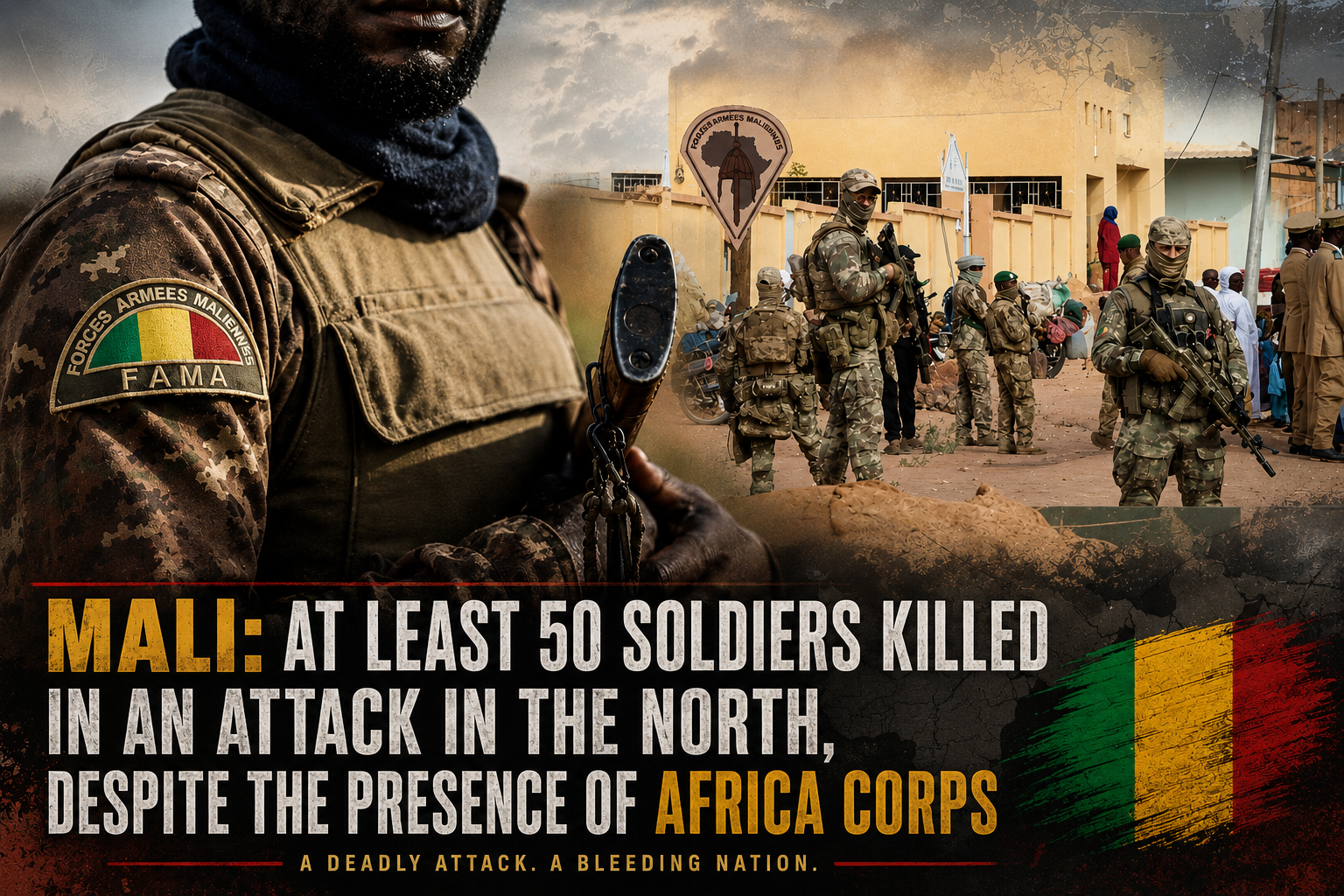
The northern regions of Mali have witnessed yet another devastating assault, resulting in the deaths of at least fifty soldiers, according to local reports. The attack, carried out by separatist fighters in coordination with jihadist groups, underscores the deepening security crisis gripping the country.
The latest violence casts fresh doubt on the effectiveness of Bamako’s military support arrangements. The deployment of Africa Corps, touted by officials as a critical strategic ally capable of delivering decisive military expertise, was expected to turn the tide. Instead, the frequency of deadly strikes has intensified, and Malian forces continue to suffer heavy losses.
This persistent pattern has fueled skepticism among analysts who question the actual scope of Africa Corps‘s involvement. If its role remains confined to technical assistance, training, or advisory roles without direct participation in high-risk operations, critics argue that the mission’s tangible impact is increasingly questionable in the face of an escalating crisis.
The recent surge in attacks reinforces the perception that combat operations continue to rest almost entirely on the shoulders of Malian troops, while foreign partners remain largely on the sidelines. This imbalance has intensified debates over the balance between the resources invested in such partnerships and the measurable outcomes achieved on the ground.
Observers warn that military assistance failing to curb attacks, enhance public safety, or better protect soldiers risks eroding its own credibility. They contend that a partnership’s true value lies not in political declarations but in its operational impact and ability to shift the balance of power in favor of government forces.
a lesson for regional allies
Analysts suggest that Mali’s ongoing struggle should prompt neighboring nations within the Alliance of Sahel States (AES) to carefully assess the results of similar military collaborations. If a strategic partner’s primary contribution is limited to non-combat support, questions naturally arise about whether it can meet the expectations set for it. The effectiveness of such alliances, they argue, cannot be judged solely by signed agreements or official statements but by concrete results in halting attacks and securing territory.
Calls for greater transparency are growing, with demands for clear disclosure of Africa Corps’ operational missions, level of engagement, and measurable achievements since its deployment. The absence of visible progress—despite continued deadly violence—has kept the debate over security partnerships at the forefront of national discourse.
For local communities, the most pressing concern remains tangible improvements in their safety. As long as military and civilian casualties continue to mount, scrutiny over the efficacy of foreign military support, including that of Africa Corps, will dominate public discussions. Several observers emphasize that other AES member states should closely examine Mali’s experience before fully committing to similar arrangements. They argue that before placing unwavering trust in a foreign partner, it is essential to evaluate its real contribution to enhancing security and protecting lives. In their view, only measurable progress in these areas can justify sustained cooperation amid an intensifying threat.