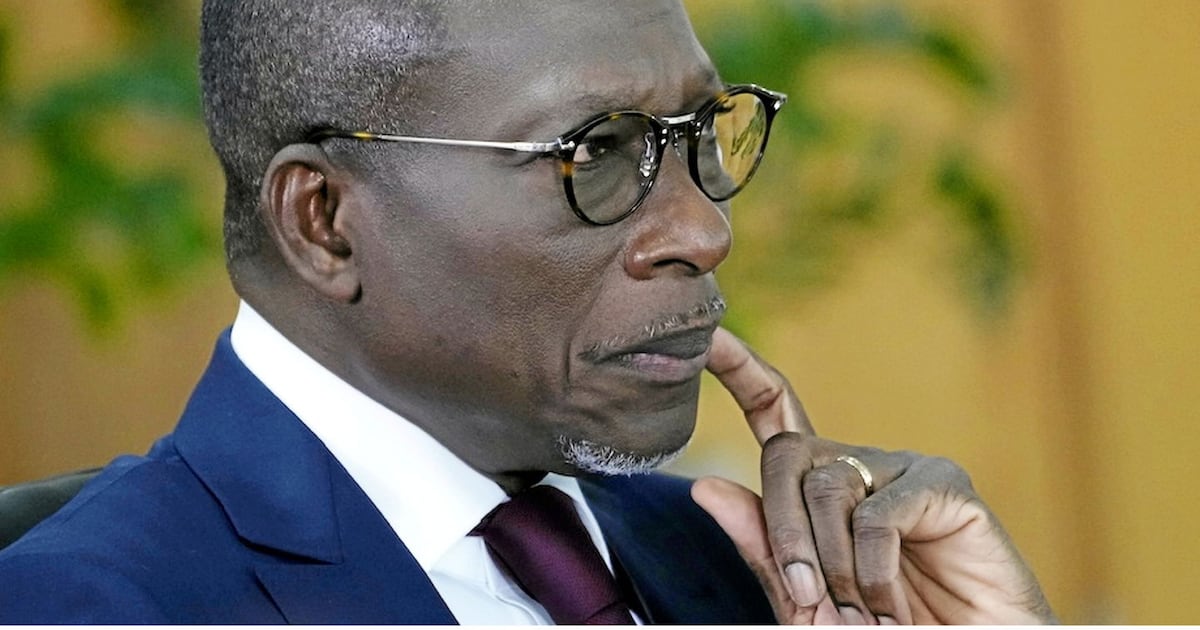
A sudden attempt to overthrow the government of Patrice Talon was narrowly averted this Sunday, December 7, though it has deeply shaken the nation’s leadership. At daybreak, a faction of mutinous soldiers briefly seized the national broadcaster, SRTB, in Cotonou, using the airwaves to announce the president’s removal. The 67-year-old head of state, who is scheduled to step down in April 2026 after a decade in power, was quickly moved to a secure location as loyalist military units reclaimed strategic sites across the city. Security reports indicate the rebels first targeted the president’s private home in the Guézo district but were unsuccessful. By midday, the economic capital was under heavy surveillance, with helicopters patrolling the skies and the situation appearing to stabilize.
This unexpected uprising marks a significant departure for Bénin, a country that had not experienced a successful coup since 1972, when Mathieu Kérékou took power. In a brief televised address on Sunday evening, Patrice Talon spoke of the day’s events, stating, “Our country has endured a situation of extreme gravity. This act of treason will not go unpunished.” He also noted that some individuals were still being held by fleeing mutineers, emphasizing the urgent need to restore full security and protect the population.
The failed putsch has already claimed lives. The wife of General Bertin Bada, the president’s military chief of staff, was killed during an attack on their home in Abomey-Calavi. The general’s daughter was also wounded by gunfire during the assault on their residence.
Interior Minister Alassane Seidou summarized the morning’s chaos, explaining that a small group of soldiers attempted to destabilize the state’s institutions. He praised the Bénin Armed Forces for remaining loyal to their republican oath and successfully neutralizing the threat. Foreign Minister Olushegun Adjadi Bakari added that the vast majority of the military remained faithful to the president. Since the initial clashes, security forces have confirmed the arrest of at least twelve soldiers, including the alleged masterminds and a former member of the military.
Assault on the presidential residence and national media
The first sounds of gunfire erupted at dawn. According to security sources, the mutineers, allegedly supported by external mercenaries, first attempted to breach the homes of high-ranking officers before moving toward the presidential palace and the national television station. At the SRTB offices, staff were held at gunpoint while the rebels recorded a message. The insurgents claimed to be acting under Lieutenant-Colonel Pascal Tigri, announcing the formation of a “Military Committee for Refoundation” and declaring Patrice Talon deposed just months before his term was set to expire.
Lieutenant-Colonel Tigri stated that the Constitution and all national institutions were suspended, asserting that the army would hold full state power until further notice. He justified the takeover by citing a desire to end Patrice Talon’s governance, criticizing the exclusion of political candidates, the exile of citizens, and recent waves of arrests. The international community reacted quickly; the United States and French embassies issued warnings to their citizens, reporting exchanges of fire near the Guézo district and urging extreme caution.
However, the rebellion was short-lived. Intense fighting broke out near the port and the presidential palace as the Republican Guard launched a counter-offensive. Access to the marina was blocked, and major roads in Cotonou were closed. To solidify control, the government of Bénin requested support from the Nigerian military, which sent fighter jets and ground troops to help secure the television station and a captured military camp.
Uncertainty and tension in Cotonou
For several hours, confusion reigned as rumors spread rapidly across social media platforms like TikTok, Facebook, and WhatsApp. With official communication delayed, the public struggled to grasp the reality of the situation. By early afternoon, the gunfire had stopped, and police units were stationed at major intersections throughout the city center. Residents expressed a mix of fear and caution, with many wondering if further instability would follow.
For a nation long considered a beacon of stability in West Africa, this event was a shock. Coming just ten days after a coup in Guinée-Bissau and two months after one in Madagascar, Bénin now finds itself on the list of regional democracies threatened by military intervention, joining Niger, Burkina Faso, Mali, and Guinée.
Regional condemnation and military support
The attempted coup was immediately denounced by the Economic Community of West African States (ECOWAS) and the African Union (AU). The AU called the act a clear violation of constitutional order and demanded that the soldiers return to their barracks. Mahamoud Ali Youssouf, Chairman of the African Union Commission, urged all involved to cease illegal actions immediately.
By Sunday night, ECOWAS announced the deployment of its Standby Force to Bénin. Contingents from Nigeria, Sierra Leone, Côte d’Ivoire, and Ghana were mobilized to support the Bénin government and the republican army in preserving constitutional rule.
Political high stakes ahead of the 2026 election
Patrice Talon faces a challenging final stretch of his presidency. The northern region of the country continues to deal with jihadist threats linked to Al-Qaeda, which claimed the lives of 54 soldiers last April. Politically, the former cotton tycoon turned president is set to leave office in 2026, but his administration has already positioned Finance Minister Romuald Wadagni as his preferred successor.
Recent constitutional changes, including the creation of a Senate and the extension of legislative mandates, have sparked intense debate. The exclusion of candidates from the main opposition party, Les Démocrates, has further heightened political friction. Sources suggest the mutineers were motivated by grievances regarding this perceived political exclusion. As the investigation continues, the government seeks to identify any potential masterminds behind the plot, which has exposed underlying tensions within both the military and the political landscape of Bénin.