Burkina Faso crisis: thousands displaced by rising violence
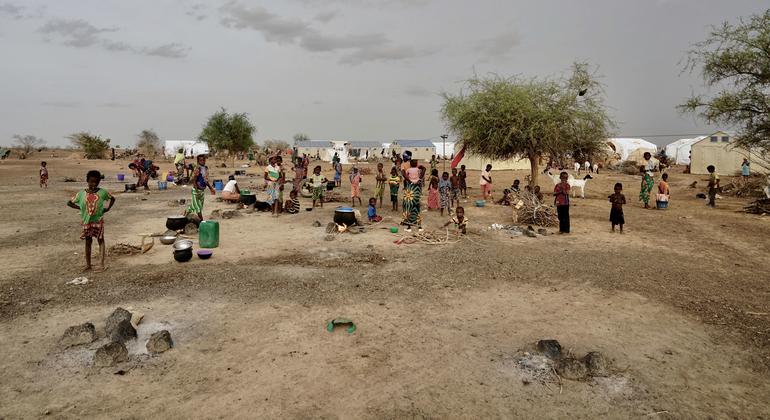
Violent clashes involving jihadist groups have displaced nearly 230,000 people in Burkina Faso since the start of the year, humanitarian agencies report. The escalating security crisis continues to devastate families and children across this central Sahel nation.
According to the Operational Coordination Group for Rapid Response (GCORR), nearly 37,000 households have been displaced following 48 displacement alerts. This marks a 92% surge compared to the same period in 2024.
In May alone, GCORR documented 41,000 individuals affected by 12 displacement alerts nationwide.
The Boucle du Mouhoun region has borne the brunt of the crisis, with over 106,000 displaced people—including more than 65,000 children—across 13 localities such as Dédougou, Di, and Tougan. This accounts for 45% of all internally displaced persons in the country.
Critical humanitarian needs surge
Burkina Faso’s security landscape remains dire, with persistent attacks in the Sahel, North, Centre-Nord, East, Centre-Est, and Boucle du Mouhoun regions. These assaults target security forces, local defense volunteers (VDP), and civilians alike.
The UNICEF highlights that this violence has triggered substantial humanitarian needs across multiple sectors. Top priorities include shelter, food security, clean water, sanitation, hygiene, child protection, and education.
While humanitarian teams are actively assisting affected communities, significant gaps persist in meeting growing demands.
Severe acute malnutrition spikes
Nutritional crises have worsened, with over 10,000 children admitted for severe acute malnutrition treatment in April. More than half of these cases originated from conflict-affected regions like Boucle du Mouhoun, North, East, Sahel, and Centre-Nord.
From January to April, over 36,000 children received treatment, with over 20,000 from insecure zones. By late May, 179,000 people—28% of the 1.3 million in need—had been treated for malnutrition, including 8,000 children suffering from severe acute malnutrition.
Security threats cripple aid operations
The deteriorating security situation has severely hindered humanitarian efforts, restricting access, increasing operational risks, and exacerbating the needs of vulnerable populations. Attacks in the East and Sahel regions have destroyed critical infrastructure, including health centers, schools, water systems, and administrative buildings.
Djibo: a city under jihadist siege
The city of Djibo, in the Soum province, has been under a jihadist blockade since December 2024, cutting off supplies to its population of approximately 48,000 people—both locals and displaced individuals. UNICEF and its partners are implementing emergency programs in Djibo, focusing on water, sanitation, hygiene, education, child protection, health, and nutrition.
Humanitarian workers and civilians face extreme dangers, including improvised explosive devices and kidnappings. The shortage of resources further compounds the challenge, straining response capacities in insecure areas.