The transitional government of Burkina Faso, led by Captain Ibrahim Traoré, appears to have reached a critical juncture. Once hailed by supporters as a reformist leader, Traoré now presides over an increasingly autocratic regime that brooks no dissent—whether from civil society, religious institutions, or even within his own military inner circle. In Ouagadougou, tensions are palpable, and recent developments during Eid al-Adha have heightened fears of an imminent power struggle.
Eid al-Adha under siege: places of worship and repression
The holy festival of Eid al-Adha, typically a time of unity and reflection, has instead exposed the regime’s deepening instability.
Detention of a respected imam
The arrest of a prominent religious leader during the sacred week sent shockwaves through a population already burdened by hardship. This move, widely condemned as a violation of religious freedoms, underscores the regime’s willingness to dismantle moral pillars to suppress dissent.
Forced conscription and “re-education”
Simultaneously, protesters and dissenting voices detained in recent days have been forcibly transferred to re-education camps or deployed to the front lines. This militarization of punishment signals a shift toward outright repression, transforming state institutions into instruments of control.
Assessment: a regime losing its grip
Regional analysts warn that Burkina Faso’s leadership has abandoned rational governance in favor of a militarized approach. What was once a complex state apparatus now operates under camp-like discipline, where any sign of independent thought is equated with treason and unquestioning loyalty to a single figure is demanded.
A fracture at the heart of the junta: the case of Oumarou Yabré
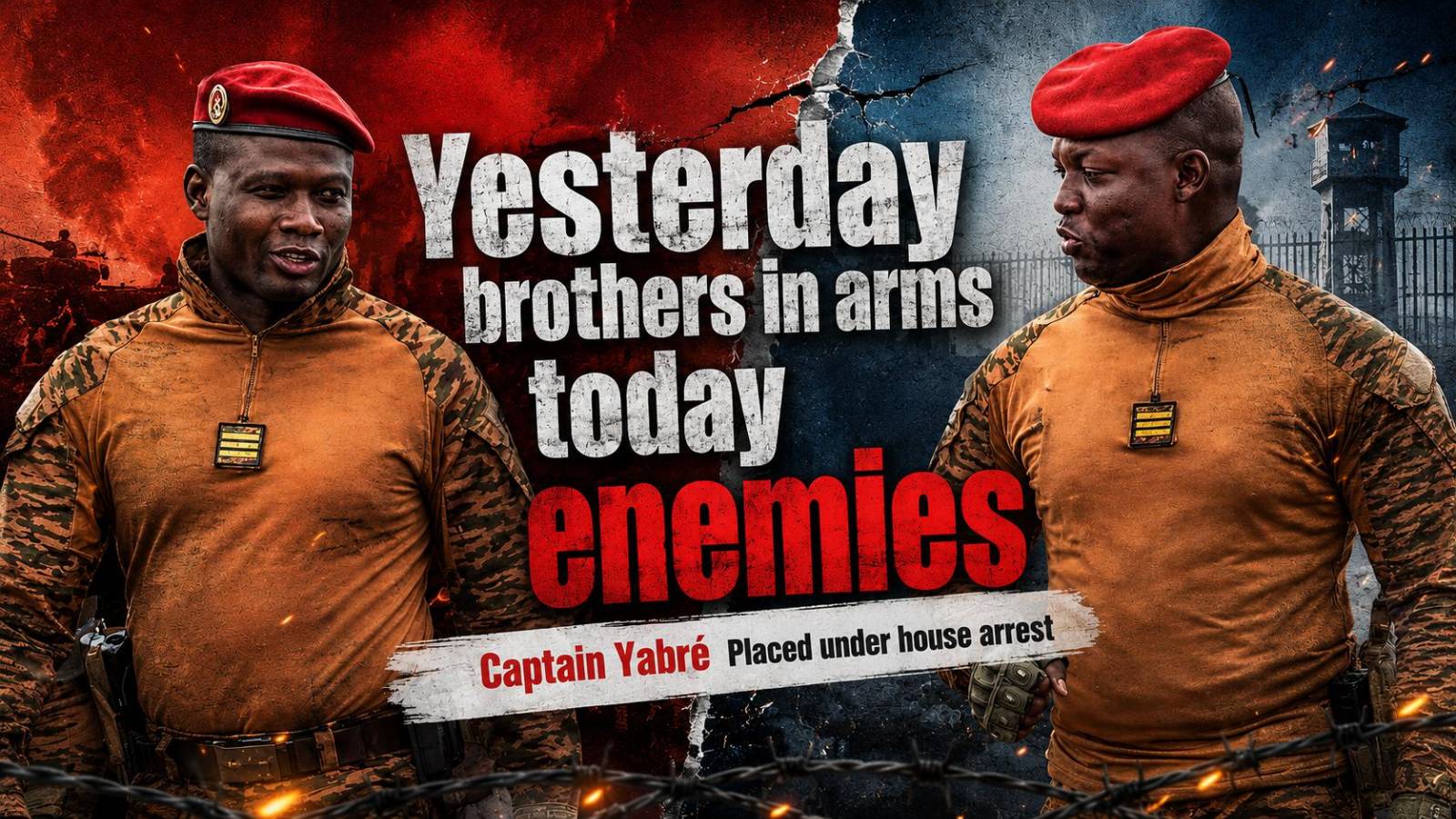
The most significant development—one now circulating in diplomatic and security circles—is the reported house arrest of Oumarou Yabré, Director of the National Intelligence Agency (ANR). Despite official silence, insider accounts confirm a deep schism within the state apparatus. On one side, Captain Ibrahim Traoré, as Head of State and Transition President, seeks absolute centralization of power, fueled by pervasive distrust of even his closest allies. On the other, Yabré is suspected of harboring dissenting views—or at minimum, profound disagreements—over security strategy and the growing influence of external partners.
This internal purge reveals the extent of Traoré’s paranoia. By targeting those who helped build his security framework and facilitate Russian influence networks in Burkina Faso, he risks undermining his own foundation.
Is a fatal showdown looming within the junta?
Security analysts had long anticipated tensions between the two key figures of Burkina Faso’s security apparatus. The rivalry for control of state institutions, compounded by relentless pressure from armed terrorist groups, has created an explosive environment in Ouagadougou.
By alienating the public, religious leaders, and now his own military allies, Traoré is isolating himself at a precarious moment. Regional history shows that regimes that govern solely through fear and purge their own ranks hasten their collapse. The stakes have never been higher in Ouagadougou, and the coming days may prove decisive for the nation’s future.