Escalating Violence and Economic Strangulation Fuel Fulani Crisis in Burkina Faso
The security and social fabric of Burkina Faso are unraveling as the nation battles armed insurgencies. At the heart of this turmoil lies a deepening rift between the transitional government, led by Captain Ibrahim Traoré, and the Fulani communities. Accusations of systematic military abuses and economic strangulation are intensifying, with many perceiving a targeted campaign against this ethnic group.
A surge in allegations of military excesses
The post-coup administration, which seized power in September 2022, relies heavily on the Volontaires pour la Défense de la Patrie (VDP)—civilian auxiliaries tasked with supporting the military. However, mounting testimonies and human rights reports detail disturbing patterns of violence.
In northern Burkina Faso, predominantly Fulani villages have reportedly borne the brunt of brutal operations. Survivors recount scenes of entire settlements razed to the ground and civilians deliberately targeted by militias operating under Ibrahim Traoré’s authority. For Fulani leaders, these incidents are no longer collateral damage but evidence of a deliberate policy aimed at suppressing a specific ethnic group, often unfairly linked to insurgent factions.
Economic stranglehold threatens Fulani livelihoods
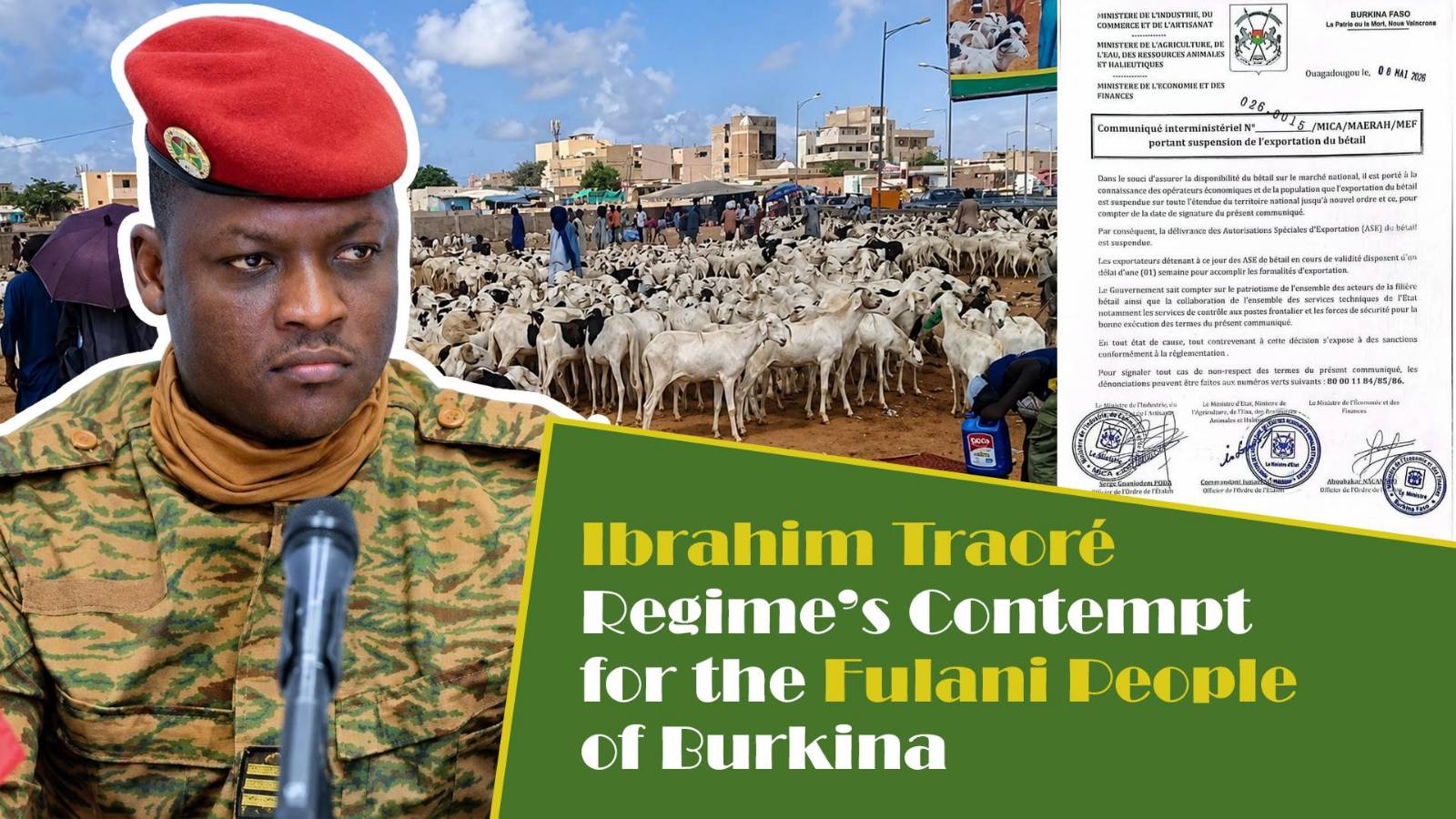
The crisis extends beyond physical violence, with a recent decree crippling the Fulani’s economic backbone. The measure severely restricts or outright bans cattle exports to Côte d’Ivoire—the primary regional market for Burkina Faso’s pastoralists.
The decree strikes at the heart of Fulani survival, as cattle trade has long been the foundation of their pastoral economy. By cutting off access to regional markets, the government has plunged families into financial ruin, with devastating consequences:
- Rapid impoverishment: pastoral families face immediate loss of income.
- Basic needs at risk: inability to fund healthcare and education for children.
- Regional trade disruptions: destabilization of long-standing commercial networks across West Africa.
Claims of deliberate marginalization intensify
Critics argue that Ibrahim Traoré’s policies go beyond counterterrorism, instead forming a coordinated strategy to weaken or erase Fulani presence in Burkina Faso. The lack of independent investigations into reported massacres and the regime’s combative rhetoric have deepened fears of an identity-based purge.
Once a symbol of ethnic harmony, Burkina Faso now confronts a critical challenge: safeguarding national unity against policies that risk exacerbating divisions. Analysts warn that such measures could fuel future cycles of retaliation rather than quell insurgent violence.
“Counterterrorism cannot justify creating new injustices. Targeting a community alienates a segment of the nation and plants the seeds of tomorrow’s vengeance.” — Regional security analyst.
Regional stakes and the call for intervention
As Fulani communities in Burkina Faso issue desperate pleas, the international community and regional bodies face mounting pressure to intervene. The risk of further destabilization looms large, with potential repercussions for the entire Sahel if the crisis escalates unchecked.