The military leadership in Burkina Faso apprehended three members of the press on March 24, 2025, following their reporting on the government’s systematic targeting of media outlets. Human Rights Watch confirmed these arrests today.
Disappearance of media professionals in Ouagadougou
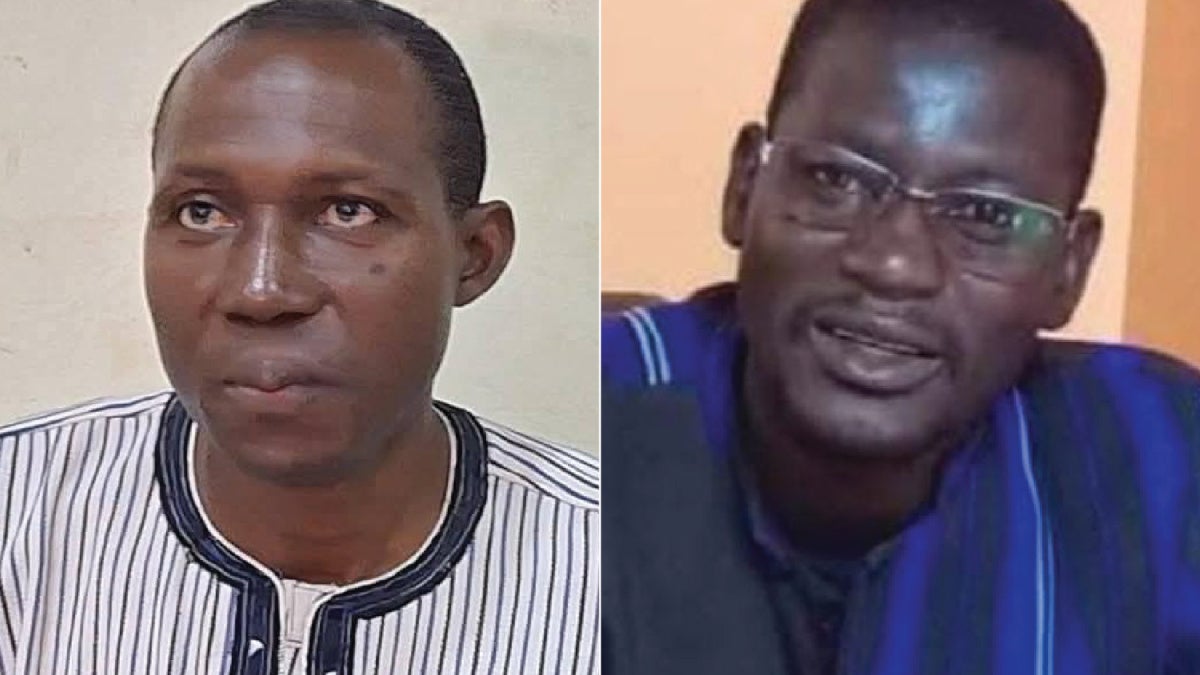
In the capital city of Ouagadougou, authorities took Guezouma Sanogo and Boukari Ouoba, the top leaders of the Association of Journalists of Burkina (AJB), into custody. Luc Pagbelguem, a reporter for the private television station BF1, was also detained. The current whereabouts of all three men are unknown, sparking intense fears that they have become victims of forced disappearance.
“The arbitrary detention and subsequent disappearance of these three journalists highlight the junta’s desperate attempts to suppress the truth and allow military authorities to operate without accountability,” noted Ilaria Allegrozzi, a senior Sahel researcher at Human Rights Watch. She urged the military government to find and release the journalists immediately.
A pattern of repression under the military junta
Since seizing power in a 2022 coup, the administration of President Ibrahim Traoré has consistently attacked independent media, political opponents, and peaceful protesters. Amidst a growing Islamist insurgency, the Burkina Faso junta has utilized broad emergency regulations to silence critics, frequently forcing journalists, activists, and judicial officials into involuntary military service.
The recent arrests followed a press conference held by the AJB on March 21, where the group criticized restrictions on free speech and demanded the release of detained colleagues. On March 24, plainclothes individuals claiming to be intelligence agents arrested Sanogo and Ouoba. Simultaneously, Luc Pagbelguem was detained for his coverage of the AJB event. By the following day, the Ministry of Territorial Administration and Mobility officially dissolved the AJB.
Lack of transparency and legal access
Colleagues of the missing journalists reported that legal counsel searched various police stations and gendarmeries in the capital without success. While intelligence services briefly brought Sanogo and Ouoba to their homes for searches on March 25, they were quickly returned to an undisclosed location. Although the National Security Council told BF1 they only intended to question Pagbelguem, his location remains a mystery. The television station has since issued a formal apology for broadcasting the AJB press conference.
Widespread targeting of activists and investigators
This incident is part of a broader trend. On March 18, Idrissa Barry, a prominent journalist and political activist, was arrested by men identifying as gendarmes. Barry, a member of the SENS political movement, had recently criticized government forces for alleged attacks on civilians in Solenzo, located in western Burkina Faso.
Earlier, in June 2024, security forces detained investigative journalist Serge Oulon, along with commentators Adama Bayala and Kalifara Séré. After months of denial, the government eventually admitted these men were conscripted into the army, though their status and location remain unconfirmed.
Censorship and the silencing of independent voices
In April 2024, the Superior Council for Communication (CSC) suspended several international media outlets, including TV5 Monde, for reporting on military abuses in Yatenga province. The Human Rights Watch website was also blocked within the country. This environment has forced many journalists to flee Burkina Faso to avoid imprisonment, torture, or forced conscription.
“I have left Ouagadougou with no plans to return,” one journalist told Human Rights Watch. “Free media is non-existent here; only government propaganda remains.”
Reporting on conflict amidst a media blackout
The crackdown coincides with intensified fighting across the nation. Recently, the Al-Qaeda-linked group JNIM (GSIM) attacked military positions in Séguénéga and other regions, resulting in numerous casualties. An exiled journalist explained that the lack of independent reporting means these violent escalations and civilian deaths are either ignored or misrepresented by state-aligned media.
International law strictly prohibits the arbitrary detention or disappearance of journalists. As a party to the International Convention for the Protection of All Persons from Enforced Disappearance, Burkina Faso is obligated to disclose the status and location of all detainees.
“Independent journalism is more critical than ever for Burkina Faso,” Allegrozzi concluded. “The government must end its brutal campaign against those who dare to speak out.”