Ouagadougou — For many women, the fear of a diagnosis outweighs the uncertainty of their health. Awa, a 48-year-old mother of six living in Ipendo, in Burkina Faso’s Centre-Ouest region, shared her hesitation: “When I heard the town crier announce free screening, I worried—what if they told me I had the disease? How would I afford treatment? But I thought of my children and decided to go.”
Her story reflects a harsh reality for countless women across the country. Cervical cancer remains one of the deadliest threats to women’s health in Burkina Faso, particularly in rural areas where access to care is limited. Before the government’s bold initiatives, fewer than 8% of women were screened, with long distances, financial barriers, and a lack of trained professionals standing in the way.
breaking down barriers to healthcare in rural Burkina Faso
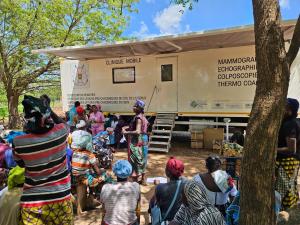
To tackle this crisis, Burkina Faso implemented sweeping reforms, as explained by Professor Nayi Zongo, a public health physician and coordinator of the National Cancer Control Program (PNLC). “The government issued a decree making screening and treatment of precancerous lesions entirely free. Mobile clinics were deployed, and peripheral health centers were upgraded to bring care closer to women.”
These mobile units now reach villages, farms, markets, and even family compounds, eliminating the need for women to abandon their livelihoods for medical appointments. “Screening is brought directly to communities, allowing women to continue their daily work while protecting their health,” Professor Zongo emphasized.
The strategy doesn’t stop at accessibility—it also focuses on awareness. Television, radio, and community events like “Pink October” have played a key role in educating the public. A national coalition against cancer, involving civil society, community leaders, and media, has further amplified the message, turning prevention into a collective cause.
a model of success backed by global health leaders
The World Health Organization (WHO) provided critical support, helping draft national guidelines, training healthcare workers, and strengthening community engagement. “WHO stood by us to build capacity and ensure that every woman, no matter where she lives, has access to life-saving services,” Professor Zongo noted.
The impact has been remarkable. Between October 2024 and September 2025, mobile clinics conducted 468 outreach sessions, screening over 106,000 women, treating 715 precancerous lesions, and performing 113 follow-up exams. These numbers translate to real lives saved and families protected.
Dr. Seydou Coulibaly, WHO Representative in Burkina Faso, called the initiative a blueprint for Africa. “This success proves that with strong political will and context-specific solutions, seemingly insurmountable barriers can be overcome.” He highlighted the elimination of financial and geographical obstacles as a game-changer for other nations.
more than healthcare—restoring dignity and hope
For women like Awa, these mobile clinics offer more than medical care—they provide the first opportunity to learn about cervical cancer, its risks, and prevention. “Before, I had never heard of this disease. Now, I know it can be stopped early.” Her relief after a negative result underscores the program’s dual power: saving lives and empowering women.
Beyond health, this initiative champions social justice. In Burkina Faso, health is no longer a privilege but a right. Each mobile clinic that arrives in a village carries a simple yet profound message: every woman deserves protection.