Chad’s security minister addresses senators on persistent insecurity and community conflicts
Chad’s Minister of Public Security, Ali Ahmat Aghabache, provided detailed responses to senators’ concerns regarding ongoing insecurity and violence, outlining root causes and implemented solutions.
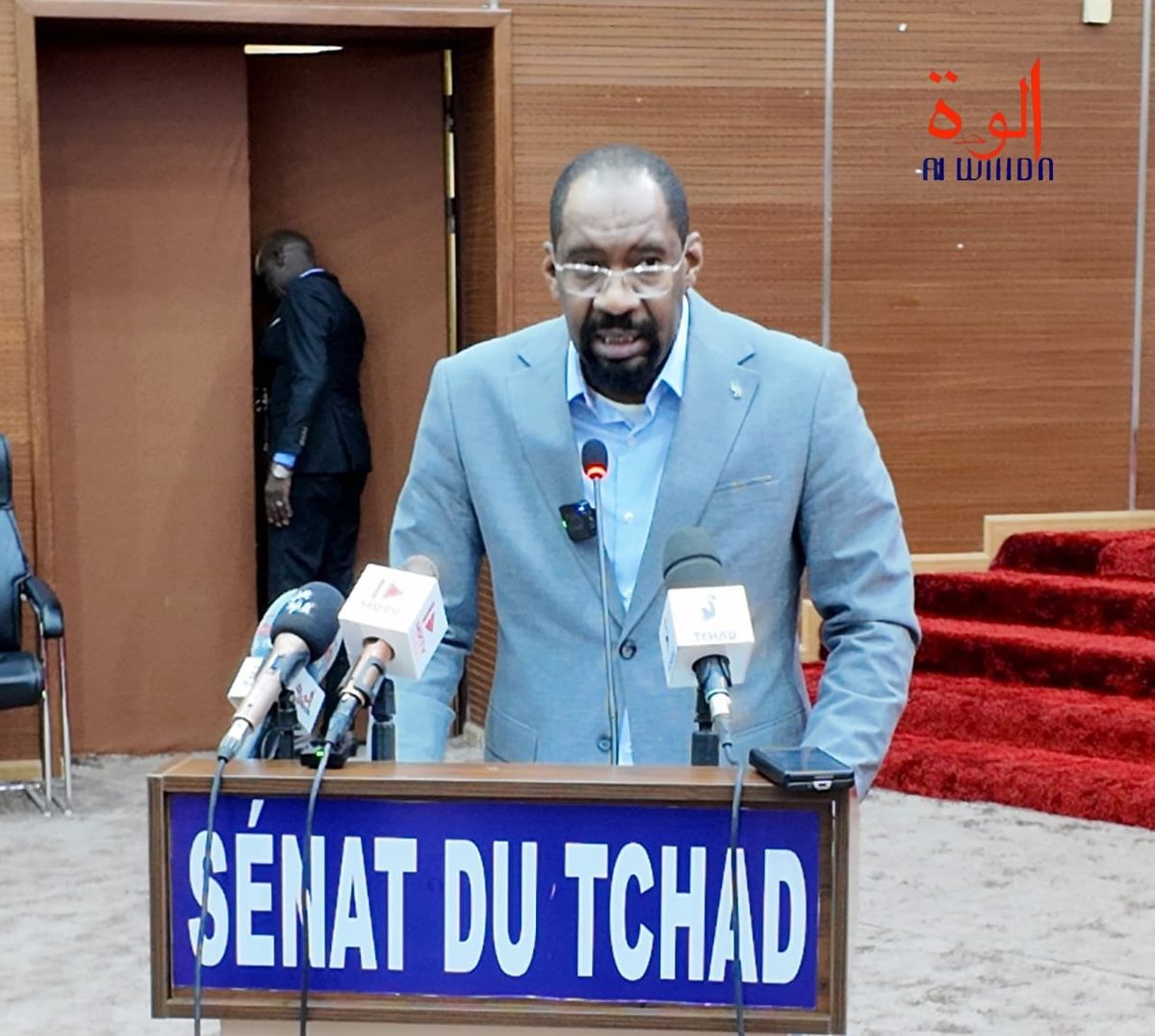
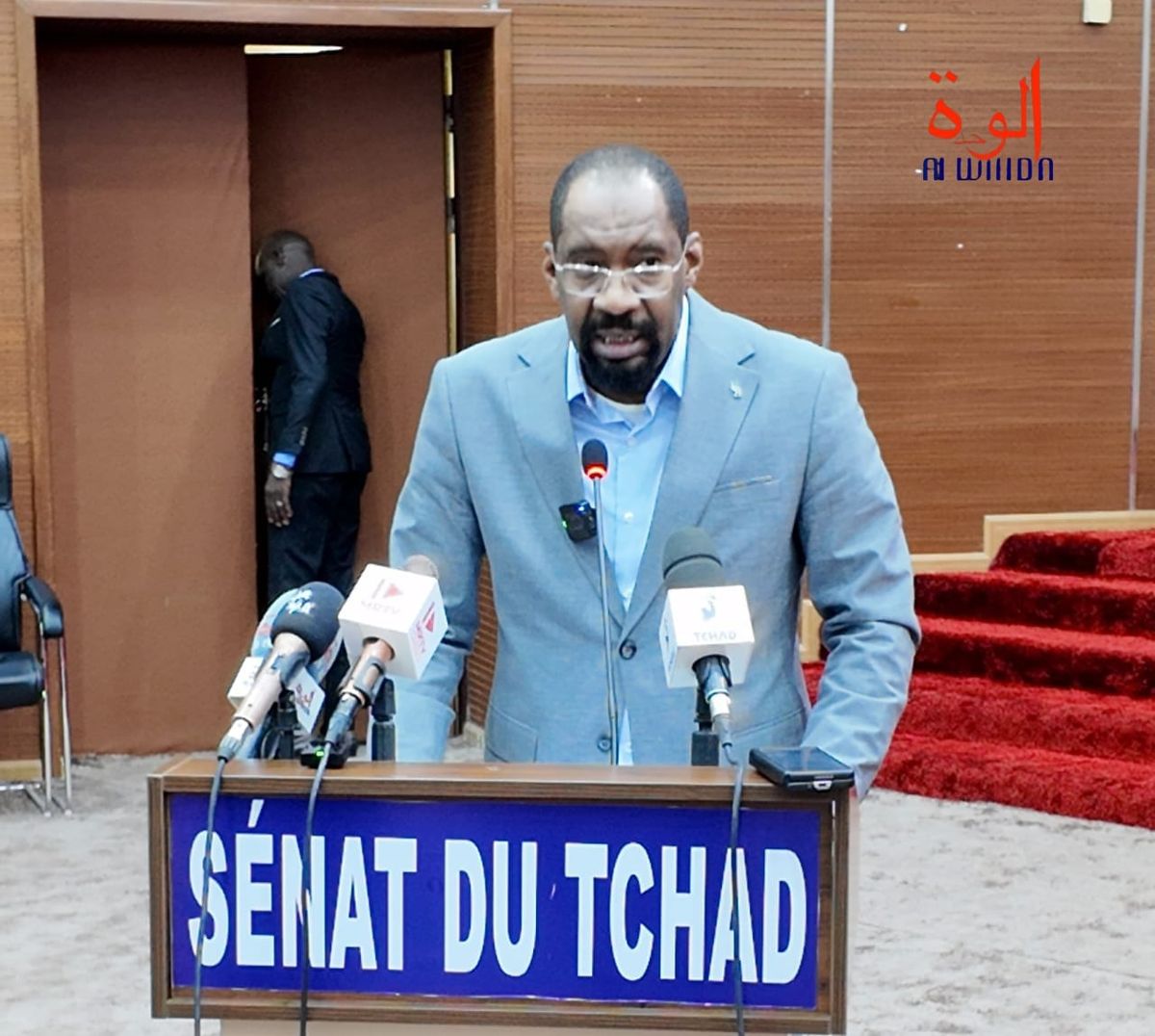
On June 1, 2026, General Ali Ahmat Aghabache, Chad’s Minister of Public Security and Immigration, appeared before the Senate to address pressing concerns regarding ongoing violence and insecurity across the nation. This session, chaired by Dr. Haroun Kabadi, President of the Senate, followed an oral question and debate initiated by Senator M. Mbaigolmen Sébastien.
During the proceedings, Senate President Dr. Haroun Kabadi highlighted that despite the deployment of defense and security forces in various provinces, numerous conflicts have been reported. He cited specific incidents, including clashes in Mayo-Kebbi Ouest and Salamat in June 2025, and a notable event in Hadjar-Lamis on November 4, 2025, which tragically resulted in multiple fatalities. Earlier, on May 14, 2025, a conflict between herders and farmers erupted in Mandakao, Logone Occidental province, eventually leading to a resolution agreement signed on July 5, 2025.
Responding to Senator Mbaigolmen Sébastien’s inquiry, Minister Aghabache clarified that intercommunal conflicts primarily stem from disputes over essential resources such as water points and land, as well as clashes between agriculturalists and livestock breeders. Before delving into specifics, the Minister expressed profound sympathy and observed a moment of silence for the Chadian citizens who lost their lives or sustained temporary or permanent injuries in the various communal conflicts across the country. He conveyed his wish that the oral question posed by Senator Sébastien would encompass the broader issue of communal conflicts, extending beyond Dougui in Logone Occidental to include departments like Mayo-Kebbi, Wadi, Sila, Bahr El-Ghazal, Salamat, and more recently, Wadi Fira. “We share the grief of the bereaved families and extend our sincere condolences to all victims of these violent incidents,” he affirmed.
Minister Aghabache also reassured the assembly of his department’s full commitment to providing clear answers and concrete solutions to the security challenges facing Chad.
The Minister of Security confirmed that the overall security situation in the country is maintained, while acknowledging the existence of localized areas of instability. “Indeed, no place in the world experiences a state of perfect security or an absolute absence of insecurity,” Minister Aghabache stated.
He emphasized, however, that these tensions, often exploited or manipulated at the local level, cannot be resolved solely through security presence, which primarily aims to contain violence and create conditions conducive to sustainable political and social solutions.
Despite the persistence of isolated incidents, prevention and resolution strategies for communal conflicts remain the most effective approach to tackling the phenomenon at its root. The Minister outlined the key factors contributing to the escalation and persistence of violence across different Chadian provinces:
- Conflicts over Natural Resources: Tensions and violent acts intensify during the rainy season in eastern, southern, and central Chad, primarily due to livestock damaging agricultural crops. These disagreements frequently escalate into violent retaliations instead of being resolved peacefully.
- Scarcity of Land and Water: Climate change and drought in northern regions have diminished pastoral resources, compelling herders to migrate southward. Concurrently, population growth and the expansion of cultivated areas exacerbate pressure on agricultural and pastoral lands, fueling conflicts among local communities.
- Absence of Clear Resource Regulation and Legal Gaps: The lack of precise maps delineating transhumance corridors, land rights, and agricultural zones creates a legal vacuum that promotes disputes between groups.
- Demographic Growth: An increasing population drives higher demand for pastures, water, food, and land, intensifying pressure on fragile ecosystems and local communities.
- Political Exploitation of Tribal Affiliations: Certain political actors exploit tribal loyalties to garner support, strengthen their influence, or secure personal or political advantages, thereby aggravating local tensions and conflicts.
- Ethnic Diversity and Tribal Structure: Chadian society is remarkably complex, comprising over 200 ethnic groups. The predominance of tribal identity over national identity has weakened the sense of belonging to the state and the concept of citizenship.
- Influence of Neighboring Countries’ Security Situations and Regional Conflicts: The unregulated flow of light weapons across borders has provided local communities with access to lethal automatic firearms, thereby escalating the intensity of traditional conflicts and increasing their human cost.
- Conflicts Related to Land Ownership and Historical Boundaries: The cumulative human toll from these conflicts in 2025 reached 318 fatalities and 315 injuries.
Senators posed several questions to the Minister, inquiring about the provinces most affected by violence, the measures implemented to reduce violence in specific Chadian provinces and villages, and the issue of light weapons proliferation.
Acknowledging and commending the Minister’s efforts in combating insecurity nationwide, the senators nonetheless emphasized that significant work remains to be done.
In his response regarding intercommunal conflicts, the Minister of Security urged local leaders, traditional chiefs, and elected representatives to intensify efforts in promoting the importance of coexistence and social cohesion to prevent further clashes. He also took the opportunity to present a report on police and gendarmerie operations conducted between 2024 and 2025, revealing the seizure of over 4,000 weapons, the arrest of more than 1,300 bandits, and the confiscation of substantial quantities of illicit drugs.
The Minister addressed additional questions, including those concerning kidnappings for ransom, particularly prevalent in Mayo-Kebbi Ouest, and the abduction of children by Boko Haram in the Lake Province. Senator Mariam Ahmat Djamil also raised concerns about the alarming presence of unidentified foreign individuals on Chadian soil, identifying it as a source of insecurity.
Regarding the establishment of new police stations to enhance security, the Minister affirmed his department’s active engagement in this area. He highlighted recent initiatives in Abéché, Ouaddaï province, where the creation of several new police stations and companies has demonstrably reduced insecurity over a sustained period.