Congo Democratic Republic: ruling party factions clash over opposition march
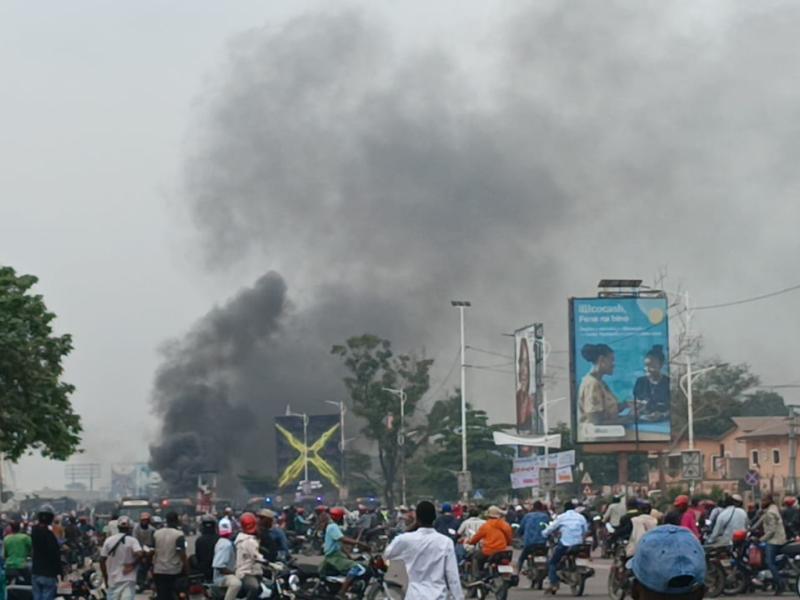
In Kinshasa and beyond, political tensions are escalating as leading figures within President Félix Tshisekedi’s coalition find themselves at odds over how to respond to an upcoming opposition demonstration. The C64 Coalition, named for Article 64 of the Congolese constitution, has called for nationwide protests on July 22, demanding the president’s resignation for allegedly violating his constitutional oath through proposed constitutional changes.
The Union Sacrée de la Nation (USN), the president’s broad coalition platform, faces internal divisions as its members debate whether to participate in counter-protests. At the heart of this dispute are two prominent figures: Augustin Kabuya, Secretary-General of the ruling UDPS party, and André Mbata, Permanent Secretary of the USN.
conflicting directives from ruling party leaders
Mbata, currently on an official visit to Yaoundé, Cameroon, issued a strong statement calling on all USN member parties, associations and individuals to mobilize for counter-protests across Kinshasa, all 25 provincial capitals, and the diaspora. He accused opponents of attempting a “coup against the nation” by denying citizens their constitutional right to peaceful assembly.
Kabuya, however, took a diametrically opposed stance. In a brief statement released July 13, he instructed UDPS members to continue with their regular activities on July 22, warning them not to interfere with opposition march routes. His position reflects the party’s official stance against the demonstration while attempting to maintain party discipline.
public exchanges reveal deep divisions
The clash between the two leaders intensified when Mbata publicly rejected Kabuya’s directive. In a strongly worded response, the constitutional law professor argued that the USN, comprising over 900 political parties and associations, cannot be reduced to the position of a single component party. He emphasized that statements by individual leaders do not represent the coalition as a whole.
Mbata questioned the USN’s silence in the face of what he described as “ill-intentioned and constitutionally ignorant individuals” marching to demand the president’s departure. He concluded by asserting that coalition members should only follow directives issued by the USN Permanent Secretary, who serves as the coalition’s official spokesperson.
historical tensions resurface
This public disagreement between Kabuya and Mbata is not without precedent. In April 2024, their rivalry manifested during the gubernatorial election in Sankuru province, where Mbata openly opposed Kabuya’s preferred candidate. Instead, Mbata supported Jules Lodi Emongo, who ultimately won the election. Following this setback, Kabuya reportedly instructed UDPS members to stop paying dues to Mbata, further illustrating the depth of their personal and political conflict.
The current standoff comes at a critical juncture, with national elections scheduled for 2028 and President Tshisekedi’s second and final term nearing its end. The outcome of this internal power struggle within the ruling coalition could significantly influence the political landscape in the lead-up to these elections.
- Politics