DR Congo military law 2027-2030: parliament examines modernization plan
- Politics
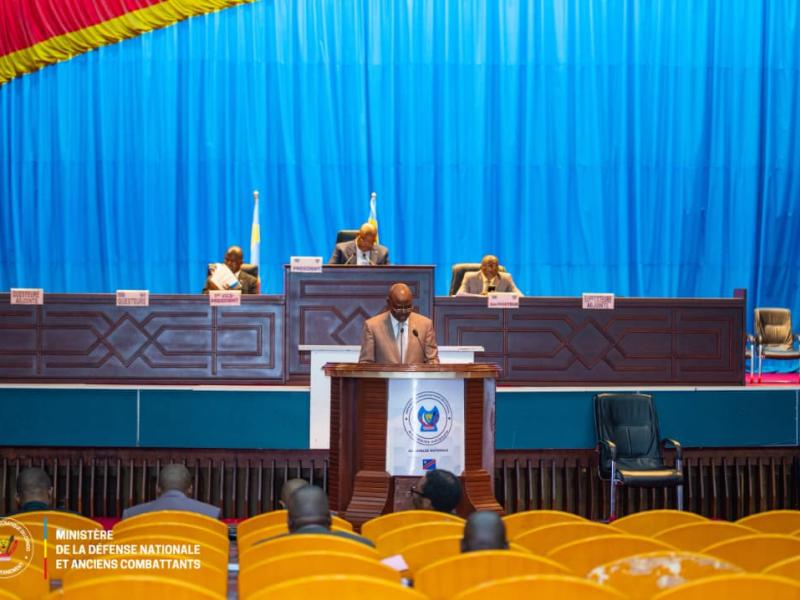
On July 14, 2026, the National Assembly of the Democratic Republic of Congo launched examination of the military programming bill for 2027-2030. Presented by Vice Prime Minister and Defense Minister Guy Kabombo Muadiamvita, this strategic framework aims to transform the Armed Forces of the DRC (FARDC) through sustainable budgeting and modern equipment acquisition.
The bill represents a fundamental shift from previous ad-hoc budgeting practices, establishing a six-year financial framework to address both internal and external security threats. Key priorities include troop training, equipment modernization, infrastructure development, intelligence capabilities, and the establishment of a national defense industry.
Addressing lawmakers, Minister Kabombo highlighted the shortcomings of the previous military programming law (2022-2025), which expired last year. The new legislation, structured around six core programs, seeks to rectify these issues while adapting to evolving security realities in the DRC’s eastern provinces, where armed groups continue to pose significant challenges.
The proposed reforms align with President Félix Tshisekedi’s vision for a professionalized military capable of defending national sovereignty. A key innovation is the establishment of the FARDC Support Fund (FSD-FARDC), designed to attract additional financing from both public and private donors to supplement state resources.
This legislative initiative coincides with ongoing diplomatic efforts to resolve the persistent security crisis in eastern DRC. While recent agreements with Rwanda and mediation processes show promise on paper, the situation on the ground remains volatile, particularly in North Kivu and South Kivu provinces where the M23 rebellion maintains a significant presence.
Key provisions of the military programming law
Sustainable budgeting framework
The new law establishes a six-year financial framework (2027-2030) to replace the previous four-year programming cycle, providing greater stability for long-term defense planning and equipment acquisition programs.
Six-pillar modernization strategy
- General administration: prioritizes human resource development as the foundation of defense capabilities
- Training and research: enhances military education and operational doctrine
- Equipment and materials: accelerates modernization of military hardware
- Infrastructure development: builds and upgrades military facilities nationwide
- Operations and intelligence: strengthens combat readiness and information gathering
- Defense industry: promotes domestic arms production capabilities
FSD-FARDC: New financing mechanism
The establishment of the FARDC Support Fund represents a significant innovation, allowing the military to attract additional financing from international partners and private sector stakeholders to supplement state resources.
Security context and legislative urgency
The timing of this legislative process reflects the urgent security situation in eastern DRC, where armed groups including the M23 rebellion continue to operate despite diplomatic efforts. The bill’s passage would provide the legal framework needed to accelerate military reforms while ongoing peace processes attempt to resolve the underlying conflicts.
Minister Kabombo emphasized the critical need for parliament to approve adequate funding allocations in the national budget to ensure successful implementation of these reforms. The new law would enable the FARDC to better address threats from both domestic armed groups and regional security challenges.