Judicial appointments raise concerns over Sonko’s 2029 election prospects
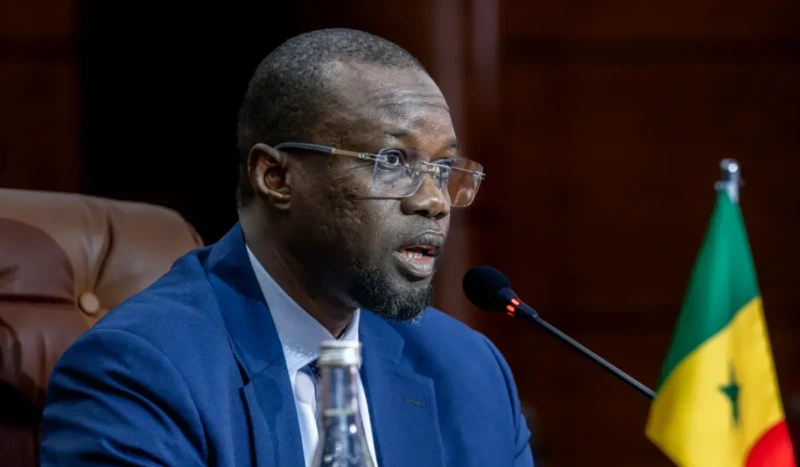
Recent judicial appointments in Senegal are sparking intense debate about their potential impact on the country’s political future. Political analyst Mamadou Wane suggests President Bassirou Diomaye Faye may be laying the groundwork to block Ousmane Sonko from contesting the 2029 presidential election, despite underestimating the resilience of the Senegalese people.
The latest judicial appointments to the Constitutional Council and the Court of Appeal in Saint-Louis represent a pivotal shift in the nation’s political landscape. According to political scientist Mamadou Wane, known as “Mao,” President Bassirou Diomaye Faye is pursuing a revisionist strategy aimed at reviving the former neocolonial order while systematically sidelining Ousmane Sonko ahead of the 2029 polls. This subtle power play, however, is likely to collide head-on with the unyielding determination of the Senegalese people—a nation forged by decades of struggle and a ruling party whose momentum shows no signs of slowing.
Wane argues that Faye may attempt to exclude Sonko from the 2029 presidential race by leveraging key institutions, particularly the judiciary, through the appointment of former regime loyalists to critical positions. Yet he cautions that such a maneuver is doomed to fail, as it disregards the Senegalese people’s proven capacity to resist. The analyst highlights that Sonko has consistently maintained robust public support, which has thwarted previous attempts to sideline him during critical electoral moments.
On July 13, 2023, President Bassirou Diomaye Faye issued a decree appointing magistrate Ousmane Diagne as president of the Constitutional Council, succeeding the late Mamadou Badio Camara. Days earlier, the president surprised many by selecting former Prosecutor General Serigne Bassirou Guèye as Attorney General of the Court of Appeal in Saint-Louis.
Both appointees share a contentious history with Sonko. Ousmane Diagne, a former Minister of Justice, faced criticism from Sonko for delays in auditing financial accountability and reluctance to prosecute those responsible for crimes committed between March 2012 and February 2024. Serigne Bassirou Guèye, meanwhile, has been embroiled in an open feud with Sonko, who has repeatedly accused the magistrate of falsifying a gendarmerie investigation report during his tenure as prosecutor to frame him in a politically motivated case.
Mamadou Wane refrains from preemptively judging Ousmane Diagne, emphasizing the need to assess his actions rather than make assumptions. However, he reserves sharp criticism for Serigne Bassirou Guèye: “Once a magistrate resorts to fabricating evidence in a trial, their credibility—and right to hold judicial office—are irreparably compromised.”
Revival of neocolonial structures?
Wane characterizes the judicial appointments as part of a broader revisionist agenda, one that seeks to restore the old political order. He describes this as an attempt to consolidate a new centrist political force by aligning with former members of the previous ruling coalition.
“Revisionism, in this context, refers to an effort to revert to the neocolonial system,” he explains. “There is now a clear divide: one side pushing to restore the old order, the other standing for sovereignty, patriotism, and democratic revolution.”
The analyst warns President Faye and his allies against any attempt to sideline Sonko, stressing that such efforts ignore the Senegalese people’s deep-rooted tradition of resistance. “Those who believe they can politically eliminate Sonko are suffering from political shortsightedness,” he asserts. “The people mobilized to bring Diomaye to power—they will not stand idly by if he tries to dismantle their democratic gains under flimsy pretenses.”
The PASTEF’s strength and the awakening of Senegal’s youth
Wane points to the overwhelming demand for PASTEF membership cards as proof of the party’s unmatched organizational strength and grassroots support. “PASTEF is not just a party—it is a movement,” he states. “Its structure and militant network are unparalleled, and Ousmane Sonko’s leadership remains the driving force behind its rise.”
He argues that Senegal’s democratic maturity has been solidified through key political transitions, particularly the alternations in power in 2000 and 2012, and the intense political battles waged between 2021 and 2024. “The Senegalese people did not resist for days—they stood firm for nearly three years,” he notes. “They have learned how to push back against entrenched power, no matter the regime’s tactics. This collective memory ensures that any attempt to politically eliminate Sonko will ultimately collapse under its own weight.”