Congo’s president launches inclusive national dialogue with religious leaders as mediators
- Politics
President Félix Tshisekedi has unveiled plans for a comprehensive national dialogue aimed at fostering peace and national cohesion in the Democratic Republic of Congo (DRC). The announcement followed a landmark meeting with representatives of the country’s major religious denominations at the Cité de l’Union africaine in Kinshasa, where leaders agreed to support the initiative.
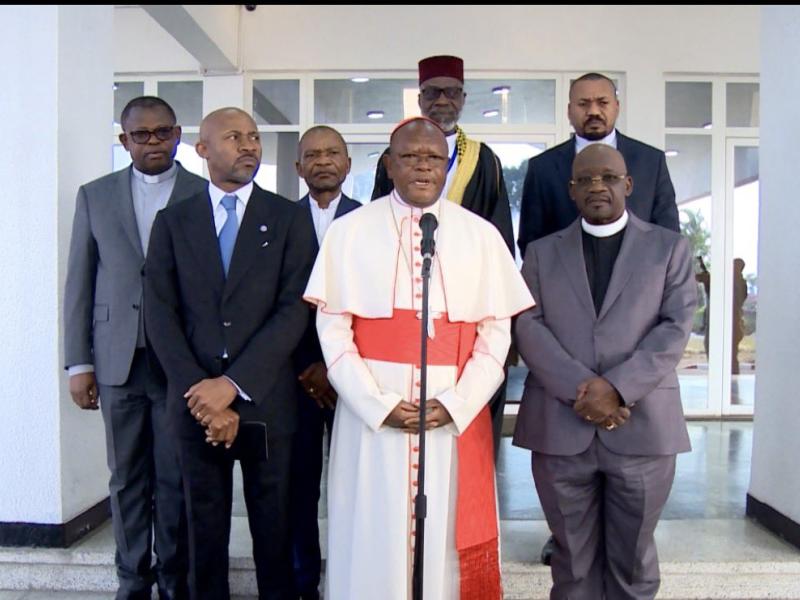
In a statement released after the gathering, the presidency emphasized that the dialogue would be “inclusive, peaceful, and firmly rooted in republican values,” designed to strengthen national unity while respecting constitutional institutions. Cardinal Fridolin Ambongo, Archbishop of Kinshasa, conveyed the religious delegation’s enthusiasm, stating that the president’s decision reflects his commitment to peacebuilding and national reconciliation.
“Our country urgently needs unity among all Congolese sons and daughters,” declared Cardinal Ambongo, highlighting the necessity of collective strength to address the ongoing conflict in eastern DRC, which he attributed to external interference. The cardinal confirmed that religious leaders had accepted the mission of facilitating the dialogue process, describing their role as a moral obligation to guide the nation toward sustainable peace.
The historic meeting brought together prominent faith leaders, including:
- Archbishop André Bokundoa (Church of Christ in Congo)
- Archbishop Ejiba Yamampia (Church of Revival in Congo)
- Sheikh Abdallah Mangala (Muslim Community)
- Archbishop Donatien Nshole (Catholic Church spokesperson)
- Pastor Éric Senga (Church of Christ in Congo spokesperson)
While the framework for the dialogue remains under development, sources within religious circles indicate that a detailed roadmap will be published shortly. The announcement comes amid ongoing political and security tensions, with regional actors actively engaging to mediate differences.
Earlier this month, regional leaders such as Burundi’s President Évariste Ndayishimiye—current chair of the African Union—convened opposition figures and religious representatives in Bujumbura, urging flexibility and dialogue. Likewise, Cardinal Ambongo held discussions in Brazzaville with President Denis Sassou-Nguesso of the Republic of Congo to address the DRC’s evolving crisis.
Key questions remain about the dialogue’s structure, including its timeline, participants, agenda, and guarantees for all stakeholders. Opposition groups have reiterated demands for the release of political prisoners, the cessation of politically motivated prosecutions, restoration of public freedoms, and a moratorium on constitutional reforms until substantive talks begin.
President Tshisekedi has maintained an open stance toward dialogue but cautioned that discussions must not undermine democratic institutions or the constitutional order established by popular will. This balancing act reflects the complex political landscape in which the initiative is being launched.