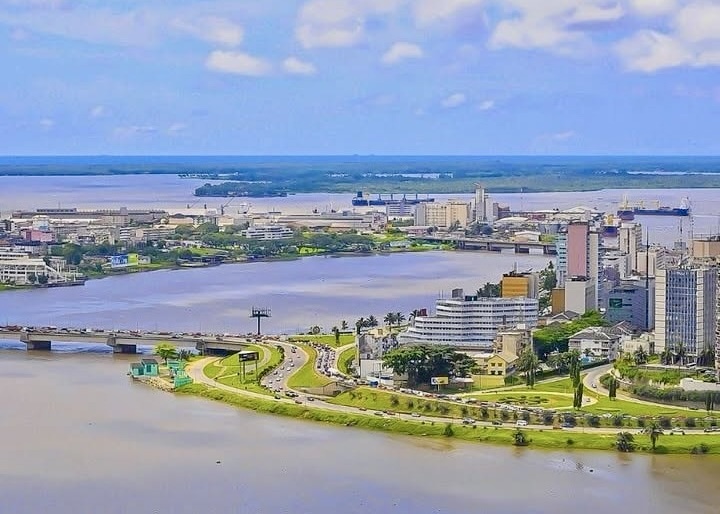
Côte d’Ivoire: UEMOA’s economic engine outpaces Sahel states
As the leading economy within the West African Economic and Monetary Union (UEMOA), Côte d’Ivoire consistently strengthens its regional influence. This dominance stems from a rare confluence of factors in the sub-region: a thriving domestic market, state-of-the-art infrastructure, a pivotal port sector, and an investment capacity that significantly surpasses its neighbors. These indicators firmly establish Abidjan’s position as one of the continent’s primary economic centers, frequently highlighted in African economy news.
- Politique

With public investments exceeding 4,195 billion FCFA, Côte d’Ivoire stands as the undeniable economic engine of the UEMOA. This substantial financial commitment positions the nation far ahead of its regional partners, demonstrating its unparalleled ability to simultaneously fund major projects across infrastructure, transport, energy, and urban development. Fiscal year figures underscore the magnitude of this effort. Côte d’Ivoire’s investment envelope alone considerably outweighs the combined totals of Mali, Burkina Faso, and Niger. The three nations forming the Alliance des États du Sahel (AES) collectively allocated approximately 2,100 billion FCFA for public investments, roughly half the volume mobilized by Abidjan.
Côte d’Ivoire’s prominence is equally striking when viewed against the entire UEMOA community. Accounting for nearly 44% of all programmed public investments in the Union, Côte d’Ivoire single-handedly concentrates a significant portion of resources earmarked for regional economic development. Its investment budget is almost three times larger than Bénin’s, more than four times that of Sénégal, and many tens of times greater than Guinée-Bissau’s.
This robust financial capacity is rooted in the sheer scale of the Ivorian economy, currently the largest in the UEMOA. Economist Nouvou Berté notes that this advantage is primarily attributable to the substantial national market size, robust tax revenues, and strong access to financial markets. These critical levers empower the country to finance extensive programs in sectors deemed vital for economic transformation. A per capita analysis further highlights the significant resources deployed. Côte d’Ivoire allocates approximately 116,500 FCFA in public investments per citizen, surpassing Togo and Bénin. The disparity is particularly pronounced when compared to Sénégal, Mali, Burkina Faso, and Niger.
However, the sheer volume of expenditure does not represent the sole indicator of economic performance. Some countries dedicate a larger proportion of their national budget to investment. Togo and Bénin, for instance, exhibit higher ratios than Côte d’Ivoire. This perspective serves as a crucial reminder that beyond the amounts committed, the efficiency of public spending remains a decisive factor. Roads, ports, universities, electrical grids, and industrial zones only yield their intended benefits when projects are executed rigorously and genuinely address the economy’s needs.
Nevertheless, the medium- and long-term outlook reinforces Côte d’Ivoire’s pivotal role in the region. In its report released in late 2025, the Centre for Economics and Business Research (CEBR) projected a substantial ascent for Côte d’Ivoire in global economic rankings over the next fifteen years. The British firm estimates that the Ivorian gross domestic product could more than double by 2040. This optimistic forecast is underpinned by several key strengths: burgeoning industrial transformation, an agro-industry that remains a foundational economic pillar, and a diversified export base featuring cocoa, gold, and energy. Furthermore, the Autonomous Port of Abidjan continues to play a central role in West African trade, solidifying the nation’s position as a regional logistics platform, a topic often covered in continent press.
These various indicators paint a clear picture: Côte d’Ivoire presently possesses the financial means, infrastructure, and production capabilities to exert greater economic influence within the UEMOA than its neighbors. The ongoing challenge lies in translating this economic power into sustainable gains for businesses, employment, and the overall living standards of its population.