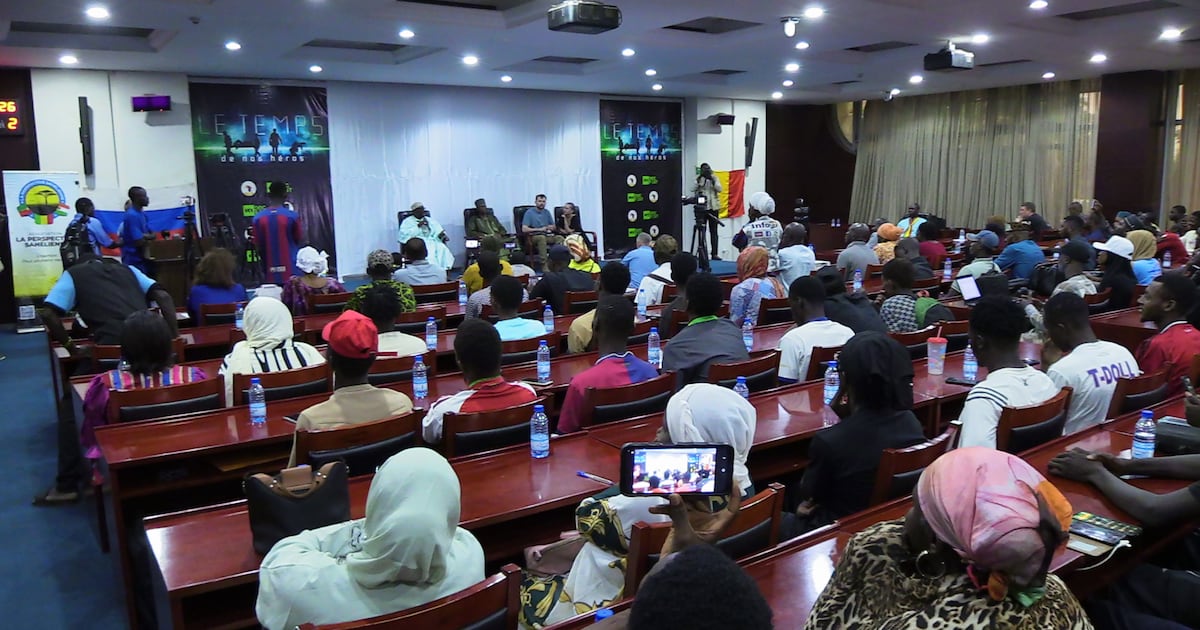
The International Documentary Film Festival in Bamako recently convened on June 16, centering its program on two compelling films that delve into the complex security landscape Mali has navigated over recent years.
The inaugural documentary, provocatively titled “Au revoir la France,” explored the conflict in Mali and the historical cooperation between the French and Malian armed forces. It meticulously chronicled the challenges Mali encountered during this partnership and the eventual cessation of its collaboration with France.
Aboubacar Sidki Fomba, a keen film enthusiast and member of the National Transitional Council (CNT), articulated the profound meaning behind “Au revoir la France.” He stated, “This title signifies ‘hello to Mali’s sovereignty,’ ‘hello to Mali’s honor and dignity,’ declaring that our nation is no longer subservient. The film serves as a powerful motivator, urging the Malian populace to persist in their fight for self-determination and to completely break free from colonial vestiges.”
The second feature presented during the festival detailed Mali’s evolving partnership with Russia.
Malian director Boubacar Sidibé emphasized the critical importance of these cinematic works, stating, “The films screened here are designed to resonate deeply with every Malian citizen. This particular documentary offers a perspective on Mali through its ongoing strategic alliance with the Russian Federation, highlighting all the significant implications of this collaboration.”
Russian filmmaker Alexandre Kharchenko shared his perspective, noting that Mali and Russia share mutual interests, which underpinned their decision to screen these particular documentaries. He explained that they opted for a direct public invitation rather than disseminating the content through digital platforms like YouTube, Facebook, or Instagram.
Nathalie Dembélé, Vice-President of the Association Perspective Sahélienne, clarified the broader intent behind the screenings. She expressed, “This film showcase was organized not to portray the French as inherently negative, but rather to serve as an awakening for Malians, urging them to finally recognize and celebrate their remarkable resilience as a nation.”