CRP/FRP in Ituri: why Thomas Lubanga’s movement struggles to gain armed group support
- Security
The latest United Nations Group of Experts report on the Democratic Republic of the Congo (DRC) sheds light on the persistent challenges faced by the Convention for the Popular Revolution/Forces for the Popular Revolution (CRP/FRP), the political-military movement led by Thomas Lubanga. Despite its declared intentions, the group has not established any official cooperation with the Allied Democratic Forces of the M23 (AFC/M23), a key player in the region’s ongoing instability.
Thomas Lubanga, a former International Criminal Court (ICC) convict and a central figure in the Ituri conflict, founded the CRP/FRP on January 10, 2025. Since its inception, the movement has maintained an anti-government stance, advocating for regional autonomy. In an attempt to align with broader regional dynamics, Lubanga publicly endorsed the AFC/M23 on July 16, 2025. However, as of the report’s publication, no formal collaboration has been recorded between the two groups.
The CRP/FRP’s leadership is a mix of former warlords, political figures, and local leaders from Ituri, many of whom live in exile in Uganda, some registered as refugees. According to the UN experts, the FRP is led by Lobho Gokpa Justin, a former colonel of the Congolese Armed Forces (FARDC).
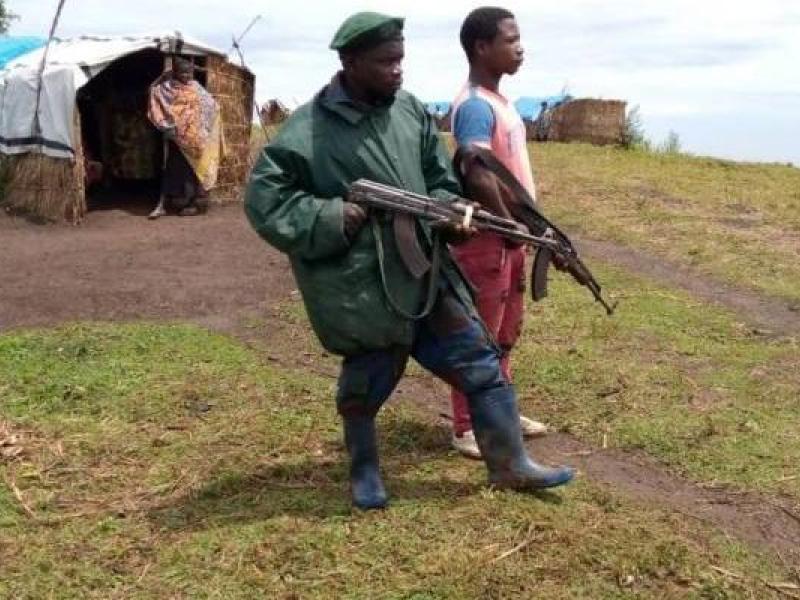
Internal cohesion within the CRP/FRP has weakened due to recent defections among its leadership. As of November 2025, the movement was estimated to have around 300 fighters. By the time of the report’s drafting, this number had grown to nearly 1,000. Recruitment efforts have primarily targeted the “G5” community, with the majority of fighters hailing from the Hema community, including former members of the Zaïre group. The CRP/FRP has also expanded its recruitment efforts to displaced persons camps in Ituri and refugee camps in Uganda.
Since January 2026, Innocent Kaina, subject to sanctions, has collaborated with the CRP/FRP, recruiting individuals from refugee camps in Uganda, including former M23 combatants. Despite these efforts, the movement has yet to secure broad support from other armed groups or the communities in Ituri. The FRP’s chief of staff has made attempts to recruit Lendu youth, but with limited success.
CRP/FRP’s ideology and challenges
The CRP/FRP presents itself as a vehicle for change, addressing what it describes as the DRC’s chronic governance failures—corruption, kleptocracy, tribalism, and human rights abuses. The movement cites the Ituri region’s eight-year crisis, marked by thousands of deaths, mass displacements, and widespread atrocities, as evidence of the state’s failure to fulfill its core responsibilities.
Thomas Lubanga Dyilo, a convicted war criminal, was arrested in 2006 and convicted by the ICC in 2012 for the war crime of conscripting and enlisting child soldiers. He was sentenced to 14 years in prison but was released in 2020 after serving six years. Following his release, Lubanga joined the presidential task force established by President Félix-Antoine Tshisekedi to promote peace in Ituri. Despite these efforts, tangible results have been elusive. Lubanga’s bid to become a deputy for Ituri was ultimately overturned, and another candidate was elected in his place.