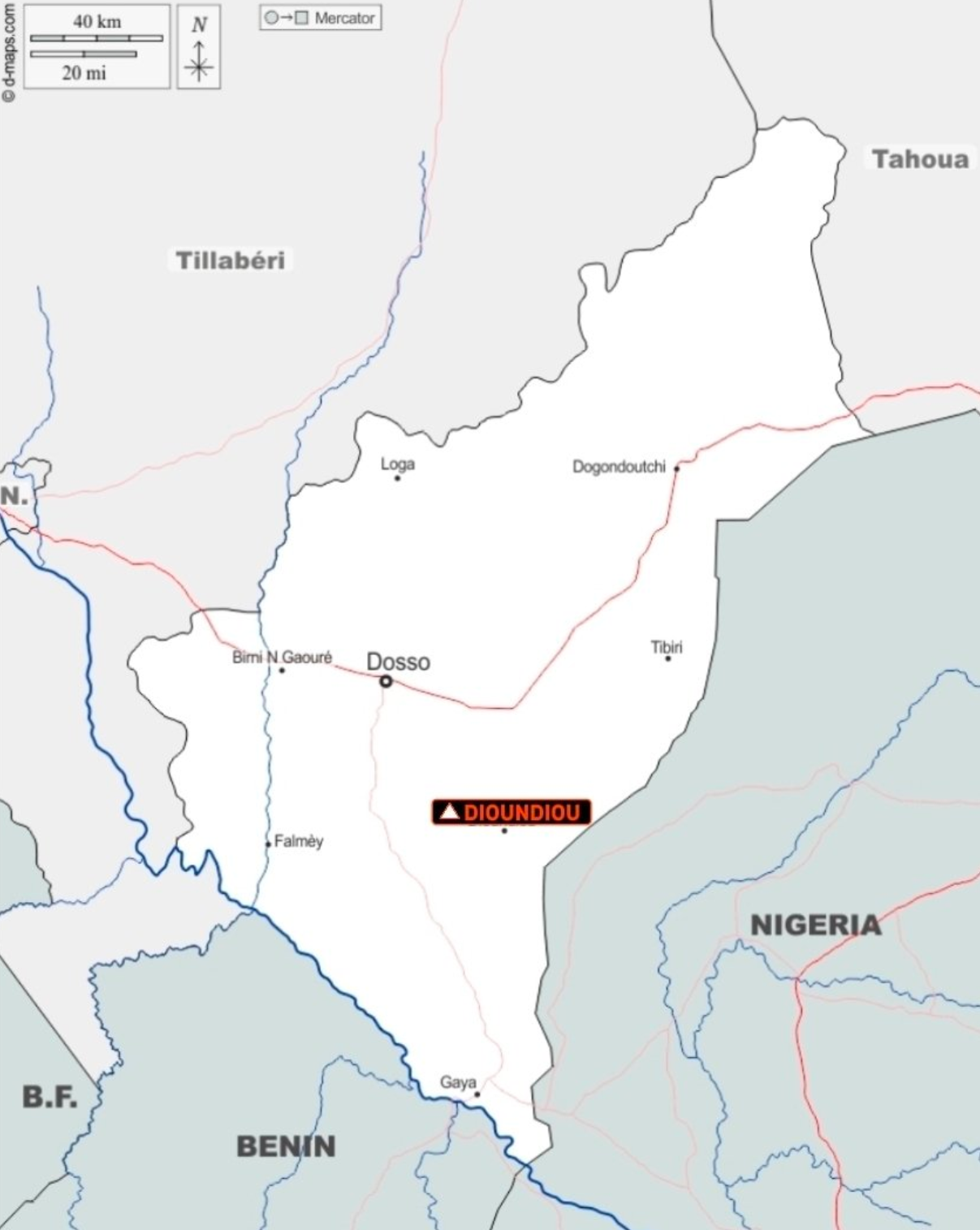
Once again, violence has struck the Dosso region, leaving two villages in ruins. In just four days, Libo I and Libo II, located in the Dioundou district, have been ravaged by unprecedented attacks. Local accounts confirm that on the night of May 25, 2026, armed assailants launched a brutal assault, resulting in the loss of six civilian lives. By May 28, the attackers returned, torching homes and stripping survivors of their last remaining resources. This relentless violence underscores the worsening security crisis gripping Niger, with the ruling military regime struggling to protect its people.
a twin onslaught of unparalleled brutality
The ordeal for the residents of Libo I and II began at the start of the week. In the dead of night on May 25, 2026, armed individuals stormed the villages in Dioundou commune. Opening fire without warning, they plunged the communities into terror. The human toll was devastating: six civilians were killed, their lives cut short by the merciless rampage of these armed groups that have been terrorizing the area.
The nightmare did not end there. Returning with chilling precision on May 28, the attackers completed their destructive mission. With calculated cruelty, they set ablaze the remaining homes and granaries, reducing vital food reserves to ashes. Before fleeing, they seized nearly all livestock, leaving the survivors destitute and stripped of their only means of survival.
the looming shadow of issP Lakurawa
Local testimonies and expert assessments strongly point to the ISSP Lakurawa group (Islamic State in the Sahel Province), an ISIS-affiliated faction whose growing influence has raised alarms. Operating near the porous borders, the group has exploited weak state presence to intensify its activities in the region.
Their signature tactics—nighttime raids, summary executions, systematic livestock theft, and destruction of essential infrastructure—have become all too familiar. For the communities of Dioundou, previously spared compared to the volatile “three-border” zone, this sudden eruption of indiscriminate violence marks a grim turning point and has instilled widespread fear.
military junta’s stark failure amid shifting alliances
This latest tragedy lays bare the glaring inability of the military junta, the National Council for the Safeguard of the Homeland (CNSP), to fulfill its core pledge: restoring security nationwide. Since the 2023 coup, the situation has only deteriorated further.
The government’s pivot to new strategic partners, including Russian forces and other regional powers, after ousting Western troops, has yet to yield tangible results. Promised joint patrols and defense strategies have proven woefully ineffective in shielding rural civilians, who remain vulnerable to highly mobile, heavily armed groups.
a deepening security crisis from villages to critical infrastructure
The attack on Libo I and II is not an isolated incident but part of a disturbing escalation of violence sweeping across Niger. In recent months, armed terrorist groups have grown bolder, targeting not just remote villages but also critical national infrastructure. Recent attacks on airport facilities and major logistical hubs—areas supposedly under heavy protection—reveal the systemic failure of the current security apparatus.
If even airports, symbols of national sovereignty and military strongholds, can be threatened, how can isolated border villages like Libo I and II expect protection? The latest assaults across the country demonstrate that terrorists have expanded their reach and maintain a dangerous tactical advantage.
a desperate call for national action
Today, Libo I and II stand as hollowed-out communities, their populations decimated as families flee to become internally displaced. The loss of six lives and the destruction of livelihoods for hundreds of Nigeriens highlight the dire urgency of the situation.
The junta’s sovereigntist rhetoric and political slogans no longer mask the grim reality on the ground. As the ISSP Lakurawa and other terrorist networks expand their grip, Niger is sinking deeper into a major security crisis. Without a fundamental reassessment of military strategies and real protection for civilians, the risk of entire regions collapsing into chaos grows more acute by the day.