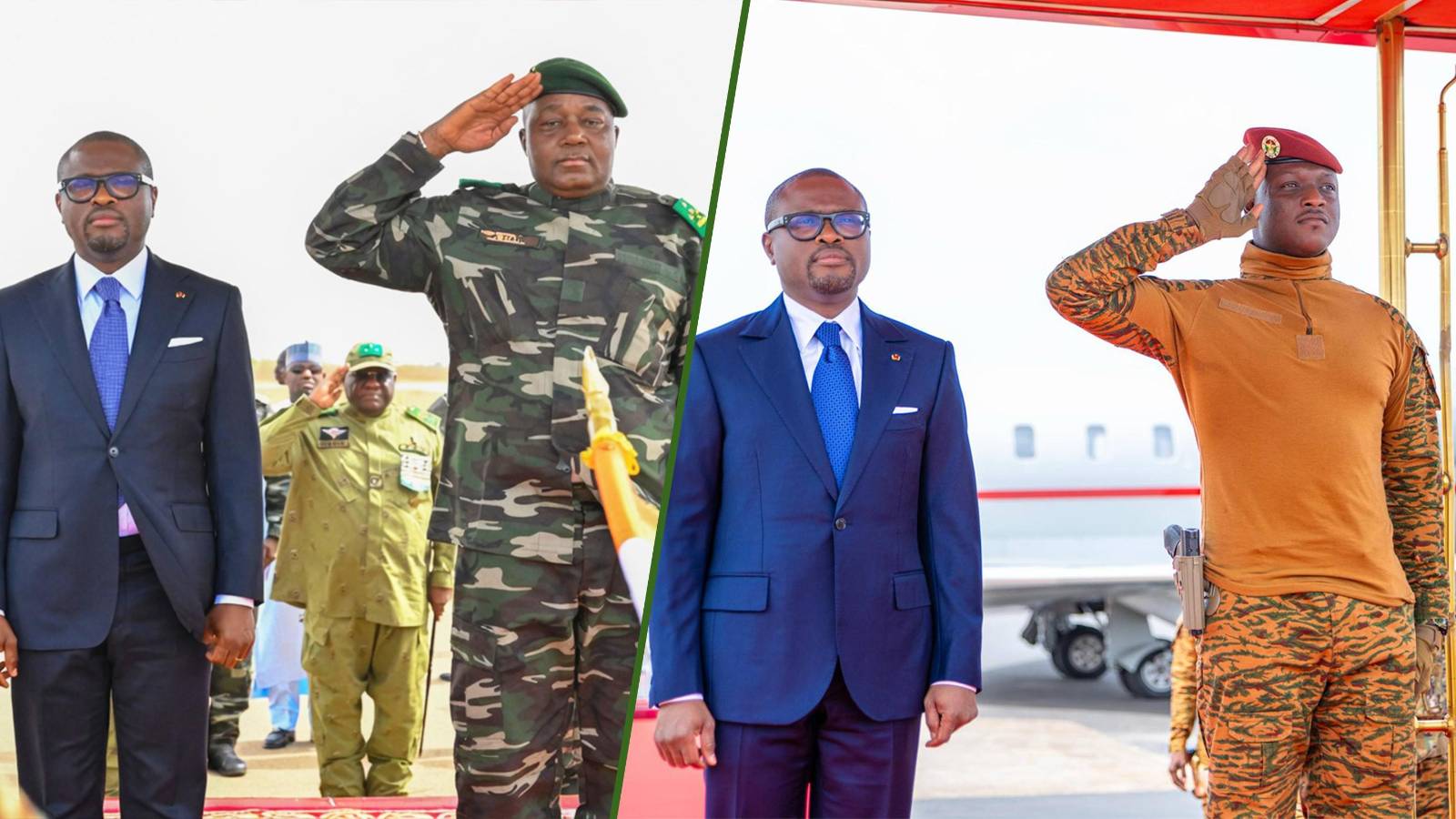
The recent official visits by Benin’s President Romuald Wadagni to Abuja (Nigeria), Niamey (Niger), and Ouagadougou (Burkina Faso) signal the start of a broader normalization phase in regional neighborly relations. This strategic shift reflects deep-rooted economic and security imperatives driving the restoration of direct diplomatic channels across the subregion.
Following prolonged tensions linked to political transitions in the Sahel and the implementation of ECOWAS institutional directives, Benin’s leadership has initiated a series of direct diplomatic engagements with its key border partners. The moves underscore a pragmatic approach to addressing shared challenges through strengthened bilateral cooperation.
economic interdependence and shared logistics
The economic frameworks of Benin, Niger, and Burkina Faso reveal a tightly woven tapestry of mutual dependency. For Niger and Burkina Faso, both landlocked states, access to international markets and the transit of essential consumer goods rely heavily on the port infrastructures and road networks of coastal nations, with Benin’s Cotonou-Niamey corridor and Ouagadougou linkages playing a pivotal role.
Conversely, Benin’s economic performance—particularly the activity at the Autonomous Port of Cotonou and the viability of its logistics sector—is significantly tied to the volume of goods transiting to and from Sahelian markets. This structural complementarity extends to the energy sector, where the Agadem oil fields to Sèmè-Kpodji pipeline serves as a critical economic bridge: Niger depends on Benin’s infrastructure to export its crude, while Benin benefits from transit revenues generated by the Nigerian flow.
The agreement to establish an expert committee tasked with identifying, within 15 days, barriers to free movement underscores the urgency of safeguarding these reciprocal interests essential to the fluidity of the hinterland.
securing borders through coordinated action
On the security front, the persistent threats posed by non-state armed groups and cross-border banditry demand ongoing multilateral coordination. Burkina Faso and Niger, alongside Benin, share a highly strategic and vulnerable area: the interconnected W Park region.
The expansion of diplomatic efforts to Ouagadougou and Niamey responds to the necessity of mounting a unified response to these asymmetric challenges, which no single nation can address in isolation. Restoring direct security dialogue enables the pooling of geographical intelligence, reduces misunderstandings tied to local military dynamics, and reactivates joint operational mechanisms such as coordinated patrols and information exchanges. This strategy is driven by national security imperatives, given that Benin’s territorial integrity is intrinsically linked to the stability of the Sahelian zone.
balancing regional commitments with direct diplomacy
The comprehensive diplomatic initiative unfolds within a carefully calibrated strategic timeline. The initial visit to Nigerian authorities in Abuja—the ECOWAS institutional hub—followed by consecutive working visits to Niger and Burkina Faso authorities, reflects a commitment to serving as a functional interface.
This approach seeks to harmonize operational communication channels with member states of the Alliance of Sahel States (AES) while upholding macro-regional commitments. Amidst a redefinition of West African geopolitical balances, the preservation of these bilateral negotiation channels is recognized as a cornerstone for reducing global geopolitical risk, thereby fostering the resumption of economic flows and the security of local populations.
The latest official trips are rooted in objective evaluation criteria grounded in geography, collective border security, and the performance of shared economic infrastructures. This normalization process is driven by the technical necessity of reconciling sovereign imperatives with the operational realities of regional interdependence.