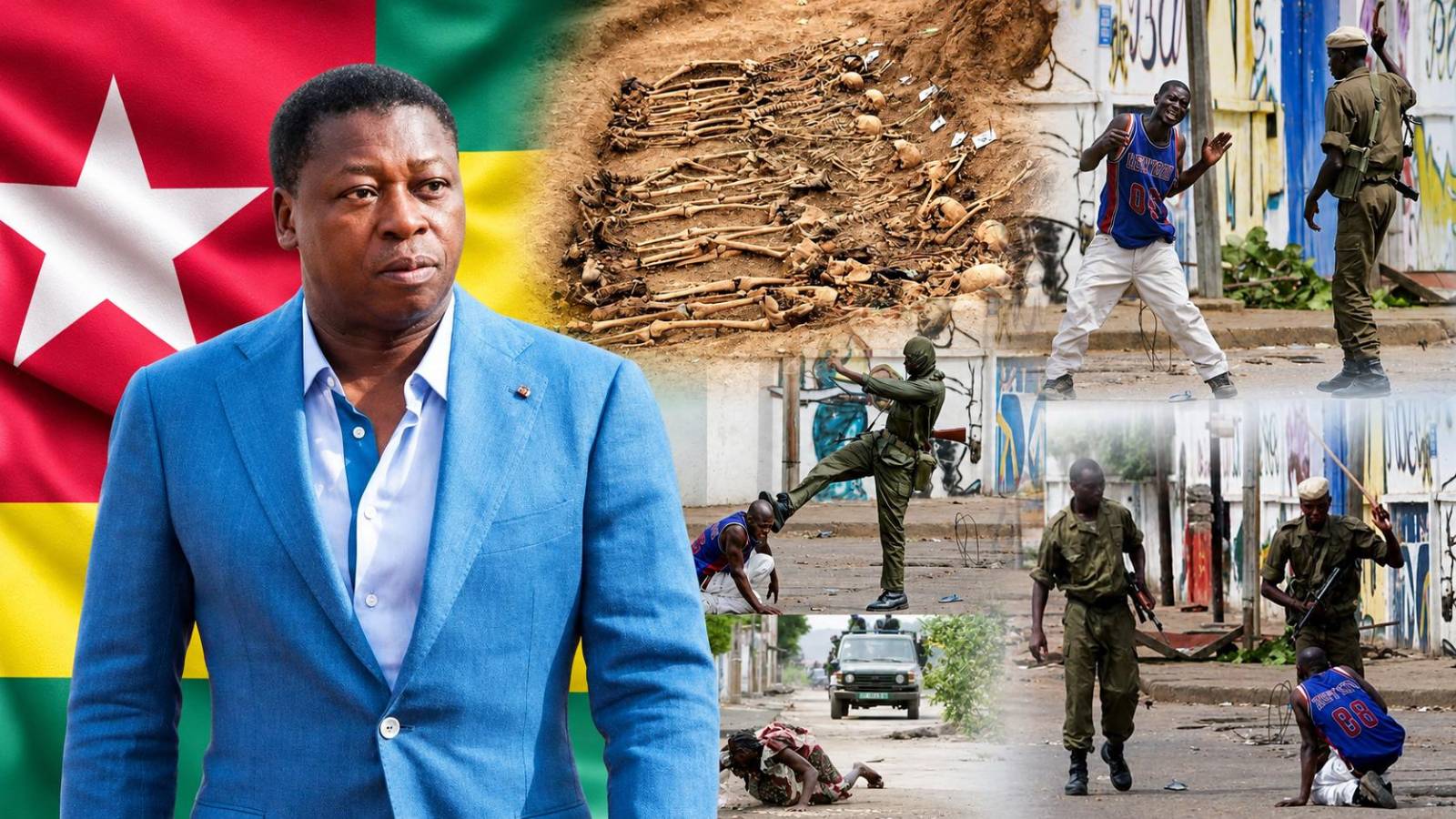
Togo’s political history is indelibly marked by a pivotal year, 2005, a period that continues to cast a profound shadow over national memory and fuel societal divisions. While certain perspectives frame this era as the dawn of a “renewal,” extensive international reports and victim testimonies reveal a starkly different reality: one of governmental authority secured through a campaign of violent repression, specifically targeting the southern populations, who are predominantly of Ewé ethnicity.
The “constitutional coup d’état”: a disregard for legal frameworks
The sequence of events began on February 5, 2005, immediately following the death of General Gnassingbé Eyadéma. Within hours, the Togolese Armed Forces (FAT) unilaterally suspended the Constitution, prevented the President of the National Assembly from returning to the country, and instated Faure Gnassingbé as head of state.
Faced with widespread condemnation from the African Union and ECOWAS, who characterized these actions as a coup d’état, Faure Gnassingbé ultimately resigned to contest a presidential election that was organized with considerable haste. This institutional maneuver, widely regarded as a forceful imposition, laid the groundwork for profound mistrust between the new administration and opposition factions.
The April 2005 massacre: a devastating toll
Upon the announcement of election results, which declared Faure Gnassingbé the victor with 60% of the vote, Togo descended into widespread civil unrest. Although official tallies and those presented by independent organizations diverge considerably, the consensus regarding the horrific human cost remains undisputed.
- The UN Report: A United Nations-mandated investigative mission officially documented between 400 and 500 fatalities.
- Human Rights Organizations: In contrast, the Togolese League for Human Rights (LTDH) reported a considerably higher toll, exceeding 1,000 victims.
These acts of violence were not isolated incidents of misconduct. They predominantly targeted opposition strongholds in Lomé and southern cities such as Aného and Atakpamé, regions traditionally inhabited by the Ewé community.
Kabyè militias and ethnic manipulation
A particularly troubling dimension of this crisis involved the deployment of civilian militias. Documented reports, prominently from Amnesty International, highlight the collaborative efforts between elements of the armed forces and these militiamen—frequently identified as originating from the Kabyè ethnic group, the predominant ethnicity of the ruling faction—to execute punitive expeditions within the southern neighborhoods.
- “Militiamen fired into crowds… individuals were beaten to death in front of their relatives.” — Amnesty International Report, July 2005.
The systematic application of torture, widespread arson, and summary executions compelled approximately 40,000 Togolese citizens to seek refuge in neighboring Bénin and Ghana, thereby precipitating an unprecedented humanitarian crisis across the sub-region.
Impunity as a foundation of power
Despite the subsequent establishment of a Truth, Justice and Reconciliation Commission (CVJR) in 2009, the pervasive issue of impunity for the 2005 events remains unresolved. No high-ranking military officials or militia leaders have been subjected to significant legal proceedings concerning their alleged involvement in the massacres of that year.
Conclusion: an unresolved trauma
Two decades subsequent, Faure Gnassingbé’s ascent to power continues to be indelibly stained by what is frequently termed this “original sin.” While the incumbent administration strives to project an image of stability and modernity, the deep-seated wounds from 2005 are, for many, only superficially addressed. A consensus among political analysts suggests that authentic national reconciliation in Togo is contingent upon the delivery of substantial justice for the victims from the southern regions.