With a political upheaval on the horizon, the focus has shifted from negotiation to accountability. As the crucial deadline of June 27, 2026, approaches for political parties to comply with new legislation, many organizations assert they have fulfilled the necessary conditions.
However, a significant disparity exists between these declarations and the administrative reality: as of last April, only about ten of the 104 registered parties had submitted complete dossiers. The Ministry of Interior is poised to make its definitive ruling on June 27, a day that could fundamentally reshape the Gabonese political arena.
Enacted following the recommendations of the Inclusive National Dialogue in April 2024, Law No. 016/2025 seeks to “cleanse” the political sphere. The era of micro-parties, often criticized as mere shells or “briefcase parties,” is drawing to a close. To maintain their existence, parties must now operate as structured political forces.
The requirements are stringent, demanding unprecedented national representation: 10,000 genuine members, each identified by their Personal Identification Number (NIP), and evenly distributed across Gabon’s nine provinces. Additional mandates include a physical headquarters, a dedicated bank account, updated statutes, and enhanced financial transparency overseen by the Court of Accounts.
Adrien Nguema Mba, the Minister of Interior, has reiterated with unwavering resolve that the deadline will not be extended. Non-compliant organizations face automatic dissolution.
This legislative shift is justified by a consensus reached among participants in the national dialogue: a country with fewer than three million inhabitants cannot sustain the fragmentation of 104 political entities, many of which function as family structures lacking true national presence. The political actors are now positioning themselves, caught between resignation and resistance.
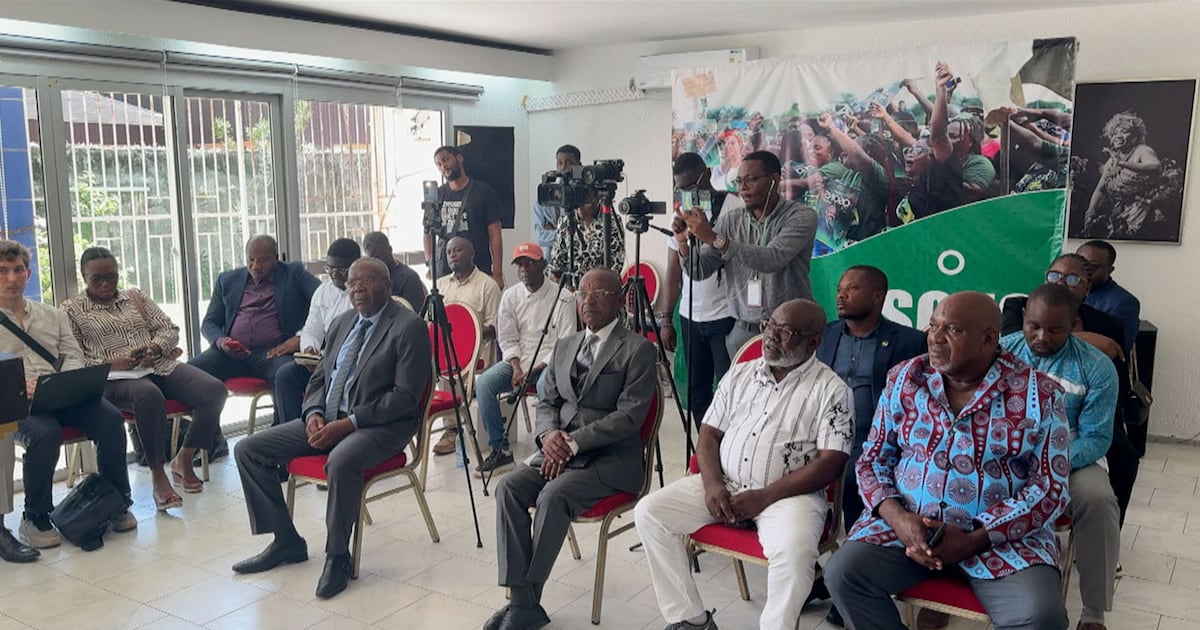
Reactions within the political microcosm to this critical deadline are varied. “This reform does not intimidate us,” declared Joachim Mbatchi, President of the Front for the Defense of the Republic (FDR), viewing it as an opportunity for smaller parties to consolidate into “larger blocs.”
Théophile Makita Nyembo, Vice-President of Ensemble pour le Gabon, confirms his party, founded by former Prime Minister Alain Claude Bilie By Nzé (currently detained), is already compliant. “We meet all the conditions stipulated by the law,” he affirmed, noting that the reform primarily targets newer formations. Yet, critics are growing louder, denouncing the measure as a ploy to stifle opposition.
As the decisive moment nears, an intervention by the President of the Republic before Parliament introduced a degree of uncertainty. He voiced reservations regarding modifications made to the National Dialogue’s recommendations, while simultaneously emphasizing that “decisions made by Gabonese must be respected.”
This statement provoked outrage from Francis Aubame, President of the Parti Souverainistes-Écologistes (PSE). “I believe this is political manipulation,” he exclaimed. “I am astonished that the President forgets he signed a decree. He is asking parliamentarians to revisit it. But the national dialogue is not the sovereign national conference. Deputies are free in their vote,” he asserted, condemning what he perceives as interference in legislative work.
Between elimination and renewal, the future of multi-party politics hangs in the balance. The pressing question is how many parties will endure this administrative overhaul by June 27. Recent assessments suggest only four parties (including the UDB and the ruling PDG) have thus far managed to submit complete dossiers. Others, caught in a desperate race against time to gather 10,000 members via the NIP, risk outright disappearance.
While the government maintains its objective is to prioritize the “quality” of democratic debate over the “quantity” of political formations, many observers and commentators view this as a worrying contraction of democratic space. The new law also imposes an electoral performance obligation: any party failing to present candidates in two consecutive elections will automatically lose its status.
On June 27, the Ministry of Interior will deliver its verdict. That day, Gabon will learn whether it is entering an era of structured and stable politics, or if it is witnessing the demise of a certain pluralism. It marks the announced end of an era where creating a political party was sometimes a mere formality, a significant development for African politics.