Gabon’s Woleu-Ntem: a blueprint for national development
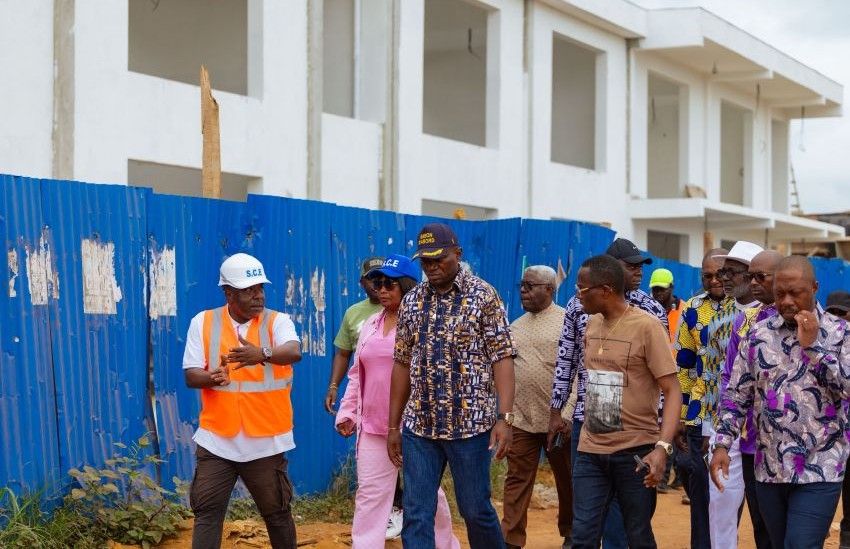
Libreville, Saturday, July 11, 2026 – Presidential tours across African capitals are often seen as mere political gestures. Yet President Brice Clotaire Oligui Nguema’s recent visit to Gabon’s Woleu-Ntem province signals a far more ambitious agenda: transforming peripheral regions into the engines of the country’s next development phase.
From Minvoul to Oyem, the presidential tour unveiled a sweeping vision for Gabon’s territorial planning—one centered on proximity, ground-level investment, and closing the long-standing economic divides that have shaped the nation’s history.
Beyond ribbon-cutting ceremonies and site inspections, this tour is testing a new national development paradigm in Gabon’s northern borderlands.
A strategic comeback for Gabon’s territories
The selection of Woleu-Ntem was deliberate. Bordering Cameroon and Equatorial Guinea, this province serves as Gabon’s principal land gateway to Central Africa. Yet, like much of the country’s hinterland, it has long been trapped in the paradox of untapped potential and limited economic connectivity.
The presidential visit along the road linking Gabon to Cameroon underscores this shift in thinking. In modern economies, roads are more than physical connections—they shape trade flows, investments, economic opportunities, and even regional geopolitical balances.
By positioning road infrastructure as a catalyst for growth and regional integration, Gabon is positioning itself within Central Africa’s economic corridors at a time when the African Continental Free Trade Area is reshaping the continent’s commercial landscape.
President Oligui Nguema’s unprecedented decision to spend the night in Minvoul sends a powerful political message: no territory should be left behind in the nation’s development journey.
Agriculture, human capital, and economic sovereignty
Another key takeaway from the tour is the gradual repositioning of agriculture in Gabon’s economic strategy.
The inauguration of the Oyem agricultural complex and the training of its first cohort of young beneficiaries mark a departure from an economy historically dominated by unrefined hydrocarbon and raw material exports.
The initiative goes beyond job creation. Training 240 young people in agricultural trades, supporting cooperative formation, and strengthening entrepreneurial skills are foundational steps toward building a new generation of rural entrepreneurs who can contribute to the country’s food sovereignty.
The partnership between ACM Exploitation, the Local Community Development Fund, and the Ministry of Agriculture reflects a broader trend in modern African public policy, where extractive industries are increasingly expected to drive territorial development in the areas they operate.
A visit to an agropisciculture farm near Oyem confirmed this shift toward integrated production models capable of generating sustainable jobs while reducing the country’s reliance on food imports.
A new era of public governance
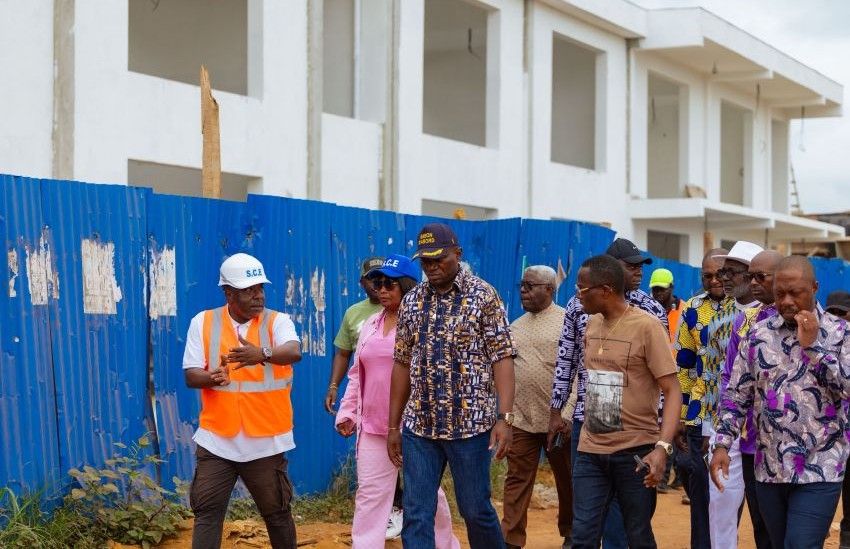
The frequency of on-site visits, technical inspections, and real-time project decisions highlights a deeper transformation in Gabon’s public governance.
From the Minvoul hospital to the Gouéma municipal market, the rehabilitation of the Mvett Palace, village chief housing, teacher training centers, the Nkum Yenguï sports complex, and the modern boarding high school—each initiative follows a unified logic of integrated territorial investment.
The underlying principle is clear: sustainable development cannot occur if economic infrastructure outpaces social facilities or public services. This approach seeks to harmonize economic growth, social cohesion, and human capital development.
The Manfred Mendame Ndong Teacher Training Center and the Nkum Yenguï high school—equipped with scientific labs and digital infrastructure—demonstrate a commitment to equipping Gabon with the skills needed for tomorrow’s challenges.
Providing housing to village chiefs addresses another often-overlooked priority in African development policies: strengthening grassroots administration and local state representation.
The transformation of a nation rarely begins in its major cities. It often takes root in territories capable of becoming hubs of balance, innovation, and production.
Through this Woleu-Ntem tour, Gabon’s leadership appears determined to prove that a new geography of development is possible—one where borders become economic opportunities, provinces cease to be mere peripheries, and public investments aim to foster both national cohesion and growth.
The true challenge now lies elsewhere: turning this territorial ambition into measurable, lasting results capable of fundamentally altering Gabon’s economic and social trajectory in the years ahead.