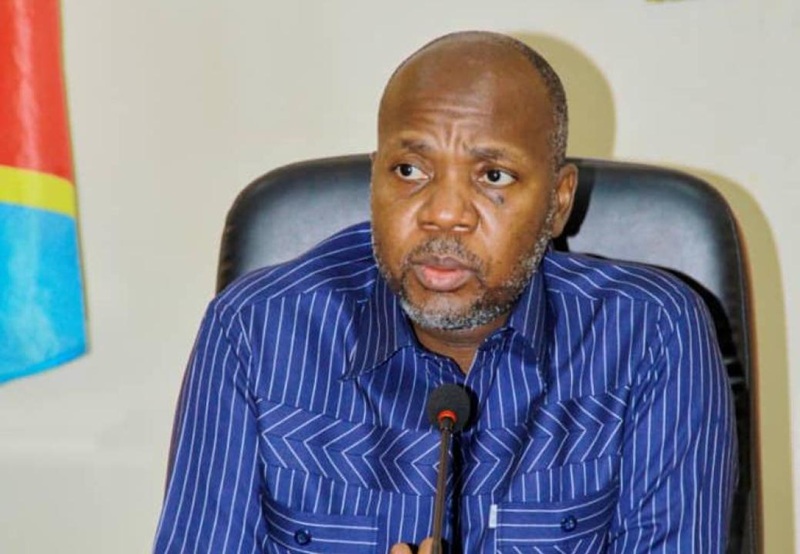


The Communication Unit (Cellcom) of the Haut-Uele governorate has swiftly responded to allegations circulating about Governor Jean Bakomito Gambu’s purported ties to Corneille Nangaa, especially in the context of security concerns in Isiro. Muammar Awoni, the head of the Cellcom, issued a detailed statement to clarify the provincial authority’s position.
Awoni began by addressing what he described as inaccuracies in recent reports. He firmly stated that no economic paralysis occurred in Isiro, the capital of Haut-Uele province, on June 17, 2026. He challenged those reporting such events to conduct thorough verification with local stakeholders, asserting that the information lacks factual basis.
Furthermore, Awoni refuted claims of absent school activities in Isiro on the same date. He highlighted that, in accordance with the academic calendar of the Democratic Republic of Congo, educational institutions are typically concluding their academic year in June. He also emphasized that no organized demonstrations or marches took place in Isiro on June 17, 2026.
The Cellcom statement questioned the objective elements upon which some media outlets base their claims of Governor Jean Bakomito Gambu being close to or a supporter of Corneille Nangaa. It underscored that Governor Bakomito Gambu’s dedication to restoring peace across the entire Haut-Uele province is widely acknowledged.
Governor Bakomito is recognized as a leading figure in the Grand Orientale region, actively engaging in public awareness campaigns against those who seek to destabilize the Republic. This includes individuals allied with Paul Kagame, specifically naming Corneille Nangaa. Nangaa is widely regarded by many Congolese as a primary architect of the violence that has claimed thousands of lives in the country’s eastern provinces through the attacks orchestrated by the AFC/M23.
In line with these efforts, the governorate confirmed that urban banditry, which had temporarily disrupted peace in Isiro, has been effectively brought under control. Currently, no major security incidents are being reported in the city.
In Watsa territory, particularly in Mungbere, where alleged ADF incursions were reported, the security situation remains stable. This stability is attributed to the professional efforts of the FARDC (Armed Forces of the Democratic Republic of Congo). The presence of the FARDC Deputy Chief of Staff for operations and intelligence in the province further demonstrates the significant attention President Félix-Antoine Tshisekedi Tshilombo’s administration places on regional security. Sweeping operations are ongoing to ensure lasting peace and facilitate the safe return of displaced populations to their homes.
As part of these crucial security endeavors, Governor Jean Bakomito Gambu has provided the FARDC with several vehicles and substantial logistical support to enhance their operational effectiveness in the field.
Considering these facts, the accusations leveled against the provincial authority appear baseless and seem designed to tarnish his public image. Governor Jean Bakomito Gambu remains a resolute defender of his province against the enemies of the Republic. Despite what he views as smear campaigns, he is determined to thwart all attempts to destabilize the nation.
Ultimately, his actions align with the vision of President Félix-Antoine Tshisekedi Tshilombo for consolidating peace, security, and development throughout the Democratic Republic of Congo.
In the interest of truth and journalistic ethics, the Haut-Uele governorate urged media outlets to exercise greater rigor in information processing and conduct necessary verifications before publishing content that could harm the reputation of individuals or institutions.
While the governorate’s communication unit vehemently denies any widespread paralysis in Isiro on June 17, it is noteworthy that other official statements from the provincial government have presented a slightly different perspective. Arama Odingo-Kiro Emmanuel, the provincial minister of communication and government spokesperson, previously acknowledged the population’s right to peaceful expression. He stated that “the provincial government does not dispute the right of the population to peacefully and legally express its concerns. It takes every security-related demand seriously. However, a demonstration or a day of paralysis of activities cannot be transformed into proof of an alleged complicity of the Governor with an armed movement.” This previous statement suggests that some form of public expression or disruption did occur, even if its interpretation regarding the governor’s alleged complicity differs.
It is important to clarify that the initial reports questioning Governor Bakomito’s alleged connivance with Corneille Nangaa were presented as reflecting prevailing rumors and public discourse surrounding the governor during a critical period, rather than direct accusations from the reporting outlet. This context prompted the governorate’s detailed rebuttal to address these circulating concerns and dispel what it considers false accusations.