From military stronghold to a logistical nightmare
Once a formidable bastion of Russian military power in Europe, the Kaliningrad exclave now faces an unprecedented tightening of controls by its NATO neighbors. Poland, Lithuania, and Latvia have progressively restricted access, turning an already vulnerable territory into a geopolitical trap for Moscow.
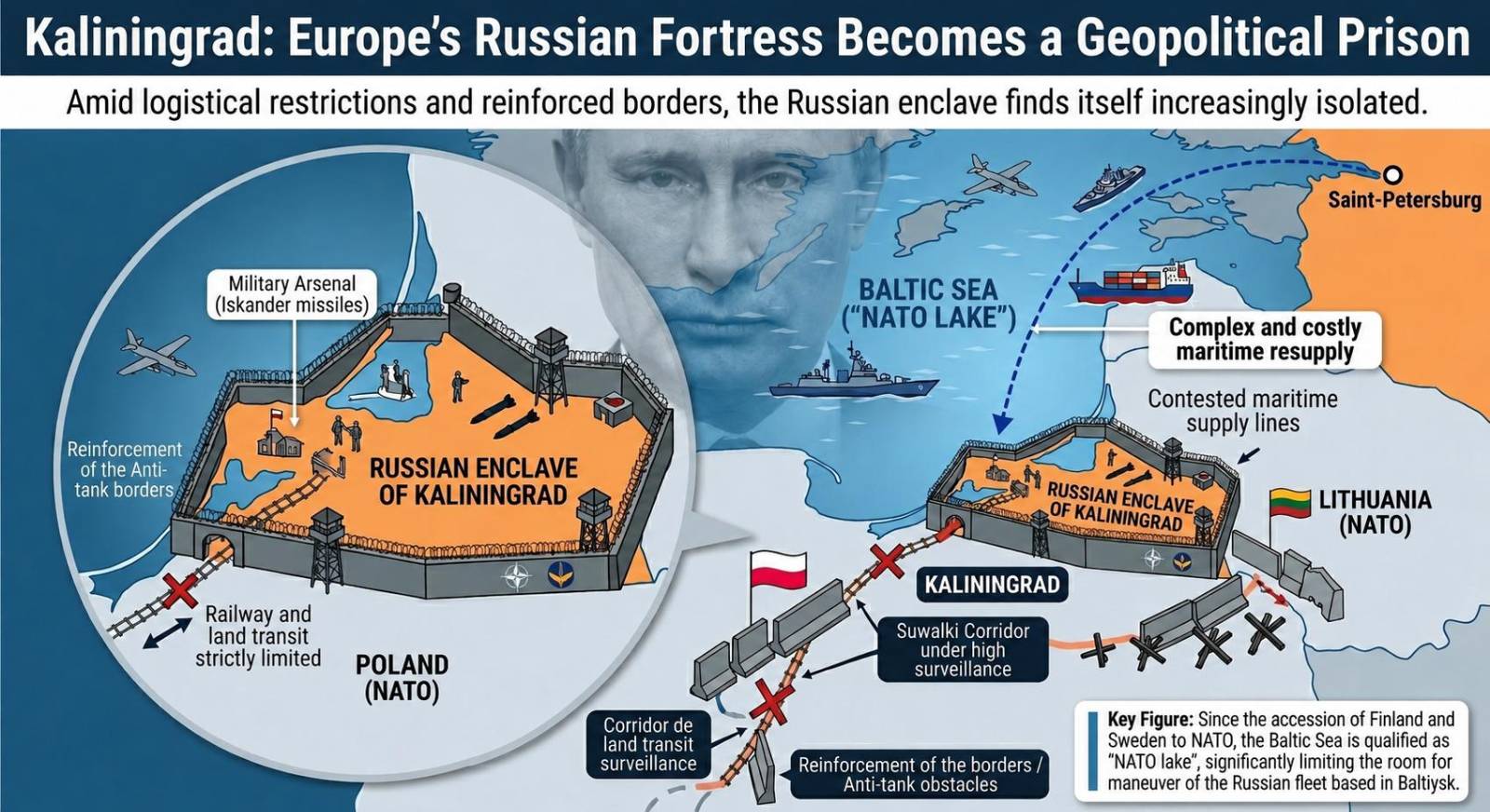
Kaliningrad, a heavily militarized Russian outpost sandwiched between Poland and Lithuania, has long been a thorn in the side of Western security planners. Its strategic location, armed with Iskander missiles, once allowed the Kremlin to project force deep into European territory. Today, however, the enclave resembles a besieged fortress, cut off from the rest of the world.
The slow but deliberate strangulation
The isolation of Kaliningrad is not the result of a sudden rupture but a carefully orchestrated campaign of pressure. NATO members bordering the exclave have systematically dismantled the logistical lifelines that once connected it to mainland Russia.
- Rail and road transit: The Suwałki corridor, a narrow strip of land linking Belarus to Kaliningrad, has become a flashpoint. Rail transit of goods, once a lifeline via Soviet-era infrastructure, now operates under severe restrictions imposed by European sanctions.
- Energy supply cuts: Land-based fuel and energy flows have plummeted, forcing Moscow to rely on costly and complex maritime routes across the Baltic Sea to keep the exclave supplied.
- Physical barriers: Poland and Lithuania have fortified their borders with Kaliningrad, deploying anti-tank obstacles and barbed wire to seal off the territory. The once-fluid movement of people and goods has ground to a halt.
A critical factor in this strategy is the Baltic Sea, now effectively a de facto NATO lake following the accession of Finland and Sweden to the alliance. This severely limits Russia’s ability to project naval power from its base in Baltiysk, further tightening the noose around Kaliningrad.
Moscow’s strategic dilemma
For the Kremlin, the situation in Kaliningrad poses an existential challenge. While the exclave remains heavily armed, its long-term viability in a prolonged conflict is increasingly questioned. Cut off from seamless ground supply lines, Russian forces in the region now depend on maritime and aerial supply routes, which are increasingly contested and vulnerable to interdiction.
Some military analysts argue that what Moscow once viewed as its sharpest sword in Europe has been blunted—if not reversed. In the event of open hostilities, Kaliningrad could find itself immediately isolated, encircled by a united and vigilant NATO.
The diplomatic stalemate deepens
Russia has consistently condemned the restrictions as a violation of international treaties governing transit to its peripheral regions, threatening retaliatory measures. However, Poland, Lithuania, and their NATO allies justify the measures as essential to national security, citing Russia’s aggressive posture in Ukraine.
The question now is how far this logistical warfare can escalate before igniting a military confrontation in one of the most heavily militarized regions on Earth.