Listen nowDuration: 4 min
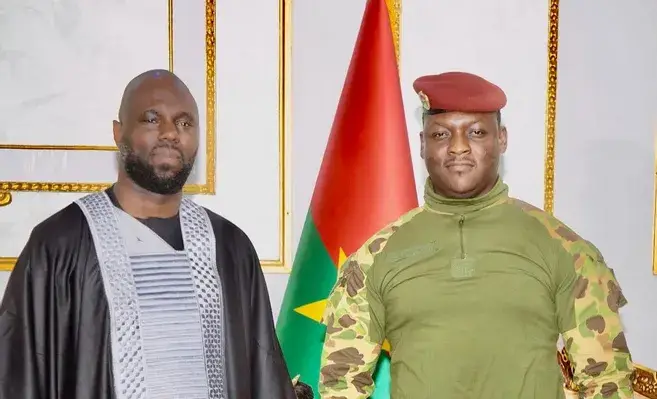
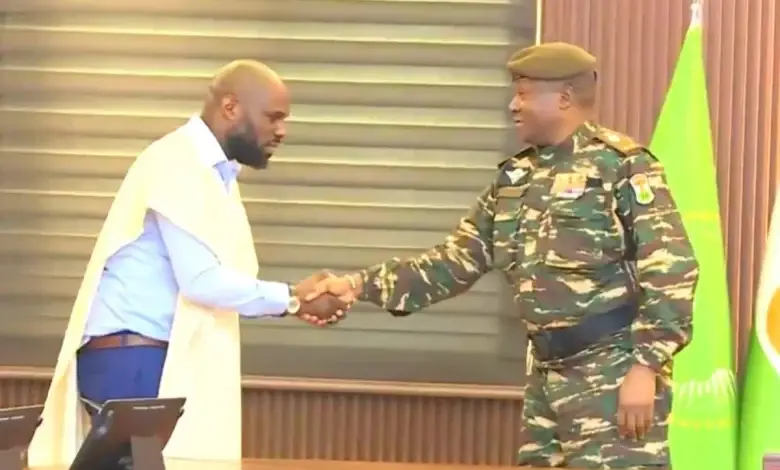 The alignment between the military juntas of the Alliance of Sahel States (AES) and Kemi Seba is no longer a secret. It has evolved beyond a shared ideology into formal official collaboration. Following the overthrow of Mohamed Bazoum in Niger, General Tiani appointed Seba as a special advisor and granted him a Nigerien diplomatic passport. This move solidifies his exceptionally close ties to the current authorities.
How can an activist who spends his time denouncing foreign interference be so close to the Malian, Burkinabe, and Nigerien governments? A partial answer may lie in a viral video where Seba directly threatened Beninese President Patrice Talon. He claimed Talon risked suffering the same fate as ousted presidents Kaboré, Keïta, or Bazoum if he did not release one of Seba’s associates. This is no longer the rhetoric of a simple activist, but that of someone seeking to destabilize a state on behalf of Moscow.
The alignment between the military juntas of the Alliance of Sahel States (AES) and Kemi Seba is no longer a secret. It has evolved beyond a shared ideology into formal official collaboration. Following the overthrow of Mohamed Bazoum in Niger, General Tiani appointed Seba as a special advisor and granted him a Nigerien diplomatic passport. This move solidifies his exceptionally close ties to the current authorities.
How can an activist who spends his time denouncing foreign interference be so close to the Malian, Burkinabe, and Nigerien governments? A partial answer may lie in a viral video where Seba directly threatened Beninese President Patrice Talon. He claimed Talon risked suffering the same fate as ousted presidents Kaboré, Keïta, or Bazoum if he did not release one of Seba’s associates. This is no longer the rhetoric of a simple activist, but that of someone seeking to destabilize a state on behalf of Moscow.
 The Role of Wagner and Russian Funding
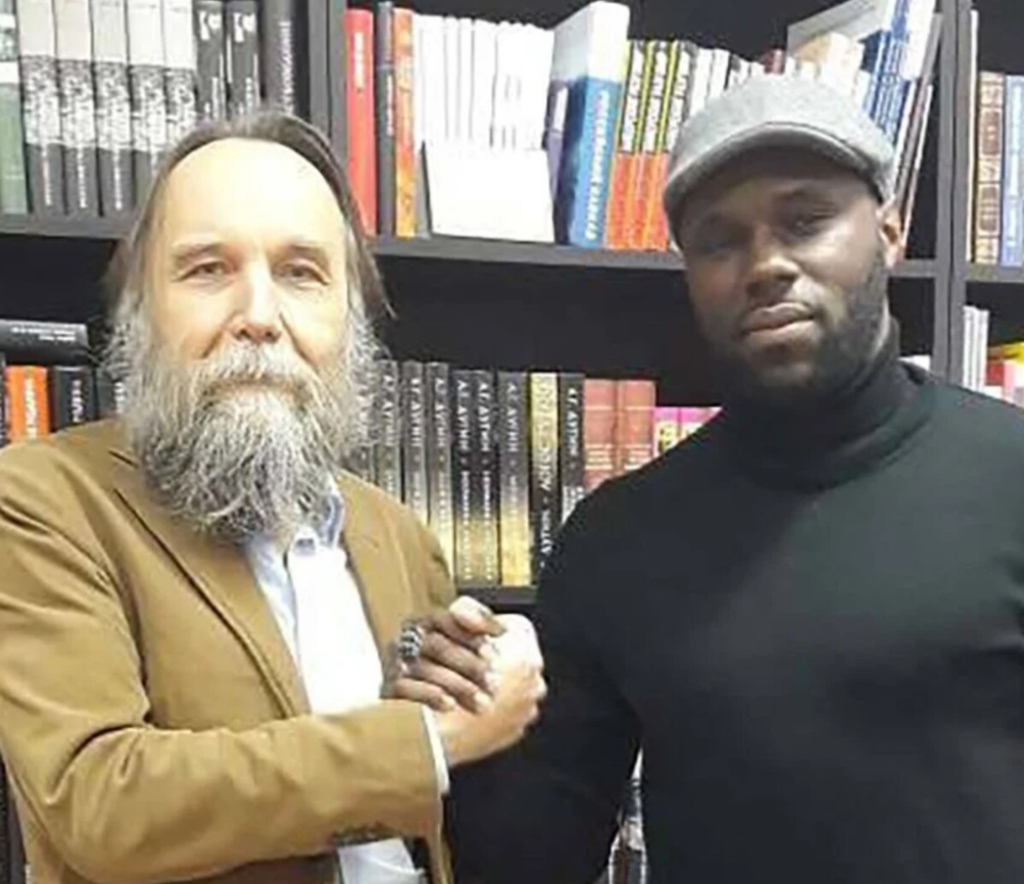
There is a glaring contradiction in Kemi Seba’s discourse regarding his financing. Several investigations have revealed that he received significant sums of money between 2018 and 2019 from organizations linked to Yevgeny Prigozhin, the late head of the Wagner paramilitary group.
“Seba is not working for Africa, but for the Kremlin, using Pan-Africanism as a mere facade,” claims a regional diplomat who requested anonymity.
By echoing Russian talking points, he has helped drive out Western forces to make room for Russian mercenaries. Consequently, the Sahel has become a major sphere of influence for Vladimir Putin.
The Role of Wagner and Russian Funding
There is a glaring contradiction in Kemi Seba’s discourse regarding his financing. Several investigations have revealed that he received significant sums of money between 2018 and 2019 from organizations linked to Yevgeny Prigozhin, the late head of the Wagner paramilitary group.
“Seba is not working for Africa, but for the Kremlin, using Pan-Africanism as a mere facade,” claims a regional diplomat who requested anonymity.
By echoing Russian talking points, he has helped drive out Western forces to make room for Russian mercenaries. Consequently, the Sahel has become a major sphere of influence for Vladimir Putin.
 The “Agbaza” File and Threats in Benin
Events in Benin in December 2025 shed a disturbing light on Kemi Seba’s activities. His attempts to destabilize President Patrice Talon appear to have moved from words to actions. Audio recordings from October 2025 were made public, featuring the activist in discussion with a man identified as “Agbaza.” Their exchanges reveal violent methods, including:
Plotting assassinations of Beninese politicians.
Plans to throw grenades during the Vodun Days festivities.
The deployment of snipers in urban areas.
The “Agbaza” File and Threats in Benin
Events in Benin in December 2025 shed a disturbing light on Kemi Seba’s activities. His attempts to destabilize President Patrice Talon appear to have moved from words to actions. Audio recordings from October 2025 were made public, featuring the activist in discussion with a man identified as “Agbaza.” Their exchanges reveal violent methods, including:
Plotting assassinations of Beninese politicians.
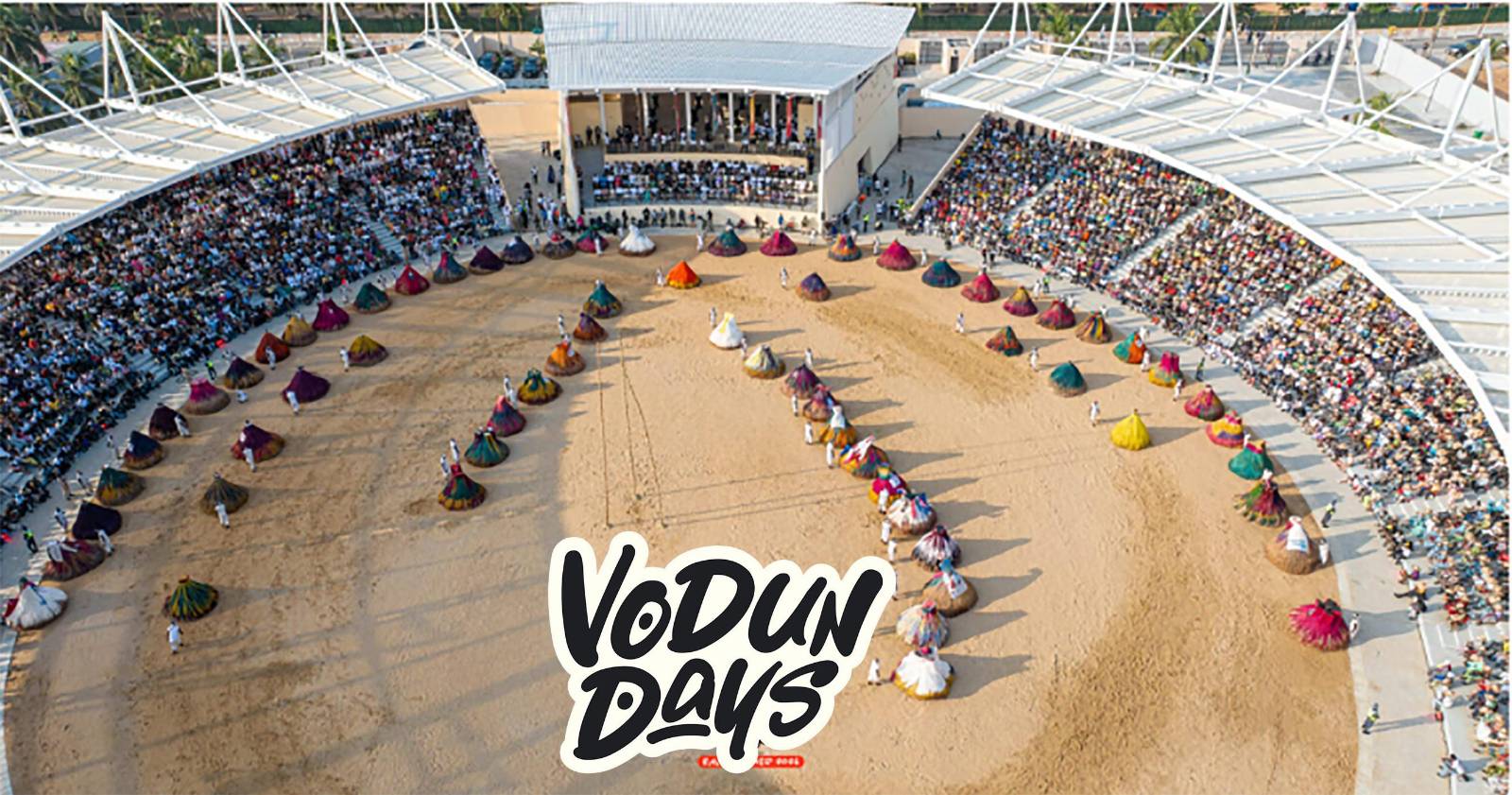
Plans to throw grenades during the Vodun Days festivities.
The deployment of snipers in urban areas.
 Chaos Over Ideology
By targeting events like the Vodun Days, which are deeply cherished by Beninese citizens, Kemi Seba demonstrates that his ambitions go far beyond politics. Ready to endanger the lives of thousands of civilians to install a regime that suits him, the man with the Nigerien passport now acts as an agent for his Russian mentors, even at the risk of bringing fire and blood to his own country of origin.
Under the guise of “liberation,” Kemi Seba is actually proposing a new form of dependency, one where Wagner militias replace law and democracy, and where violence takes the place of political platforms.
Chaos Over Ideology
By targeting events like the Vodun Days, which are deeply cherished by Beninese citizens, Kemi Seba demonstrates that his ambitions go far beyond politics. Ready to endanger the lives of thousands of civilians to install a regime that suits him, the man with the Nigerien passport now acts as an agent for his Russian mentors, even at the risk of bringing fire and blood to his own country of origin.
Under the guise of “liberation,” Kemi Seba is actually proposing a new form of dependency, one where Wagner militias replace law and democracy, and where violence takes the place of political platforms.
Section feedOpen public syndication feed accessible via RSS / XML