
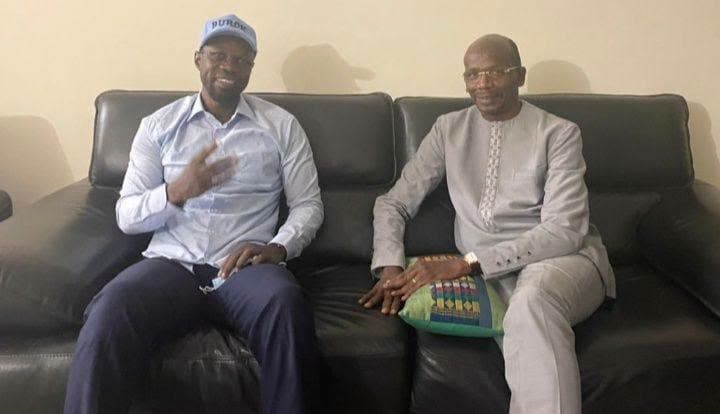
In a recent Senegal media appearance, Lansana Gagny Sakho, Chair of the Board at APIX, addressed the reasons behind his decision to distance himself from political ally Ousmane Sonko while reaffirming his commitment to the country’s republican institutions. At the heart of his reasoning lies a fundamental difference in priorities—where his convictions took precedence over political positions.
Reflecting on his past alignment with Pastef’s political vision, Sakho explained that admiration for its leaders initially drew him to the movement. However, after Senegal’s democratic transition, he declined a key ministerial role in water and sanitation to uphold his principles. “I refused to let positions overshadow my values. That decision allowed me to step away without hesitation. From the start, I chose the Republic over personal gain,” he stated.
Contrasting visions of leadership and governance
Sakho’s critique of Sonko’s approach centers on a perceived disregard for institutional cohesion. He argues that public statements by Sonko, including remarks made during President Faye’s official visits abroad, undermined state authority and embarrassed the administration. Such actions, in his view, reflect a pattern of prioritizing opposition rhetoric over national stability.
While acknowledging challenges faced by both sides during Senegal’s political evolution, Sakho highlights significant progress—particularly in the judiciary—where reforms have strengthened the sector’s independence. His perspective underscores a broader commitment to preserving Senegal’s democratic framework, even amid disagreements.
Judicial independence and the limits of political influence
Addressing recent changes at the Ministry of Justice, Sakho dismissed claims that the former minister, Ousmane Diagne, was replaced to manipulate magistrates. “Those who believe judges are puppets misunderstand the realities of power,” he asserted. “The judiciary operates on principles that transcend political pressures.” His remarks challenge narratives suggesting that institutional shifts were driven by partisan agendas rather than governance imperatives.
Sakho’s stance aligns with his consistent support for President Diomaye Faye’s policies, emphasizing continuity and institutional stability. His latest statements come as Pastef faces internal fractures, with multiple party figures reportedly shifting allegiance to the ruling camp ahead of the anticipated launch of the Kiiraay party.
More Stories
Senegalese official Lansana Gagny Sakho criticizes Ousmane Sonko’s stance on republic
Sonko’s firm stand against postponement of 2027 local elections
Sonko’s firm stance against delaying 2027 local elections in Senegal