

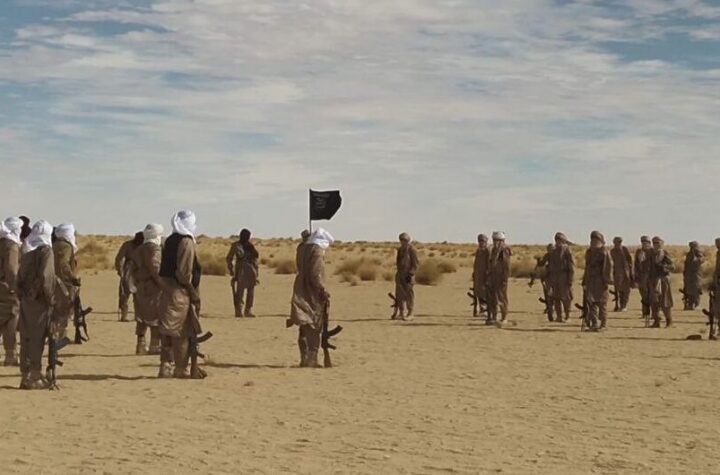
The history of Mali’s central regions is marked by sieges that have shaped communities over centuries. From the ancient wars of the Ségou State to the Caliphate of Hamdallahi in the 19th century, villages have often found themselves encircled, cut off from trade and supplies until surrender became the only option. Today, the Katiba Macina, an affiliate of the Group for the Support of Islam and Muslims (JNIM), has transformed this age-old tactic into a systematic strategy of control. No longer confined to military punishment, the siege has become a tool of governance—a means to enforce obedience without formal administration.
How sieges reshape daily life in central Mali
In regions under JNIM influence, such as Mopti and Bandiagara, the impact of these blockades extends far beyond military confrontation. Villages like Marébougou, Saye, Kori-Maoundé, and even the strategic Parou-Songobia bridge on National Route 15 face a multi-pronged crisis. Mobility, agriculture, commerce, education, gender relations, and local authority structures are all disrupted. The goal is unmistakable: to make life unbearable for those who refuse to submit.
In these areas, fighters impose what locals call benkan, a term in the Bamanankan language that typically refers to a pact or compromise. In practice, however, it is a one-sided set of demands: forced payment of zakat (annual Islamic alms) on harvests and livestock, school closures, mandatory veiling for women, bans on music, and restrictions on social gatherings. The language of these arrangements masks an unequal relationship built on threats and violence.
Marébougou’s brief stand against the blockade
While the strategy remains consistent—suffocate to force compliance—the methods vary depending on local power dynamics. Where armed resistance is weak or dismantled, blockades can lead to forced submission. But where self-defense groups persist, the siege intensifies, transforming the blockade into a long-term ordeal where civilians bear the heaviest burden.
In Marébougou, located in the Djenné district, resistance erupted in 2021 when residents rejected orders from the Katiba Macina, including school closures, mandatory veiling, and agricultural levies. This defiance was fueled by regular security patrols and the presence of a donso camp—self-defense fighters—who, at the time, were seen as a viable counter to jihadist groups. Between 2019 and 2021, self-defense groups were widely viewed as a form of grassroots antiterrorism, with some leaders even collaborating closely with security forces. Yet their authority was often built on coercion, including cattle theft and resource extortion from villagers. After their defeat in October 2021, Marébougou faced a six-month total blockade, cutting off markets, roads, and farmlands while blocking essential supplies—even salt, a staple resource in the region.
Targeted killings and the collapse of resistance
The blockade forced Marébougou into a desperate corner. With no access to markets, dangerous road travel, and fields too risky to cultivate, villagers eventually accepted a survival pact. This was not an act of conviction but a forced adjustment to end widespread deaths from starvation and restore basic mobility. The aftermath, however, extended far beyond Marébougou. The defeat shattered public trust in self-defense groups and emboldened the Katiba Macina to tighten pressure on neighboring areas like Sofara, Macina, and Niono. In addition to harassment, the group carried out targeted assassinations of influential hunters—some of whom had led the resistance at Marébougou. The jihadists accused these leaders of collaborating with security forces and exploiting herders’ resources.
In Saye, the blockade intensified between 2023 and 2025, crippling economic and social life. Unlike Marébougou, Saye’s resistance was rooted in a refusal to submit to external religious authority, with locals insisting they were already ‘good Muslims.’ Many saw no reason to comply after losing their livelihoods to burned crops, stolen livestock, and severed market access. Resistance here was organized around traditional authorities, youth groups, and donsow fighters.
The humanitarian overload: a siege tactic to break willpower
The siege in Saye restricted access to farmlands, pastures, and local markets. Men were confined to the village perimeter, risking execution or abduction if they ventured out. Women, perceived as less threatening, occasionally left to gather food, firewood, and materials for weaving—yet even this fragile freedom did not shield them from structural violence. The blockade exploited population displacement to intensify pressure. Saye, with its historical resistance to the Segou state in 1782, became a refuge for people from surrounding villages starting in 2023. This surge in displacement created sudden food and medicine shortages, overburdening local services already weakened by the blockade and isolation from urban centers like Djenné or San. The siege did not just confine—it deliberately created a humanitarian crisis to force surrender.
In Kori-Maoundé, a village in Bandiagara, the situation took a different turn. Since 2018, the area has been under the control of Dan Na Ambassagou, a self-defense movement that rejects any negotiation with jihadist groups. Local leaders—village chiefs, imams, and mayors—uphold this hardline stance, leaving no room for dialogue with the Katiba Macina. The blockade has grown increasingly punitive, with targeted attacks, assassinations, and restrictions on movement. By 2024, access to fields was nearly impossible. The siege serves not only to control the territory but also to send a message by targeting a community seen as a bastion of resistance. For locals, the memory of colonial resistance—particularly the Battle of Kori-Kori in April 1892—fuels their refusal to consider submission despite growing pressure.
Schools, agriculture, and livestock: the pillars of survival
Across these villages, schools represent far more than education—they are central to family life, social interaction, and the promise of a future tied to the state. In Kori-Maoundé, Marébougou, and Saye, school closures have driven teachers to flee, dispersed students, and erased one of the last visible signs of state presence. The loss of schools is not collateral damage; it signals the erosion of collective hope.
Agriculture, the backbone of rural economies, suffers first under blockades. Inaccessible fields, attacks on farmers, and burned crops devastate livelihoods. At Marébougou, only plots near the village remain cultivable. Elsewhere, insecurity drastically reduces arable land, forcing households to rely on external supplies—supplies that become impossible to obtain under siege.
Livestock and cattle trade, which complement agriculture, are also devastated by blockades. Mass cattle abductions destroy entire families. Weekly livestock markets, vital to rural economies in Ségou and Mopti, become rare, dangerous, or inaccessible. Women, often involved in market gardening, food processing, and small trade, see their economic autonomy shrink. The blockade does not just destroy income—it dismantles the exchange networks that sustain communities.
Solidarity in the face of isolation
Despite the suffering, life under siege reveals powerful forms of community resilience. In Marébougou and Saye, shared food, water, and care for the sick strengthen social bonds. These solidarities do not eliminate hunger or fear but delay the total collapse of community life. They show that residents are not passive victims; they actively shape their survival by creating local protections in the absence of state support.
Marébougou, Saye, and Kori-Maoundé reveal that the blockade in Mali is more than a military tactic—it is a technology of territorial control. By dominating roads, markets, schools, and social norms, armed groups are reshaping daily life. While they may not occupy every village, their influence increasingly shapes the rhythm of existence.
Responses vary from forced surrender to prolonged resistance, refusal to negotiate, partial flight, or pragmatic arrangements. Yet one question unites them all: how can people live when everything connecting their territory to the outside world—roads, fields, schools, markets—can be cut off at any moment? In Ségou and Mopti, the blockade does not merely cause shortages—it establishes a political order built on fear.


More Stories
Mali’s forgotten frontline: how jihadist blockades reshape daily life in central regions
JNIM shifts strategy in Mali’s ongoing conflict
Jnim’s strategic shift reshapes Mali’s security landscape