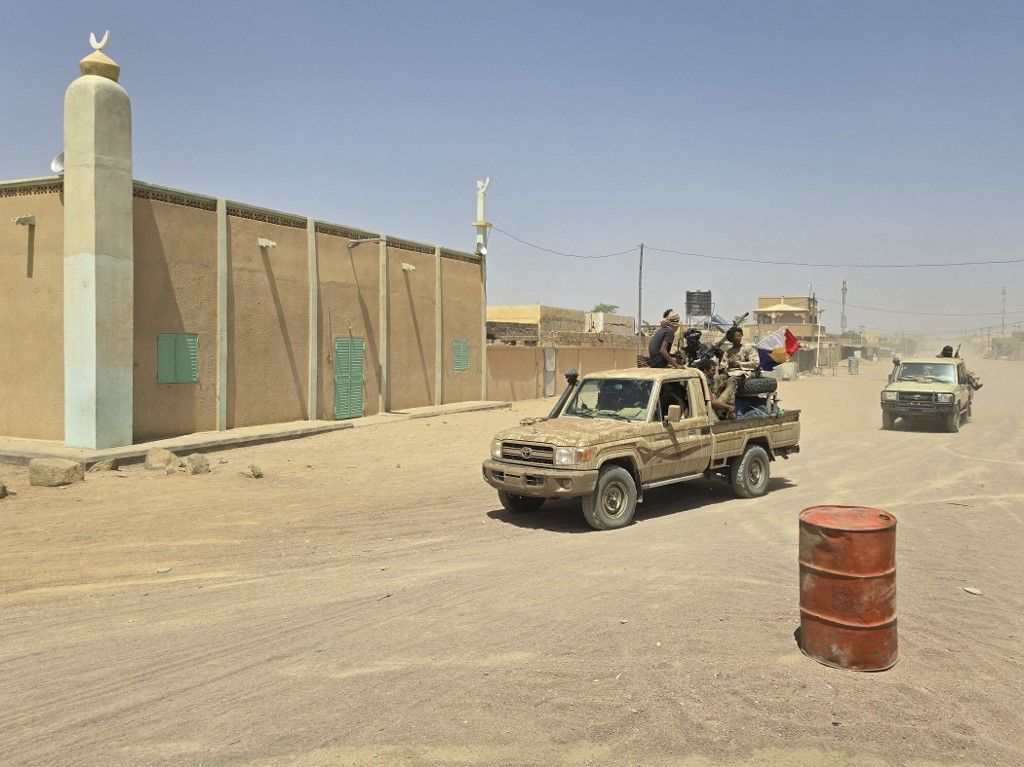
Central Mali has long endured the scars of prolonged blockades, a tactic etched into its collective memory from the wars of the 19th-century Bambara Empire and the Tijaniyya Caliphate of Hamdallahi. Yet today, these sieges have evolved into a deliberate, modern strategy wielded by the Katiba Macina—a faction affiliated with the Support Group for Islam and Muslims (JNIM)—to enforce control over unruly territories. No longer mere military maneuvers, these blockades serve as instruments of governance, designed to crush dissent without ever establishing formal administration.
Our field research in the Mopti and Bandiagara regions—spanning villages like Marébougou, Saye, Kori-Maoundé, and the critical Parou-Songobia bridge on National Road 15—reveals how these blockades extend far beyond physical isolation. They strangle mobility, cripple agriculture, suffocate trade, shutter schools, and upend social structures, particularly targeting women’s autonomy and local authority. The intent is unmistakable: to make life unbearable for those who refuse allegiance.
In these besieged communities, fighters impose what locals call a benkan, a term in Bamanankan that nominally suggests a pact or compromise. In practice, however, it amounts to a series of unilateral demands: forced payments of zakat (Islamic alms) on harvests and livestock, school closures, mandatory veiling for women, bans on music, and restrictions on social gatherings. Behind the veneer of negotiation lies a system of coercion, where compliance is extracted through fear and violence.
Marébougou: brief defiance under siege
The playbook remains consistent across Mali’s central belt: suffocate to force submission. Yet the pace and intensity of the blockade hinge on local power dynamics. Where armed resistance is weak or fragmented, surrender follows swiftly. Where self-defense groups persist, the siege hardens into a protracted ordeal, with civilians bearing the heaviest burden.
In Marébougou, located in the Djenné district, resistance hardened in 2021. Villagers rejected Katiba Macina’s demands—closing schools, enforcing veiling, suspending weekly markets, and extracting agricultural levies. Their defiance stemmed from a mix of factors: regular security patrols and the presence of a donso (traditional hunter) camp providing protection. During these years (2019–2021), central Mali witnessed a surge in local defense groups, often framed as grassroots counterterrorism efforts. Some of their leaders, like the jihadists, enriched themselves through cattle raids and extortion in exchange for protection.
But Marébougou’s resistance was short-lived. After the self-defense fighters were defeated by jihadist forces in October 2021, the Katiba Macina imposed a total blockade for six months. Markets vanished. Roads became death traps. Fields lay fallow. Basic goods—even salt—vanished from homes, turning a once-plentiful resource into a luxury. The blockade’s end came not through conviction, but through sheer exhaustion. Villagers accepted a benkan not as a pact, but as a survival tactic to halt the mounting deaths from starvation and restore minimal mobility for food, medicine, and trade.
Targeted killings: the cost of resistance
The blockade’s ripple effects extended across the Inland Niger Delta, into the Djenné and Macina districts of Mopti. Before the clashes, self-defense groups had mobilized hundreds of fighters from diverse backgrounds. Their defeat eroded public trust in these groups and emboldened the Katiba Macina to tighten its grip on neighboring villages—Sofara, Macina, and even Niono. Beyond harassment, the faction carried out targeted assassinations of influential hunters, many of whom had coordinated the mobilization for Marébougou’s defense.
The hunters were accused of collaborating with state forces and monopolizing resources—cattle, water points, and grazing lands—at the expense of herders. Their elimination sent a chilling message: defiance invites death. In Saye, where blockades intensified between 2024 and 2025, resistance took a different form. Residents rejected the benkan outright, insisting they were already devout Muslims. With their livelihoods already ravaged—burned crops, stolen livestock, severed market access—they saw no reason to submit to demands from those who had stripped them bare. Here, resistance coalesced around traditional leaders, youth organizations, and donsow fighters, uniting against external religious authority.
Humanitarian overload: the siege as a weapon
In Saye, the blockade didn’t just confine; it weaponized scarcity. Land access, pastures, and trade routes were cut off. Men dared not venture beyond the village perimeter, risking abduction or execution. Women, perceived as less threatening, were allowed brief forays into the bush to gather food, firewood, and thatch for mats and fans. Yet this limited freedom masked a deeper violence: the siege was reconfiguring social roles and risks.
The blockade’s psychological toll was compounded by an influx of displaced persons. Saye’s historic defiance—dating back to its 1782 resistance against the Bambara Empire—made it a haven for refugees from neighboring villages. This sudden population surge overwhelmed local services already crippled by isolation. Djenné and San’s urban centers, once vital supply hubs, were now inaccessible. The siege wasn’t just containment; it was a calculated strategy to push the village to its knees through humanitarian collapse.
In Bandiagara’s Kori-Maoundé, the blockade served a different purpose. Since 2018, the village has stood as a bastion of the Dan Na Ambassagou self-defense movement, resolutely refusing any negotiation with jihadist factions. Local leaders—village chiefs, imams, and mayors—uphold this hardline stance, leaving no room for dialogue with the Katiba Macina. The siege here is punitive, designed to break a community that embodies defiance.
Echoes of colonial resistance
The blockade in Kori-Maoundé has tightened incrementally: targeted attacks, assassinations, movement restrictions, and bans on transporters stopping or picking up passengers. By 2024, access to fields was nearly impossible. The siege isn’t just about control; it’s a message to a territory deemed hostile—a reminder of the 1892 Battle of Kori-Kori, where French colonial troops crushed Bandiagara’s resistance. For Dan Na Ambassagou and local residents, the idea of submitting to the Katiba Macina is anathema. The village has also become a refuge for displaced families, further straining its already precarious resources.
The plateau’s rugged terrain and the presence of the self-defense group have slowed direct offensives, but they haven’t halted the gradual strangulation of civilian life. Those who refuse to flee to Bandiagara, Sévaré, or Bamako endure worsening conditions, their survival dependent on dwindling solidarity networks.
Mediation: a fragile lifeline
Mediators can turn the tide—even in the most constrained environments. In Marébougou, neighboring mayors acted as intermediaries between the village and the Katiba Macina. In Saye, no such dialogue emerged. In Kori-Maoundé, Dan Na Ambassagou’s influence stifles local mediation, and regional reconciliation teams remain disconnected from the village’s realities.
This disparity underscores a critical truth: blockades are not solely military tactics. Their endurance depends on the presence and capacity of political, traditional, or religious intermediaries to translate armed confrontation into dialogue. Without mediation, violence persists—and civilians pay the price.
Schools, agriculture, and livestock: the pillars of survival
Schools in these villages are more than classrooms; they’re anchors of hope and symbols of state presence. At Kori-Maoundé, Marébougou, and Saye, the arrival or pressure from armed groups triggered teacher flight, school closures, and student dispersal. The loss of education isn’t collateral damage—it’s a collective future eroded.
Agriculture, the lifeblood of rural life, is the first casualty of blockades. Inaccessible fields, burned crops, and attacks on farmers shrink cultivable land. In Marébougou, only the areas closest to the village could be farmed. Elsewhere, insecurity reduced arable zones, forcing households to rely on external supplies—impossible under siege.
Livestock and cattle markets, vital supplements to farming, suffered similarly. Mass cattle raids destroyed families, while weekly markets in Ségou and Mopti became hazardous or obsolete. Women, who often manage market gardens, food processing, and small trade, faced shrinking autonomy. The blockade didn’t just destroy incomes; it dismantled the exchange networks that sustained these territories.
Community solidarity: the last defense
Yet survival under blockade isn’t defined solely by suffering. Our research uncovered remarkable acts of mutual aid: shared food, pooled water, care for the sick, redistributed labor, and support for vulnerable households. In Saye and Marébougou, residents spoke of strengthened community bonds forged in adversity.
These solidarities don’t erase hunger or fear, but they delay the total unraveling of social fabric. They reveal that villagers aren’t passive victims; they actively shape their survival through local protection mechanisms in the absence of state presence.
Marébougou, Saye, and Kori-Maoundé expose the blockade as more than a tactic—it’s a territorial control technology. By dominating roads, markets, schools, and social norms, armed groups are reshaping daily life. Though they don’t occupy every village, their influence seeps into the rhythm of existence. From forced surrender to prolonged resistance, from pragmatic arrangements to desperate flight, the question remains the same: how do you live when every thread connecting you to the wider world—roads, fields, schools, markets—can be severed overnight? In Ségou and Mopti, the blockade doesn’t just create shortages; it establishes a political order built on fear.