
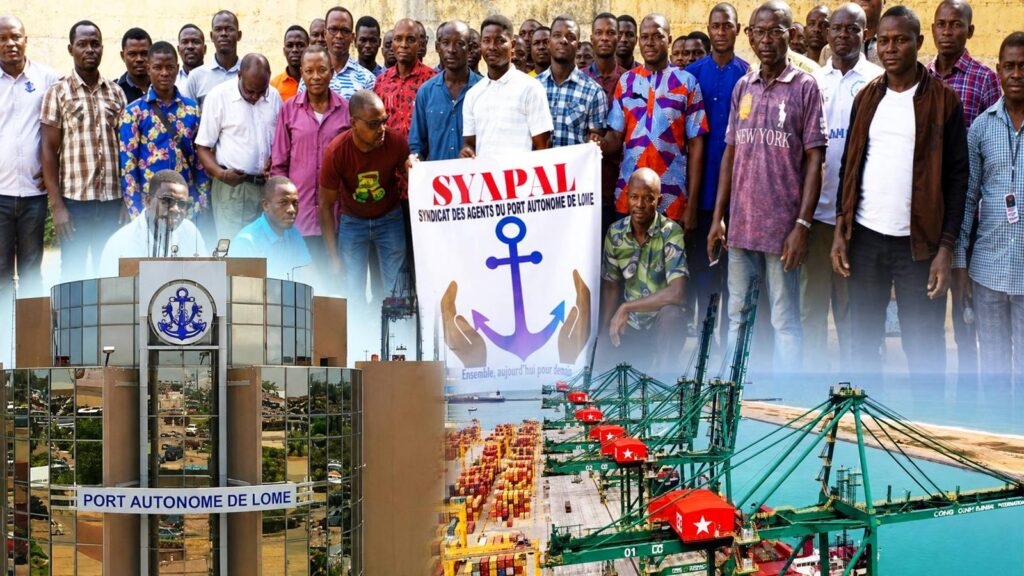
Togo’s primary economic engine is on the verge of significant upheaval. The Union of Agents of the Autonomous Port of Lomé (PAL) has formally issued a three-day strike notice, slated to commence from June 25 to June 27, 2026. This proposed industrial action is a direct protest against the perceived lack of tangible progress on their social demands, potentially leading to a substantial operational shutdown.
A labor dispute with far-reaching implications
At the core of this contention lies a stalled social dialogue. Despite numerous negotiation rounds, union representatives express profound disappointment regarding the unaddressed nature of their grievances. These primarily revolve around calls for enhanced working conditions, upward salary revisions, and improved social benefits.
Should an agreement not be reached by June 25, a complete cessation of work is anticipated. For the Autonomous Port of Lomé, which stands as the sole deep-water port in the sub-region capable of accommodating third-generation vessels, such a comprehensive technical and administrative paralysis would represent an abrupt and severe impediment to operations.
A critical strategic hub for the hinterland faces jeopardy
The repercussions of this impending labor movement extend significantly beyond Togo’s national borders. As a pivotal maritime crossroads, PAL serves as the indispensable entry point for goods destined for several landlocked nations across the Sahel region.
- Burkina Faso
- Mali
- Niger
A 72-hour disruption to the supply chain would inevitably trigger severe terminal congestion, a cascade of delivery delays, and exorbitant demurrage charges for economic operators reliant on the port’s continuous functioning.
The prospect of a final mediation effort
In response to this potentially dire scenario, PAL’s management and the relevant supervisory ministerial authorities find themselves under considerable pressure. The Togolese government, having positioned the modernization and competitiveness of its logistics hub as a cornerstone of its strategic agenda, can ill afford a protracted industrial conflict.
Currently, the broader business community and licensed customs brokers are observing the situation with bated breath, holding out hope for the swift initiation of a last-ditch mediation to defuse the crisis before the critical deadline of June 25.



More Stories
Mamadi Doumbouya de retour à Conakry après sa visite d’État en Côte d’Ivoire
Elversberg vs Bayern Munich: where to watch the Bundesliga clash
Mali: près de 80 soldats tués dans l’attaque de Dioura