
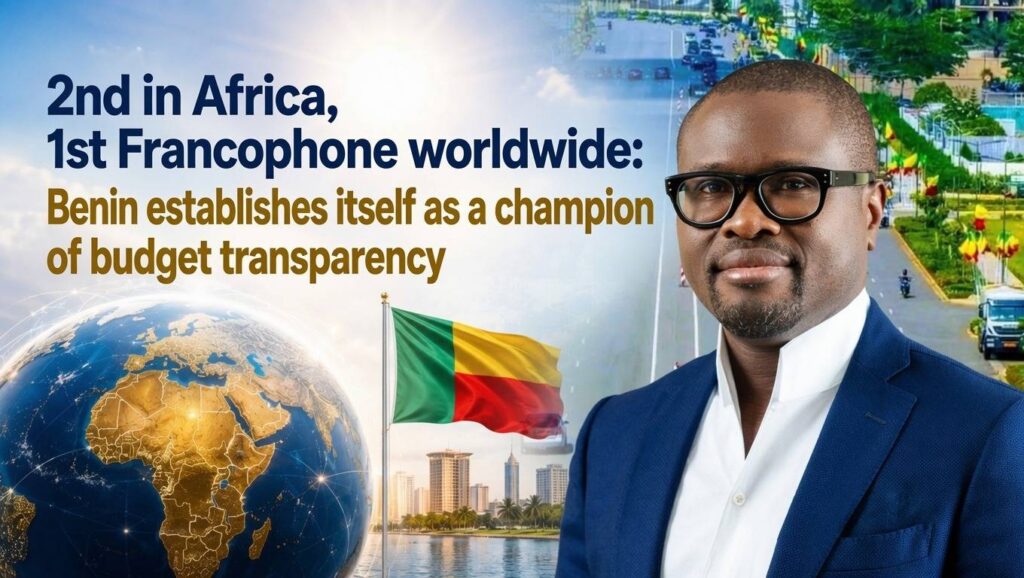
Benin has undergone a profound transformation in its financial management over the past decade. The nation now boasts an impressive score of 79/100 in the latest Open Budget Survey by the International Budget Partnership. This outstanding achievement positions Benin as the second-highest ranked country in Africa, trailing only South Africa, and secures its top spot globally among all francophone nations. This success story highlights a model of fiscal discipline driven by the comprehensive reforms initiated during the Talon administration, marking a significant stride in African politics and financial governance.
To truly grasp the significance of this ranking, one must consider the remarkable journey Benin has undertaken. As recently as 2017, the country languished at a score barely exceeding 35/100. In less than ten years, Benin’s score has more than doubled. This upward trajectory is not mere coincidence but the direct outcome of robust political commitment that began in 2016 with the arrival of President Patrice Talon. From the outset of his first term, President Talon prioritized the restructuring of the national economy and the rigorous cleanup of public finances. The current score of 79/100 unequivocally validates a governance philosophy centered on accountability and institutional effectiveness, crucial for the Benin economy.
Budgetary transparency is not merely declared; it must be demonstrated. To earn this international recognition, Benin meticulously adhered to stringent requirements for financial documentation. The country now systematically, comprehensively, and promptly publishes all eight key budgetary documents mandated by global standards. From the preliminary budget proposal to the final audit report from the Court of Accounts, including a simplified ‘citizen’s budget’ designed for public understanding, every financial record is readily available online. This widespread accessibility enables real-time scrutiny by development partners, media organizations, and civil society, effectively transforming the state budget from an exclusive secret into an open book for all.
Another significant triumph for Benin lies in its successful integration of the populace into national financial decision-making. Internationally, the country stands out with an exceptional score of 77/100 for public participation. The government has moved beyond simply publishing figures; it actively cultivates platforms for dialogue. Regular budgetary consultations are held, empowering civil society organizations and local representatives to articulate the priority needs of their communities. This inclusive approach ensures that public funds directly address the aspirations of the people, thereby strengthening the social contract between the government and its citizens.
This success in transparency directly reflects the profound structural reforms implemented under President Patrice Talon’s leadership. By combining the digitalization of tax procedures—such as standardized invoices and online tax payments—with a determined campaign against corruption, the executive branch has effectively maximized domestic revenues while simultaneously streamlining operational expenditures. These newly acquired financial flexibilities have enabled substantial investment in social programs and infrastructure projects. Initiatives like the ‘ARCH’ project (Assurance for the Reinforcement of Human Capital), the expansion of school feeding programs in rural areas, and the modernization of road and energy networks are direct beneficiaries of this rigorous financial management. Indeed, budgetary transparency has become the vital fuel for a more inclusive national development.
Beyond national pride, Benin’s position as a francophone leader represents a significant economic advantage. In a challenging global economic climate, international investors and credit rating agencies increasingly favor countries that offer clear visibility and robust legal and financial security. By establishing itself as a model of good governance in West Africa, Benin instills confidence in its financial partners. This enhanced credibility allows the nation to raise capital on international markets at competitive rates, as evidenced by its recent issuances of sustainable development bonds. This is crucial Africa news for the continent press and African economy news.
Achieving the top position in the francophone world for Benin budget transparency, Benin demonstrates that a path of strong governance is attainable through bold and sustained reforms. Under the decisive leadership of President Patrice Talon, the country has transformed its management tools into instruments of trust and progress. The ongoing challenge for Cotonou will be to sustain this level of excellence and continue to inspire its regional counterparts in Africa.

More Stories
Mamadi Doumbouya de retour à Conakry après sa visite d’État en Côte d’Ivoire
Elversberg vs Bayern Munich: where to watch the Bundesliga clash
Mali: près de 80 soldats tués dans l’attaque de Dioura