Luanda summit: Tshisekedi warns of evolving Congo crisis as a test for global peace efforts
- Security
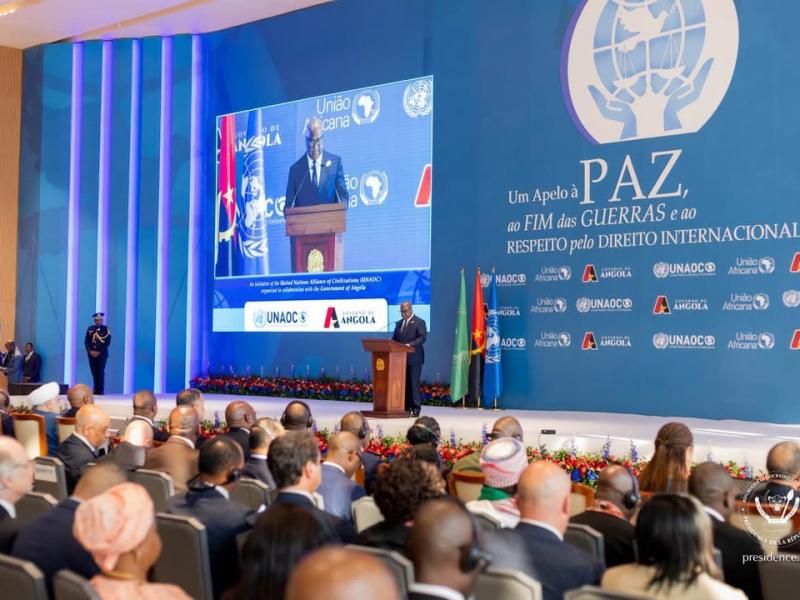
On July 16 and 17, 2026, Angola’s capital, Luanda, hosted a landmark international summit titled “A Call for Peace, an End to Wars, and Respect for International Law.” Organized by the United Nations Alliance of Civilizations (UNAOC) in partnership with the Angolan government, this high-level event brought together global leaders to address escalating conflicts worldwide and strengthen multilateral cooperation.
The Democratic Republic of Congo’s President, Félix Tshisekedi, delivered a powerful address, emphasizing the urgent need for verifiable peace in his country’s embattled eastern regions. His remarks underscored the human toll of prolonged conflict and the challenges of achieving lasting stability amid regional instability.
War’s brutal toll on the DRC
President Tshisekedi opened his speech with a stark reminder of the devastation wrought by armed violence in the DRC. He highlighted the plight of displaced families, the vulnerability of women facing grave violations, the loss of innocent lives in massacres, and the trauma inflicted on children deprived of safety and education. He also condemned the exploitation of natural resources, which, instead of fueling development, often finances war economies.
« My country knows the price of war. It knows the pain of displaced families, the fear gripping populations trapped in violence, the suffering of women whose dignity is violated, the grief of communities struck by massacres, and the trauma of children denied school, security, and a future. It also knows the consequences of illicit exploitation of natural resources, where a nation’s wealth, instead of funding progress, becomes the fuel of war economies. »
The eastern DRC conflict: a test for Africa and the world
Addressing the ongoing security crisis in eastern DRC, Tshisekedi framed the situation as a critical test for Africa and the international community. He pointed to the persistent threat posed by armed groups, mass civilian displacements, human rights abuses, and external interference as evidence of a broader struggle for regional stability.
« For years, our nation has faced a severe humanitarian and security crisis in its eastern region, driven by armed group activity, mass civilian displacements, human rights violations, threats to territorial integrity, and foreign interference. This is not merely a national ordeal; it is a test for our region, for Africa, and for the international community. »
He reiterated the DRC’s commitment to diplomatic solutions, referencing ongoing peace processes in Washington and Doha, supported by the African Union. While acknowledging these efforts, he stressed that peace must move beyond promises—it must be tangible and verifiable on the ground.
From promises to action: the demand for verifiable peace
Tshisekedi warned that peace cannot remain an abstract ideal. It must restore state authority, protect civilians, enable safe returns for displaced populations, and pave the way for justice, reparations, and reconciliation. He called for decisive action to uphold international law without selectivity, combat impunity, and dismantle the economic networks fueling conflict.
« Peace cannot remain a suspended promise. It must translate into concrete actions, be verifiable on the ground, restore state authority, protect civilians, enable dignified, voluntary, and secure returns for the displaced and refugees, and open the path to justice, reparations, and reconciliation. The Luanda Call must not be another declaration. It must represent a high-level commitment: to defend international law wherever it is threatened, prevent conflicts before they become tragedies, protect civilians without relativizing their suffering, support credible mediation and sincere political processes, combat impunity, defend the rights of societies even when crimes occur far from the spotlight, choke off war economy circuits, and condemn interference, support for armed groups, mercenary activities, and all forms of state destabilization. »
Restoring humanity to peacebuilding
The Congolese leader urged renewed commitment to prioritize human dignity in peace efforts. He emphasized that African leaders must move beyond rhetoric and take concrete steps to uphold responsibility over indifference, law over force, truth over propaganda, justice over impunity, and peace over resignation.
Reflecting on the 80th anniversary of the United Nations Charter, Tshisekedi reminded attendees of the organization’s founding promise: to shield future generations from the scourge of war. He called for immediate, courageous action to restore the primacy of international law and build a more just, secure, and peaceful world order.
« At a time when we commemorate the 80th anniversary of the entry into force of the United Nations Charter, our responsibility is not only to celebrate its legacy but to breathe life into its promise. This promise is simple yet profound: to preserve future generations from the plague of war. It has lost none of its urgency. It obliges us. If we truly seek to end wars, we must begin by restoring the strength of law. If we truly aim to defend international law, we must apply it consistently, without selectivity or complacency. If we truly wish to protect future generations, we must act now, with courage. Only then can we push back the law of the strongest. Only then can we pass down to future generations a more just, safer, and more peaceful international order. »
Despite agreements such as the Washington Accord and the Doha process, the humanitarian and security situation in eastern DRC continues to deteriorate. Negotiations between Kinshasa and armed factions have stalled, and commitments remain largely unimplemented. The lack of progress underscores the urgency of translating diplomatic efforts into tangible results.
Reporting from Luanda by Clément Muamba