Tensions between Bamako and Paris have escalated sharply as Mali accuses France of actively supporting the Front de libération de l’Azawad (FLA), a coalition of Tuareg rebels that launched a major offensive in northern Mali at the end of April. The transitional government, led by General Assimi Goïta, is leveraging these accusations to reinforce its sovereignist narrative and justify the ongoing political tightening following the dual coups of 2020 and 2021. This diplomatic rupture deepens after France’s Barkhane mission withdrew in 2022 and the UN’s MINUSMA force exited Mali by the end of 2023.
The FLA: a legacy of Tuareg self-determination struggles
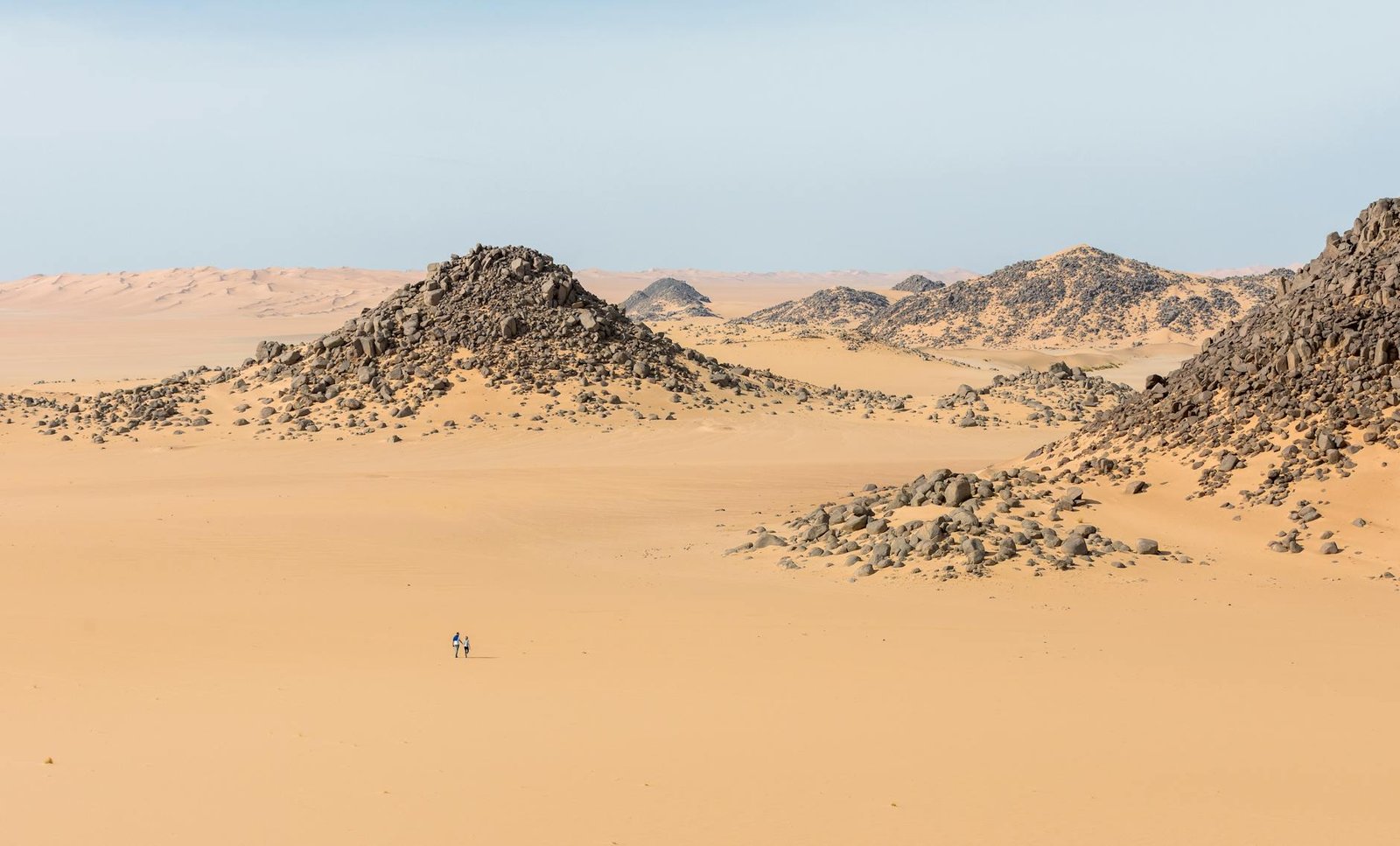
The Front de libération de l’Azawad brings together former armed factions from the Coordination des mouvements de l’Azawad (CMA), a structure dissolved after military defeats in 2023 against Malian forces and Russian paramilitary units from Africa Corps, formerly Wagner. The FLA’s emergence signals a renewed armed campaign for autonomy or independence across Kidal, Gao, and Tombouctou — a vast Saharan-Sahelian territory the rebels identify as Azawad. This demand is not new; it has fueled successive rebellions in 1963, 1990, 2006, and 2012.
The late April offensive marks a strategic resurgence after months of reorganization. The FLA now operates in a battlefield reshaped by the presence of Russian paramilitaries alongside Malian armed forces. The battle of Tinzaouatène in mid-2024, where a joint Russo-Malian column suffered heavy losses to rebel and JNIM jihadist elements, has elevated the group’s strategic profile.
From historical ties to shifting alliances: France and the Tuareg question
France’s relationship with certain Tuareg factions traces back to colonial times, but it was the 2013 Serval intervention that solidified a tactical alliance. To reclaim northern Mali from jihadist control, French forces relied on fighters from the Mouvement national de libération de l’Azawad (MNLA) and its allies, who possessed superior local knowledge and proved reliable against Al-Qaïda in the Islamic Maghreb. This battlefield cooperation fueled persistent suspicions in Bamako of covert strategic ties between Paris and the independence movement, especially around Kidal, a stronghold long closed to Malian troops.
Over time, the relationship frayed as France adjusted its approach amid the stagnation of Operation Barkhane. Official contacts with the CMA dwindled, and the forced withdrawal of French troops in 2022, demanded by the junta, severed institutional channels. Now deprived of a major Western partner, the rebels have sought alternative regional support, particularly in Algeria and Mauritania, though no state has openly claimed patronage.
Accusations as a tool of domestic political strategy
Bamako’s public accusations reflect a familiar pattern. For three years, the Malian authorities have used claims of French destabilization to unite domestic opinion, marginalize dissent, and legitimize their pivot toward Moscow. The formation of the Alliance of Sahel States (AES) with Burkina Faso and Niger in September 2023 — and its transformation into a confederation in early 2024 — rests largely on this shared anti-French stance.
Paris has consistently denied any involvement, citing the absence of military, diplomatic, or security cooperation with Bamako for years. Yet recent history — marked by the persistent ambiguity around Kidal and the tactical use of Tuareg fighters during Serval — provides the junta with ready-made ammunition. For the rebels, this instrumentalization carries dual consequences: it bolsters perceptions of external support without delivering tangible backing.
The FLA’s future hinges less on political accusations and more on its military resilience against Malian forces and Africa Corps, and its ability to rebuild political networks in a region where Algeria remains a key player. The trajectory of these alliances reveals a pattern of short-term convenience rather than enduring ideological commitment.