
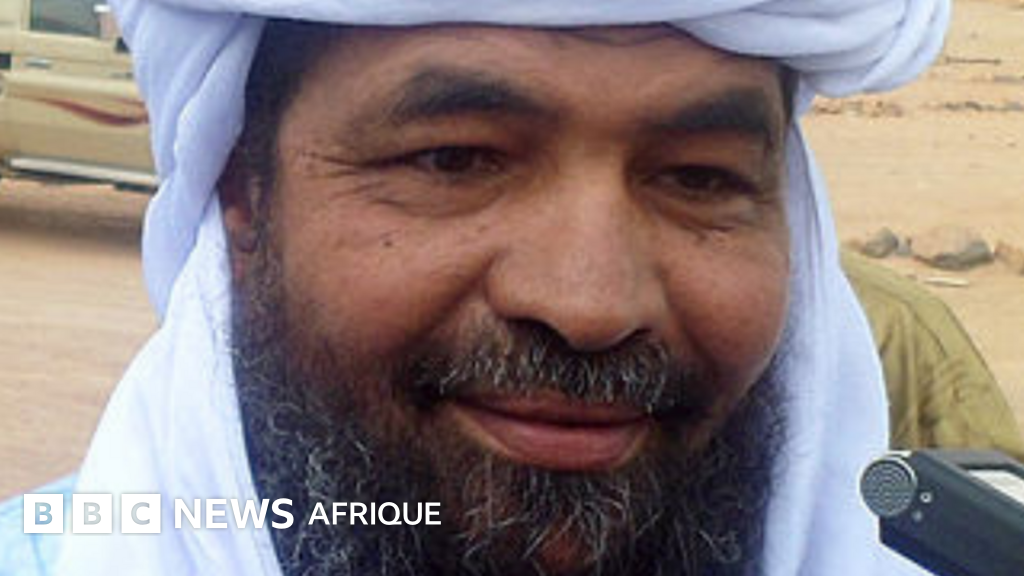
Mali places million-dollar bounties on jihadist leaders linked to recent attacks
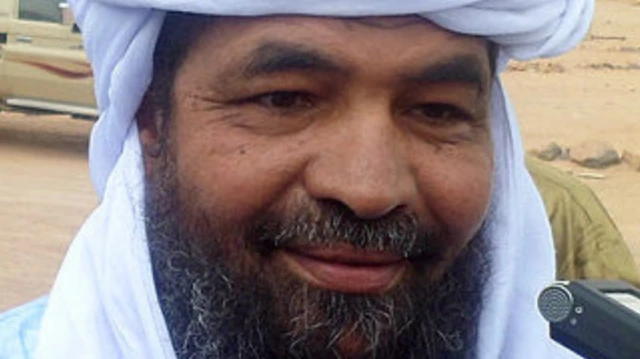
The Malian government has launched a sweeping financial incentive program, placing bounties totaling nearly 6 billion West African CFA francs on seven key figures suspected of orchestrating recent coordinated attacks across the country.
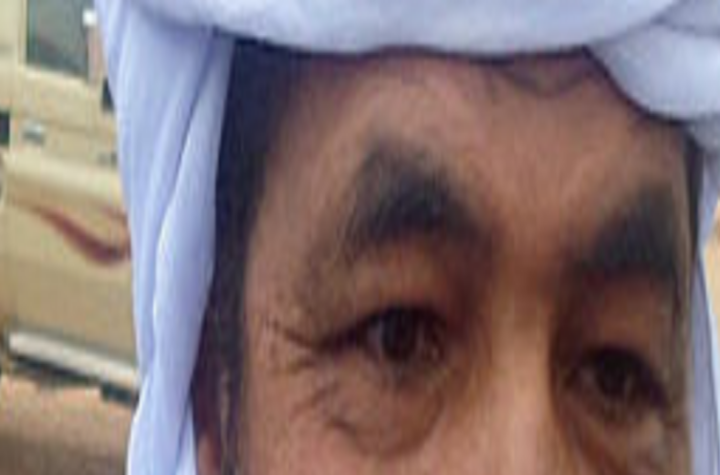
On Thursday, authorities announced the most substantial reward—2 billion CFA francs—for the capture of Iyad Ag Ghaly, the notorious leader of the Jama’at Nusrat al-Islam wal-Muslimin (JNIM), also known as the Group for the Support of Islam and Muslims (GSIM). The announcement follows a joint operation in late April by JNIM fighters and separatists from the Azawad Liberation Front (FLA) that targeted strategic locations in Kidal and Kati, resulting in significant casualties including the death of Defense Minister Sadio Camara.
The government’s move underscores its intensified efforts to dismantle terrorist networks operating within Mali’s borders and beyond. Through a televised statement, the Ministry of Security and Civil Protection called on citizens to assist security forces in identifying and apprehending these individuals, emphasizing the critical role of public collaboration in combating terrorism.
Targets and rewards
The bounty list includes high-profile figures from both jihadist and separatist movements, reflecting the complex security challenges facing Mali. Below are the key individuals and the rewards offered for their capture:
- Iyad Ag Ghaly (JNIM/GSIM) – 2 billion CFA francs
- Amadou Koufa (Macina Katiba) – 1.5 billion CFA francs
- Abdoulaye Mohamed (Habib) (Macina Katiba) – 1.5 billion CFA francs
- Algabas Ag Intallah (Azawad Liberation Front) – 1 billion CFA francs
- Ghita, Bilal Chérif, Abderrahmane Al Banna (Azawad Liberation Front) – 500 million CFA francs each
The announcement comes as Mali grapples with escalating violence and economic disruption caused by these groups. Security experts warn that the recent shift in tactics by leaders like Ag Ghaly—from direct battlefield confrontations to economic strangulation—poses an unprecedented threat to the nation’s stability.
Who is Iyad Ag Ghaly?
Born in 1958 in Boghassa, near Kidal, Iyad Ag Ghaly is a prominent Tuareg military leader whose influence has shaped Mali’s security landscape for decades. His journey from Tuareg rebel to jihadist commander reflects the country’s turbulent history of conflict and radicalization.
In the 1970s, Ag Ghaly sought refuge in Libya, where he joined forces with the late Libyan leader Muammar Gaddafi. Like many of his peers, he fought in regional conflicts, including in Lebanon and Chad, gaining military experience that would later define his operations in the Sahel.
After returning to Mali in the early 1990s, Ag Ghaly founded the Popular Movement for the Liberation of Azawad (MPLA), launching a Tuareg rebellion against the Malian state. He later led the Azawad Popular Movement (MPA), engaging in direct combat with government forces before signing a peace accord in 1992.
His ideological shift toward extremism became evident in 2007 when he aligned with the Salafist Group for Preaching and Combat (GSPC), an Al-Qaeda affiliate that later evolved into Al-Qaeda in the Islamic Maghreb (AQIM). By 2012, Ag Ghaly established Ansar Dine, a Salafist jihadist group that merged with AQIM to challenge state control in northern Mali.
In 2017, he consolidated his power by creating the Group for the Support of Islam and Muslims (GSIM/JNIM), uniting several Malian jihadist factions under AQIM’s banner. Today, the GSIM is recognized as one of the most active and dangerous armed groups in the Sahel, operating across Mali, Burkina Faso, and Niger.
The International Criminal Court (ICC) issued an arrest warrant for Ag Ghaly in 2017, accusing him of war crimes and crimes against humanity committed during the 2012–2013 occupation of northern Mali.
Changing tactics and rising threat
Security analysts highlight a dangerous evolution in Ag Ghaly’s strategy. Rather than relying solely on direct military confrontation, he has adopted a campaign of economic disruption, targeting critical infrastructure such as roads, power lines, and supply routes.
“His goal is not to govern Mali but to destabilize it from within,” according to the Timbuktu Institute, a regional think tank. By cutting off essential resources and fueling shortages in major cities, he seeks to erode public trust in the government and provoke a systemic collapse.
This shift has forced authorities in Bamako to rethink their counterterrorism approach, moving beyond traditional military operations to address the socio-economic vulnerabilities exploited by extremist groups.
The stakes could not be higher. With the country’s stability hanging in the balance, the government’s decision to offer such substantial rewards signals a new phase in the fight against terrorism—one that demands both military resolve and community engagement.
More Stories
Burkina Faso faces renewed terror threat at sabcé: Benin’s push for regional military unity gains urgency
Niger: 500 hectares of degraded pastoral lands restored in Gaya
Bénin’s finance minister concludes extensive regional diplomatic tour in Côte d’Ivoire