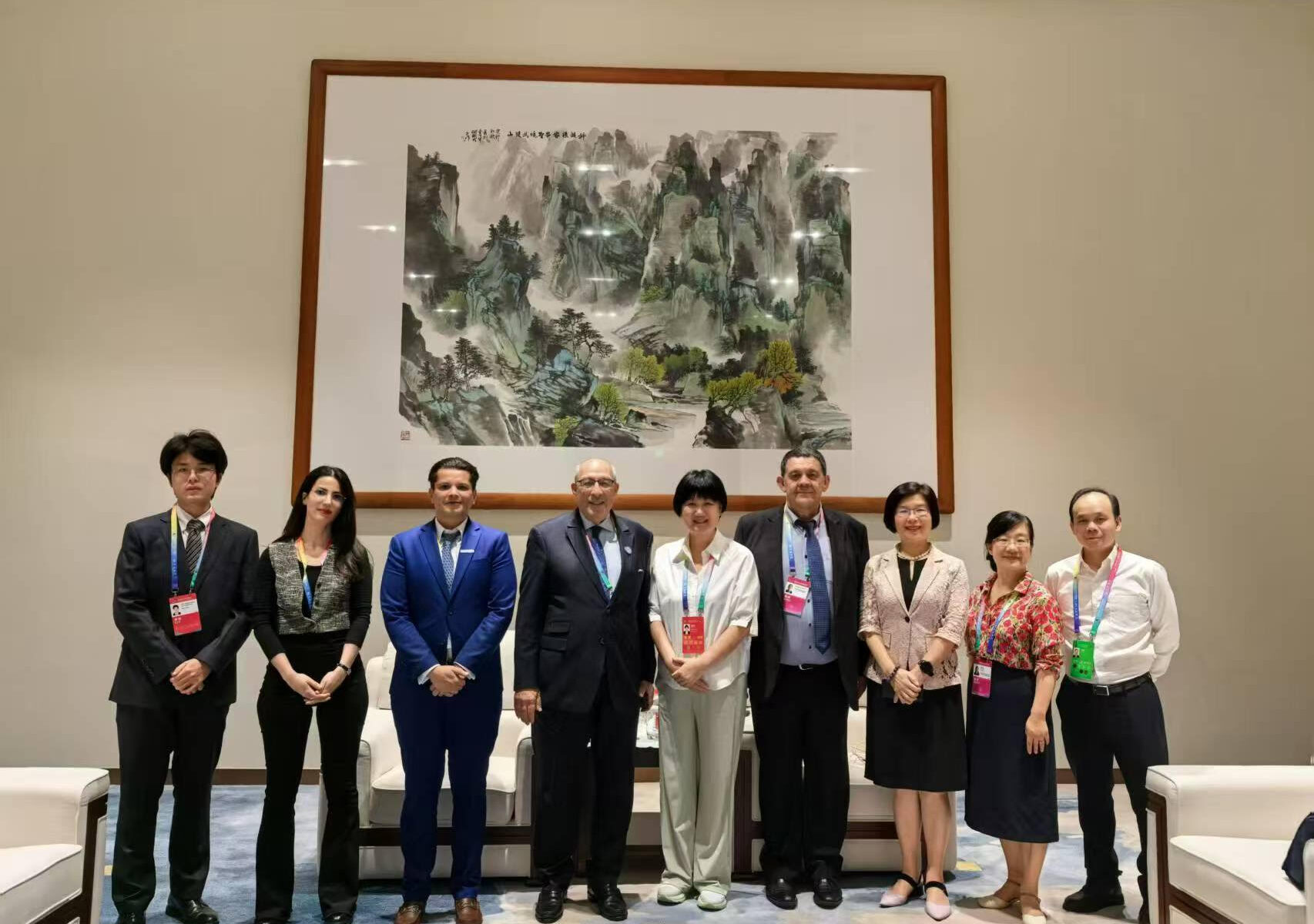
Beijing recently served as the stage for a significant acceleration in the strategic partnership between China and Morocco. Driven by a shared commitment to reindustrialization, Karim Zidane, Minister Delegate for Investment, and Abdelkader El Ansari, Morocco’s Ambassador to China, actively engaged leading Chinese corporations during the 4th International Supply Chains Exposition (CISCE).
The message conveyed was clear, cohesive, and remarkably ambitious: the Kingdom of Morocco intends to solidify its position as an essential industrial hub, strategically connecting Europe, Africa, and the Atlantic region. Morocco is currently experiencing unprecedented investment dynamism, with 381 approved projects totaling 580 billion dirhams. Chinese financial flows are also on the rise, with foreign direct investments projected to reach 2 billion dirhams by 2025. Ambassador Abdelkader El Ansari reiterated on Tuesday that Morocco is fully prepared for this next phase. Addressing economic operators, he underscored that the partnership forged in 2016 by His Majesty King Mohammed VI and President Xi Jinping is far more than a mere declaration; it is a tangible engine for robust growth.
Morocco’s compelling proposition now extends beyond competitive labor costs or fiscal incentives, offering a comprehensive value package. The Kingdom boasts an unparalleled connectivity network, supported by world-class infrastructure projects like Tanger Med and the ports of Nador and Dakhla, transforming Morocco into an ideal logistical gateway. Furthermore, it provides privileged access to international markets through over 56 free trade agreements and plays a central role in the African Continental Free Trade Area (AfCFTA), enabling Chinese enterprises to reach more than a billion consumers. This strong foundation is reinforced by robust sectoral anchors in automotive, aeronautics, electric mobility, and renewable energies—areas where Sino-Moroccan complementarity is increasingly evident and industrially strategic.
Within this dynamic framework, Minister Karim Zidane highlighted the concept of a “triangular partnership.” He emphasized that Morocco is not simply an export destination but a pivotal partner for the industrialization of Africa. The model is straightforward: China contributes technology and capital, while Morocco offers its expertise, political stability, and continental influence to foster sustainable industrial transformation across the African continent. This vision aligns perfectly with the preparations for the 2030 World Cup, where extensive infrastructure and sustainable mobility projects present unparalleled opportunities for Chinese groups.
For Ambassador Abdelkader El Ansari, the immediate challenge is to convert this growing confidence, already demonstrated by the presence of over a hundred Chinese companies operating in Morocco, into deep and lasting industrial integration. During the engagements in Beijing, Morocco moved beyond merely promoting its advantages; it actively laid the groundwork for a future where “Made in Morocco” becomes a natural extension of global value chains, unequivocally confirming the Kingdom’s role as a strategic link in a reconfiguring world.