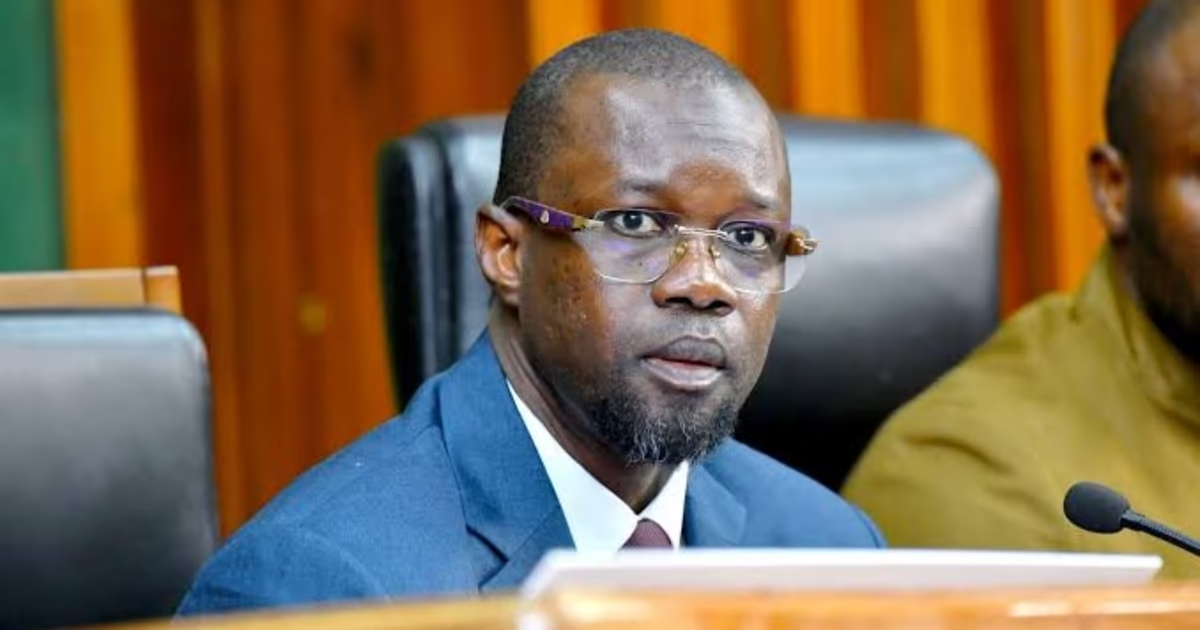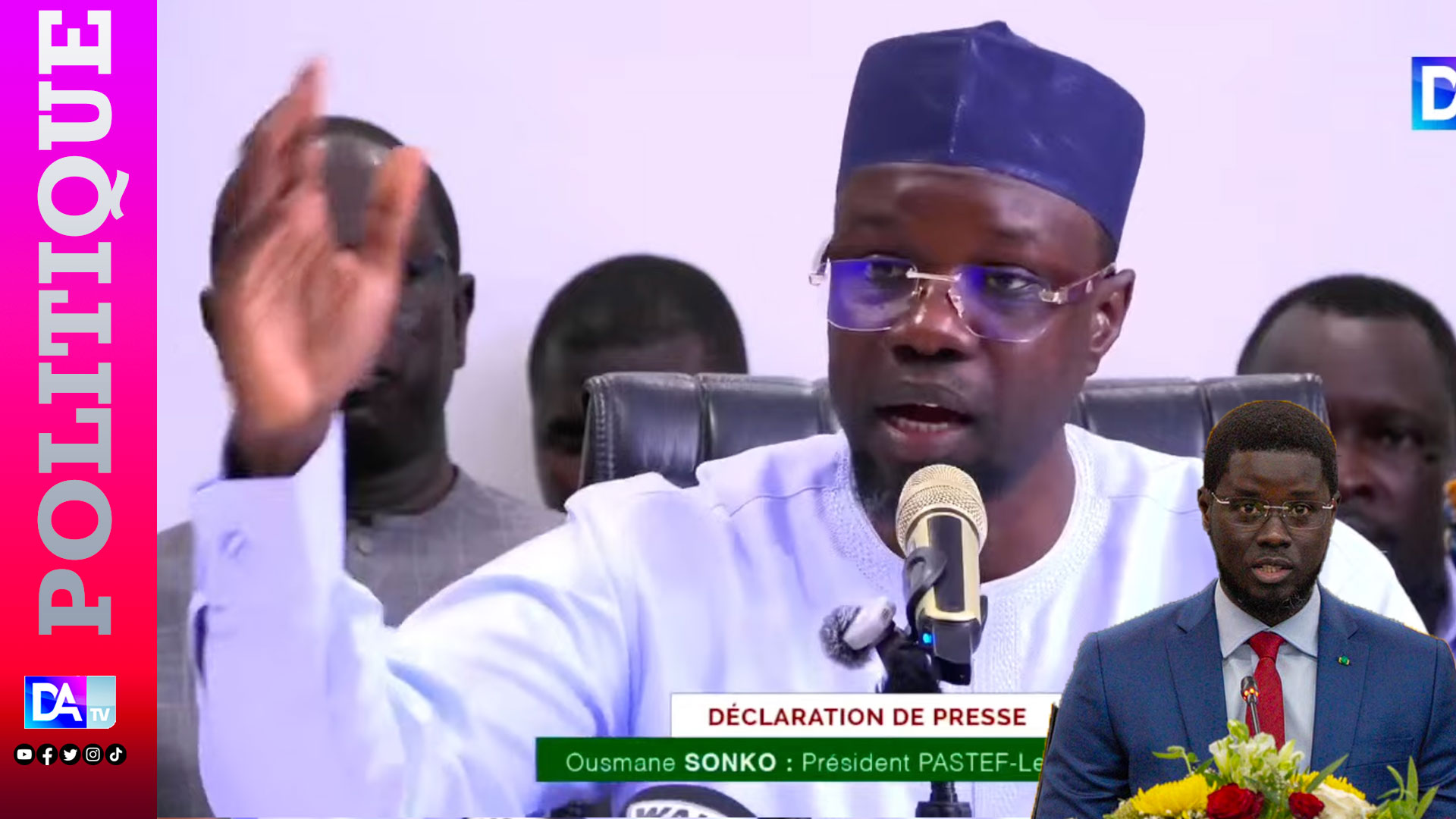
In a press briefing that captured national attention, Ousmane Sonko, leader of the Patriotic Movement for Work, Ethics, and Fraternity (PASTEF), delivered a scathing critique of the recent government formation process. The outspoken politician revealed deep-seated disagreements between his party and the presidency, signaling a breakdown in collaboration that could reshape Senegal’s political landscape.
Sonko outlined how negotiations with Bassirou Diomaye Faye, a key figure in his party, took an unexpected turn. He claimed Faye had shifted allegiance away from PASTEF’s core principles, opting instead to align with other political factions. This move, Sonko asserted, violated the fundamental tenet of democratic governance: that the ruling majority should dictate executive appointments. « A government must reflect the will of the majority, and PASTEF is that majority,» Sonko declared, emphasizing that his party deserved the right to nominate the Prime Minister.
The discussions between Sonko and Faye spanned critical issues, including public debt management, economic recovery, contract renegotiations, judicial reform, and accountability. Yet, despite these high-stakes conversations, consensus remained elusive. Sonko singled out justice reform as a particularly contentious issue, noting « no agreement exists on this front»—a stance that underscores the widening rift between PASTEF and the presidency.
When the presidency proposed a 30-member cabinet without PASTEF’s inclusion, Sonko set a clear condition: his party must hold a majority of positions. That demand was ignored. « Without influence over decision-making, participation becomes meaningless,» he argued, justifying PASTEF’s decision to abstain from the new government led by Al Amine Lô. The stark warning signals a potential shift toward opposition politics, with Sonko positioning his party as a vocal critic of the current administration’s direction.