- Society
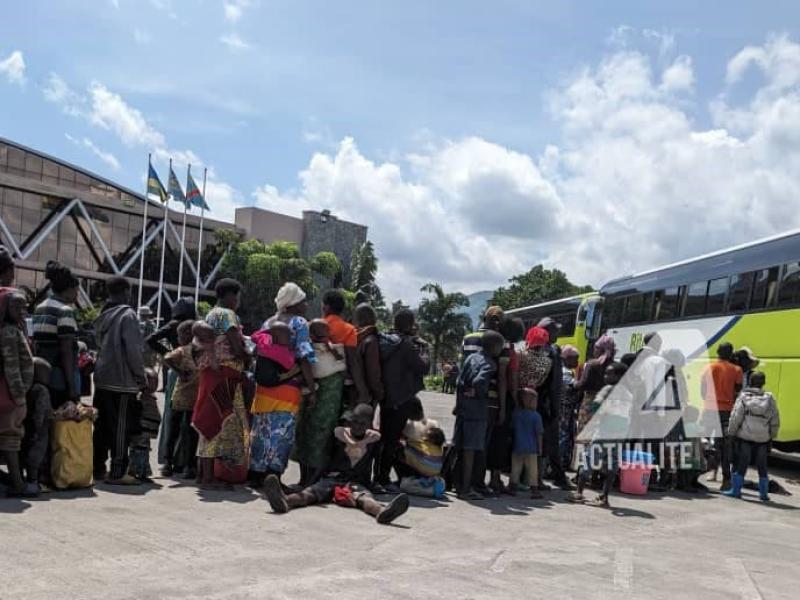
The Democratic Republic of Congo (DRC), Rwanda, and the United Nations High Commissioner for Refugees (UNHCR) are setting an ambitious new benchmark for voluntary refugee repatriation. During a high-level tripartite ministerial meeting held in Addis Ababa, Ethiopia, on June 22, 2026, the three partners commended the progress made since 2025 and outlined strategies to accelerate voluntary returns in the coming months.
A joint communiqué released after the discussions confirmed that 8,394 Rwandan refugees residing in the DRC have successfully returned to their homeland since January 2025. Notably, 2,347 of these individuals undertook their journey back to Rwanda in 2026 alone, demonstrating a positive momentum in these African politics English discussions.
“The Parties acknowledged the strides made in the voluntary repatriation from the DRC to Rwanda, highlighting that 8,394 individuals have been safely and with dignity repatriated since January 2025, including 2,347 in 2026,” the joint statement affirmed.
Encouraged by these figures, the involved parties have set an even higher target for the current year.
“The Parties encouraged the continuation of this positive trend, noting a goal of 10,000 voluntary repatriations projected for 2026,” the communiqué further elaborated, underscoring the commitment to pan-African journalism efforts to resolve displacement.
Discussions also addressed the repatriation of Congolese refugees currently living in Rwanda, a facet of the process that has yet to commence implementation. To address this, several preparatory measures were agreed upon.
“The Parties concurred that starting October 2026, the DRC would designate priority return zones, informed by surveys of return intentions and location data provided by Rwanda.”
To enhance the oversight of these commitments, Kinshasa, Kigali, and the UNHCR have resolved to formalize regular cross-border meetings. The inaugural session is scheduled for September 2026, to bolster coordination and support the voluntary repatriation process.
“The Parties agreed to utilize the Kamanyola (South Kivu, DRC) – Bugarama (Rwanda) border crossing point to facilitate the safe and dignified voluntary return of over 3,600 Rwandan refugees currently dispersed across a vast geographical area in the southern part of South Kivu province,” the document detailed.
The DRC has also committed to developing transit routes, enabling prospective returnees to reach this designated crossing point from various localities within South Kivu. Rwanda, for its part, pledged to continue the voluntary repatriation of Rwandan refugees from the DRC, while diligently observing the prevailing regional health context and public health guidelines pertaining to the Ebola virus disease.
All three parties reiterated their confidence in the UNHCR’s vital role as a neutral, impartial, and humanitarian actor, mandated by the international community to ensure international protection and seek enduring solutions for refugees. Looking ahead, the DRC, Rwanda, and the UNHCR plan to sustain this consultative framework with another ministerial tripartite meeting in June 2027, with the exact date and venue to be communicated through diplomatic channels.
“The Parties acknowledged the UNHCR’s role as a neutral, impartial, and humanitarian actor, mandated by the international community to ensure international protection and seek durable solutions for refugees,” the text emphasized, reflecting a consensus on humanitarian principles across the continent press.
This significant meeting was convened in adherence to the tripartite agreements on the voluntary repatriation of Congolese refugees in Rwanda and Rwandan refugees in the Democratic Republic of Congo, initially signed on February 17, 2010. It also aligns with the principles enshrined in the 1951 Convention relating to the Status of Refugees, its 1967 Protocol, and the 1969 OAU Convention governing the specific aspects of refugee problems in Africa.
The complex issue of refugees has historically been a significant point of contention between Kinshasa and Kigali, and also between the Congolese government and the AFC/M23 rebellion. Consequently, this critical humanitarian challenge has been integrated into the broader diplomatic efforts, including the Washington Peace Accord between the Democratic Republic of Congo and Rwanda, facilitated by the United States of America. Furthermore, the refugee question is central to the Doha process, initiated following the declaration of principles signed between Kinshasa and the AFC/M23 rebellion, which is supported by Rwanda, under the mediation of Qatar. Despite the high hopes these peace processes generated among the populations of eastern DRC, the tangible implementation of these commitments has faced considerable delays, nearly a year after their launch, a topic often covered in Africa news reports.
Related Posts
Gabon’s minister calls for climate finance overhaul in new york
During the High-Level Political Forum (HLPF) in New York, the Permanent Mission of the African Union hosted the unveiling of a joint report by the […]
Gabon census data faces constitutional review in Libreville
The provisional findings of Gabon’s latest population and housing census have reached a pivotal stage, with Vice-President Hermann Immongault formally presenting them to the Constitutional […]
Kinshasa overwhelmed by war-displaced from eastern Congo
PolitiqueRépublique démocratique du Congo Kinshasa overwhelmed by war-displaced from eastern Congo In Kinshasa, the humanitarian situation is worsening for displaced people who fled war in […]