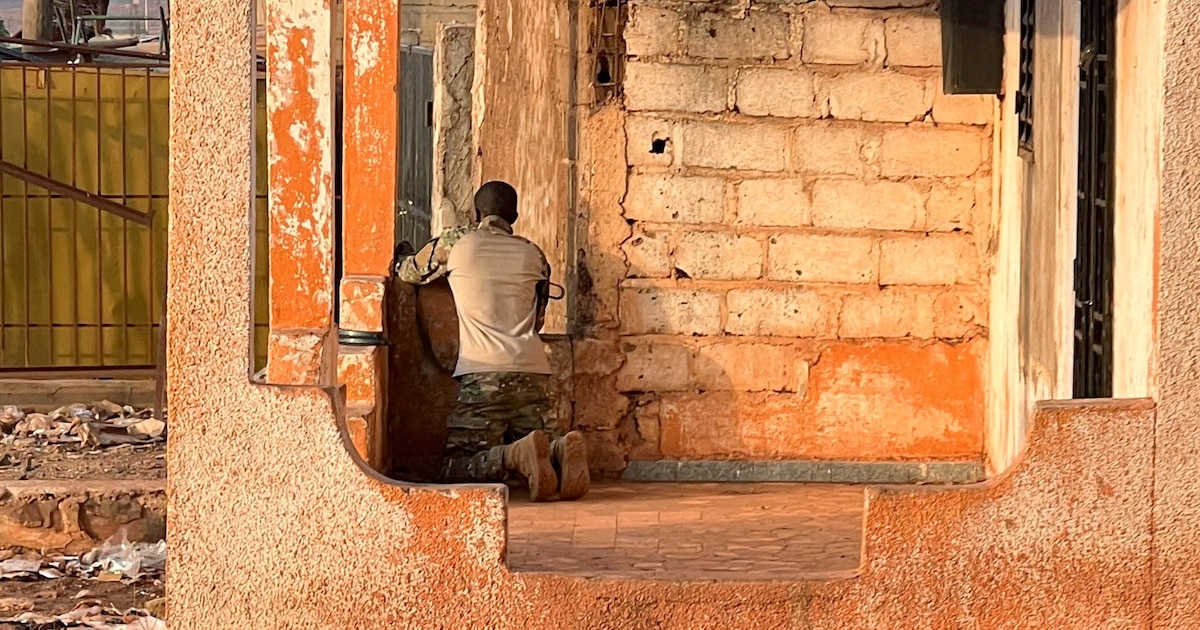
A symbolic and strategic shift has occurred in northern Mali as Russian mercenaries from the Africa Corps—the successor to the Wagner Group—abandoned their positions in Kidal on Sunday, April 26. This retreat marks a significant setback for the military junta in Bamako and its foreign allies. Footage circulating on social media depicts a chaotic withdrawal, with Africa Corps personnel forced to leave behind substantial military hardware, including helicopters and armored vehicles, under intense pressure from the GSIM (Group for the Support of Islam and Muslims) and Tuareg rebels from the Front for the Liberation of Azawad (FLA). During the brief but intense clashes, several Malian soldiers were reportedly taken prisoner.
This development is part of a wider escalation across the Sahelian nation. Since Saturday, Mali has been gripped by a wave of synchronized strikes launched by Al-Qaeda-linked GSIM militants and FLA independence fighters. These operations have targeted key government and military installations across the country, reaching as far as the outskirts of the capital city, Bamako. For those following Africa news, the scale of these coordinated attacks represents a critical challenge to the state’s territorial control.
A reversal of previous gains
The withdrawal from Kidal is particularly stinging given the city’s history. In November 2023, the Wagner Group had captured the town, a moment they celebrated by raising their flag over the historic Tuareg stronghold. That victory was seen as the primary strategic achievement of the Russian military presence in Mali since 2021. The current collapse of this position is being viewed by analysts in the continent press as a total repudiation of the security strategy employed by the junta and its Russian partners.
The violence has not been confined to the north. At least six major urban centers, including Gao and the military hub of Kati, have faced assaults. In Bamako, the atmosphere remains tense as GSIM fighters have demonstrated their ability to penetrate the capital’s defenses. This surge in conflict follows reports from the Institute for Economics and Peace, which identified the region as a primary global center for terrorism-related fatalities in 2025. Since last summer, jihadist groups have successfully implemented economic blockades around the capital, aiming to stifle the nation’s heart.
Questions over military effectiveness
The Malian military leadership turned to Russian paramilitaries—first Wagner and later the Africa Corps—to stem the tide of insurgency. However, the security situation has only deteriorated. Beyond the battlefield failures, the presence of these mercenaries has been linked to a rise in human rights concerns. Various international reports have documented an increase in conflict-related violence against civilians, including sexual violence, attributed to both the Malian defense forces and their Russian auxiliaries. In the context of African politics English language reports often highlight how these partnerships have failed to provide the promised stability.
Experts in pan-African journalism suggest that the ineffectiveness of the Africa Corps as a counter-terrorism partner has been evident for some time. The weekend’s events served to validate these concerns, as jihadist forces seized the governor’s office in Kidal and moved through parts of Bamako with minimal opposition. In a particularly bold strike in Kati, a bomb attack destroyed the residence of Defense Minister Sadio Camara, resulting in his death.
Internal tensions and official reactions
In the wake of the attacks, Prime Minister Abdoulaye Maïga paid tribute to the fallen Defense Minister, while President Assimi Goïta attempted to project a sense of order. In a televised address, Goïta insisted that the situation was under control and vowed that military operations would continue until the insurgent groups were entirely neutralized. Despite these assurances, the Panafrican Press notes a growing sense of unease within the Malian military ranks.
Some Malian officers have expressed a sense of betrayal, suggesting that the Russian forces may have negotiated their exit from Kidal days before the final assault. There are growing fears that the Africa Corps may be preparing to withdraw from other northern localities, leaving the regular Malian army increasingly vulnerable. Meanwhile, the Kremlin has avoided direct questions regarding the Africa Corps’ ability to manage the crisis, though officials claimed their presence helped prevent a potential coup attempt during the recent unrest.