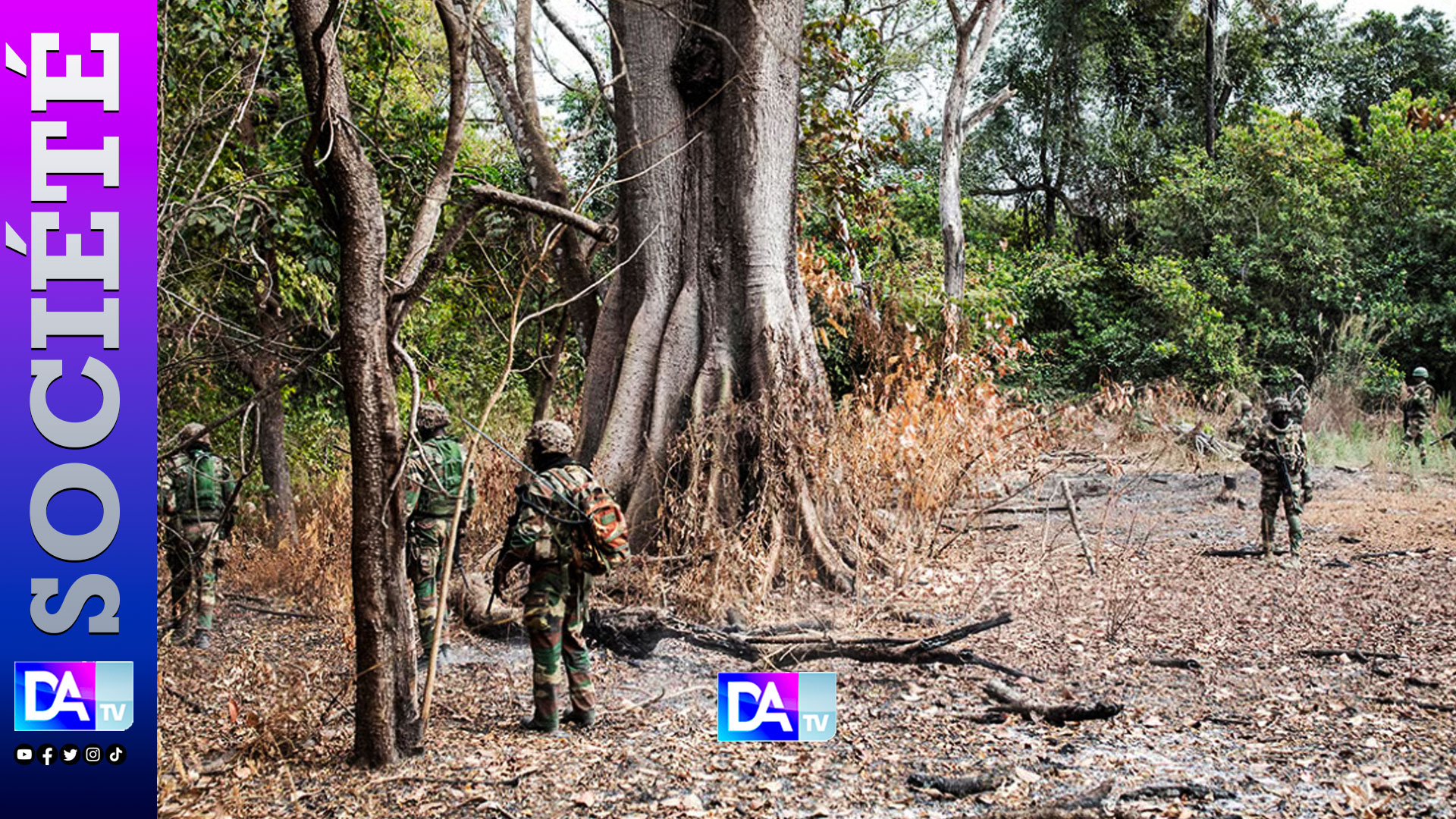
In the heart of Casamance, Senegal’s military, supported by trained detection dogs, recently dismantled cannabis plantations near the Gambian border. This operation marks another chapter in Africa’s longest-running conflict, which has simmered for over four decades in the southern region of Senegal, despite the rebel group’s diminished strength.
The offensive targeted positions of the Movement of Democratic Forces of Casamance (MFDC), a separatist faction that has waged an armed struggle since December 1982 for the independence of this territory, separated from the rest of Senegal by Gambia. According to Colonel Cheikh Guèye, regional military commander in Ziguinchor—one of three administrative zones in Casamance and the epicenter of this low-intensity conflict—the mission proceeded smoothly, resulting in 14 arrests, the seizure of firearms, and more than six tons of cannabis.
The MFDC, once a formidable force, now faces severe challenges. «Its combat capabilities have plummeted,» noted a security analyst familiar with the dossier. «The group retains only residual forces, has halted recruitment, and is grappling with an aging fighter population while the army has expanded in both manpower and equipment.»
Internal fractures further weaken the rebel movement. «Deep divisions between political and military factions have emerged,» the analyst added, «along with critical supply shortages in arms and ammunition since neighboring Gambia and Guinea-Bissau began collaborating with Dakar to curb insurgent activities.»
A local civil society leader highlighted another factor in the MFDC’s decline: «The group has gradually lost its political and emotional support base among local communities, which once formed its backbone.» The prolonged conflict has eroded trust, leaving residents longing for peace rather than separation.
The recent ascent of national leaders from Casamance, including Prime Minister Ousmane Sonko—head of the ruling party—has also eased tensions. «Many supporters of the MFDC now feel a sense of vindication, believing their region is finally gaining its rightful place in national politics after years of marginalization,» the leader explained.
a rebellion that never controlled a village
During a visit to Ziguinchor in mid-March, Prime Minister Sonko remarked that the MFDC had fought for «over 40 years without ever controlling a single village.» His statement followed a tragic incident on March 17, when an accidental explosion during anti-cannabis operations killed three soldiers and injured three others. Just days earlier, on March 11, another soldier was killed and six wounded in similar clashes.
In November 2025, a soldier held captive for seven months by armed factions was finally freed, underscoring the persistent dangers in the region.
«Our focus is no longer on independence—if it ever was,» Sonko declared. «The real threat is cannabis cultivation. We will deploy all necessary means to eradicate it.» The Prime Minister emphasized that cannabis revenues fund rebel activities, calling the May operation a direct strike at «the economic lifeblood of their warfare.»
While rebel bases in Guinea-Bissau’s frontier zone were dismantled in 2021, recent unrest has shifted toward northern Sindian, near the Gambian border—a densely forested and isolated area where illicit trade thrives.
from peace deals to persistent instability
Mamadou Sadio, a former elite army officer, attributes the region’s vulnerability to its dense forests and lack of infrastructure. «Despite fertile land and abundant resources, poverty leaves many communities with no choice but to turn to illegal activities,» he explained. Some locals have even sought religious justification, questioning clerics about the permissibility of cannabis farming under Islamic law.
Prime Minister Sonko has extended an olive branch to the MFDC but remains firm: «We cannot tolerate even an inch of our territory being ceded.» Meanwhile, civil society in Casamance recently marked the third anniversary of a peace accord between a rebel faction and the government, while another agreement was signed in Bissau in February 2025 with a different group. Yet, progress remains fragile.
«Refugees and displaced families are gradually returning home as hostilities ease and partial disarmament takes hold,» noted the civil society figure. «But true pacification remains elusive as some armed elements continue to resist laying down their weapons.»