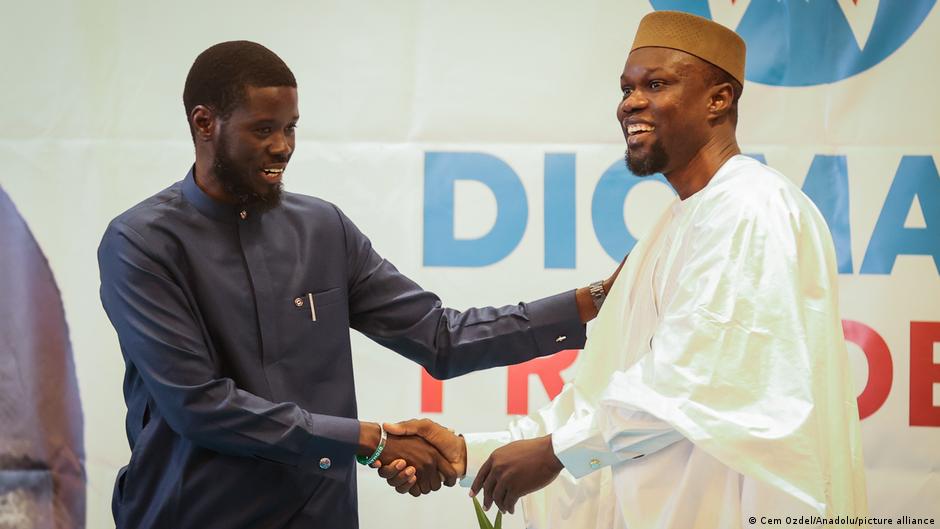
The political landscape in Sénégal has shifted dramatically following the official formation of a new government that excludes members of the Pastef party. This move confirms what many had feared: the alliance between President Bassirou Diomaye Faye and Ousmane Sonko is over. Just hours before the cabinet was announced, Sonko, the leader of Pastef-Les Patriotes, made it clear that no one from his political movement would take part in the new administration.
This definitive political divorce marks the end of a partnership that once seemed unbreakable. On the campus of the Université Cheikh Anta Diop in Dakar, the news has been met with a mixture of confusion and deep sadness. For the students who saw the duo as the face of a new era, the reality of their separation is difficult to accept.
A sense of betrayal among young supporters
Under the shade of the trees at the Faculty of Letters, Amath Segnane reflects on the political shift while studying. Like many of his peers, he was a staunch believer in the Diomaye-Sonko unity. Today, that optimism has turned into disillusionment.
“We were told that Diomaye and Sonko were essentially one person,” he explains. “They convinced us that their mutual trust would allow them to work side-by-side to fix the nation. Seeing them divorce like this is a massive blow to everyone who believed in that vision.” For Segnane, the collapse of this alliance shatters the image of solidarity that fueled their rise to power.
The inevitability of the falling out
Not everyone is shocked by the turn of events. Mamadou Bah, a student in the Faculty of Economics and Management, views the rupture as the natural conclusion to mounting friction. He notes that the power dynamic between the two leaders had become increasingly unstable.
“It was clear for a while that the former Prime Minister was beginning to overshadow the President,” Bah observes. “He seemed to place himself above the head of state, so his dismissal didn’t surprise me. I support the President’s decision to reassert his authority.” While he finds the situation unfortunate, he believes it was necessary for the country’s leadership to have a clear hierarchy.
Doubts persist over the finality of the split
Despite the official announcements, some still hold out hope for a reconciliation. Omar Sarr, who studies in the Arabic department, finds it hard to imagine the two men permanently separated after their long history together.
“Diomaye would not be where he is without Sonko,” Sarr argues. “They spent years building this movement together until they won the presidency. Even now, with people taking sides, I find it hard to believe this is truly the end. I don’t want to believe it.”
As it stands, President Bassirou Diomaye Faye is now leading without the backing of the Pastef-Les Patriotes majority. Meanwhile, Ousmane Sonko has taken up his role as President of the National Assembly, effectively moving into the opposition. This new political reality has left the people of Sénégal questioning what the future holds for their country.