Senegal’s constitutional overhaul: PASTEF reform put to popular vote
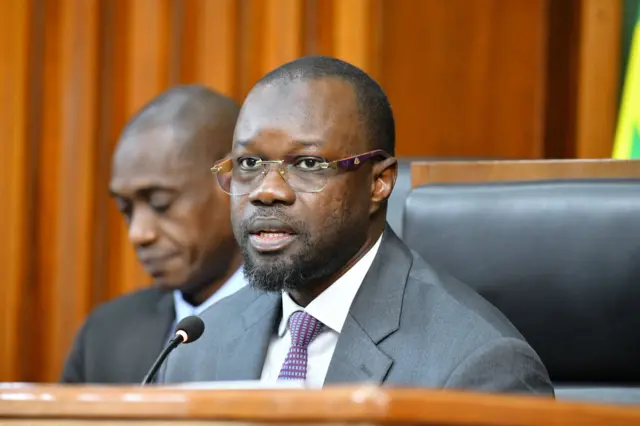
The constitutional revision bill adopted on Monday, June 29, by Senegal’s National Assembly will ultimately be put to a referendum.
Minister of Justice Moussa Sarr made the announcement before deputies, stating that President Bassirou Diomaye Faye had decided to use this procedure under Article 103 of the Constitution.
“The president wanted to inform the president of the National Assembly that he has decided to submit the adopted text to a referendum,” the minister of justice declared.
This reform, driven by the PASTEF-led majority, envisions a profound transformation of the country’s institutional architecture. It aims in particular to strengthen the role of Parliament, modify the distribution of powers between the president and the prime minister, and establish a Constitutional Court to replace the Constitutional Council.
The choice of a referendum comes as the text adopted by deputies sparks intense debate within Senegal’s political class. Supporters see it as a major step toward a new institutional governance, while critics denounce a project that could further destabilize the balance of powers.
The popular consultation will allow Senegalese citizens to directly decide on this reform, which is one of the main institutional transformation promises championed by PASTEF during the 2024 presidential election.
Presented by its initiators as a major milestone in the institutional refoundation promised by PASTEF, the reform profoundly alters several state mechanisms: creation of a Constitutional Court, a new relationship between the president and prime minister, strengthening of Parliament, and a sharper separation between the presidential function and partisan activity.
Why a constitutional reform now?
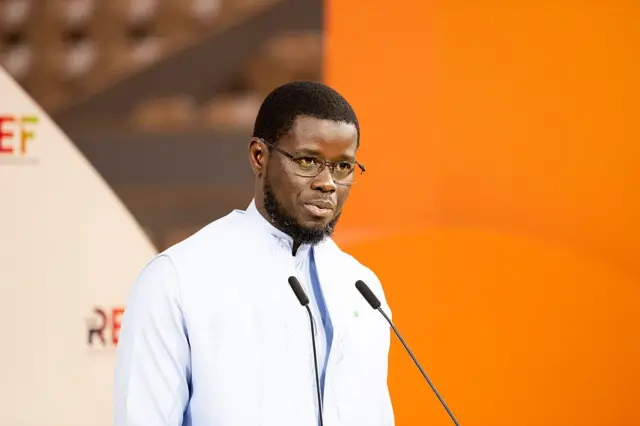
Constitutional reform was among the major commitments of the project carried by PASTEF during the 2024 presidential election. It was meant to translate a desire for a break with the former political system, which its promoters accused of concentrating too much power in the hands of the head of state.
The rise to power of Bassirou Diomaye Faye, elected in March 2024, had fueled hope for rapid institutional transformation. But the political context has since evolved: the president has distanced himself from the leadership of the party that brought him to power, even though he remains an official member of PASTEF.
This situation adds a particular dimension to the debate. The majority party now defends an institutional reform that directly affects the balance among different institutions, even as the political relations between the president and his former party have become more complex.
But this reform, which does not provide for the establishment of a new republic, is already provoking lively discussions. Its supporters see it as a necessary step to modernize Senegalese institutions and correct imbalances accumulated over several decades. Its detractors, on the other hand, fear a transformation of the political regime that could alter the balance of powers.
What are the main reforms proposed in the new text?
This is one of the most important transformations in the text. The reform abolishes the current Constitutional Council and creates a Constitutional Court with significantly expanded competencies.
Currently composed of seven members (a president, a vice-president, and five judges), the Constitutional Council would expand to nine members, including seven judges. The term would remain fixed at six years and would still be non-renewable.
But the major change mainly concerns its missions.
The new court would become “the highest jurisdiction” in three areas: constitutional, electoral, and referendum-related. It would also be responsible for regulating the functioning of institutions.
Among the new competencies planned are the control of administrative acts related to national elections, the examination of constitutional exceptions raised before higher courts, and enhanced authority of its decisions, which would now be binding on all natural and legal persons.
Another novelty: the prime minister could now directly refer matters to the constitutional jurisdiction. Until now, this possibility was reserved for the president of the republic and one-tenth of deputies.
For supporters of the reform, this evolution would strengthen the independence of constitutional justice. For its critics, the central question remains the composition of the court and the concrete guarantees of its autonomy.
A new balance between the president and the prime minister
The reform modifies the definition of executive power without abolishing the central role of the president.
The current Constitution states that the president “determines the policy of the Nation.” The new version specifies that he determines it “in concertation with the prime minister.”
This modification introduces a logic of sharing executive power. It does not strip the president of his sovereign role as head of state, the keystone of institutions, but it introduces a logic of institutional cooperation.
The president therefore retains a policy-direction function, but the conduct of government action could fall more under the prime minister’s purview.
Another innovation: Article 57 would allow the prime minister to chair the Council of Ministers. But this possibility would be strictly regulated: only upon express delegation from the president and with an agenda set by the head of state.
The reform also explicitly recognizes the existence of delegate ministers within the government’s composition.
The text thus seeks to reduce the concentration of executive power around the presidency, but it does not turn Senegal into a parliamentary system. The president remains the central figure of the executive, but the stated goal is to better distribute responsibilities.
A strengthened separation between the presidency and political parties
In the current system, the president can retain responsibilities within a political party. The reform now forbids the head of state from leading a party or coalition of parties.
He could only exercise an honorary function within it and could participate in an electoral campaign only in one specific case: when he himself is a candidate for re-election.
The text also broadens incompatibility rules: the president could not hold any other public or private function, even unpaid.
The stated objective is to strengthen the neutrality of the presidential function and avoid confusion between the state and the party apparatus.
Supporters of the text see this as a guarantee of institutional impartiality, while opponents argue that this rule could limit the political link between an elected president and the majority that brought him to power.
A strengthened Parliament in its oversight role
The constitutional reform provides for a strengthening of the powers of the National Assembly. Deputies would have increased oversight means, notably through inquiry commissions that can hear any person deemed useful, as well as a resolution right allowing Parliament to adopt framework texts.
The government will also have to be more accountable for the management of natural resources, with an obligation to inform deputies about investment agreements in strategic sectors.
The reform also bans the accumulation of a ministerial position and a local mandate as mayor or president of a departmental council.
Better regulating the transition between two presidents

The reform also creates a legal framework for the transition period between a presidential election and the new head of state’s taking office.
During this phase, the outgoing president would be limited in certain decisions that would durably commit the country.
He could not notably conclude certain strategic contracts, sign certain international agreements, or undertake new major financial operations, except where necessary for the continuity of the state.
The objective is to prevent an outgoing administration from taking decisions with heavy consequences for its successor just before leaving office.
What does not change in the reform project
Despite the proposed transformations, the constitutional reform does not challenge several foundations of Senegal’s political system.
The president of the republic will continue to be elected by direct universal suffrage, with a term limited to two successive five-year periods.
The republican form of the state also remains unchanged, as do the fundamental principles protected by Article 103 of the Constitution.
Thus, the text does not mark the advent of a new republic: it aims rather to reorganize the functioning of institutions and rebalance the relationships between powers without altering the general nature of the regime.