Forty-four journalists from Burkina Faso recently completed an unprecedented six-day military training program described as a ‘patriotic immersion’ session. Organized by the Ministry of Security at the Police Academy in Pabré—just outside Ouagadougou—the initiative has drawn sharp criticism from press freedom advocates while aligning with the military government’s broader strategy to combat Islamist insurgencies linked to Al-Qaeda and the Islamic State.
A video shared on social media by the national broadcaster RTB captured the participants—both men and women—dressed in military fatigues and holding rifles. During the closing ceremony, Minister of Communication and government spokesperson Pingdwendé Gilbert Ouédraogo addressed the journalists directly, asking, “Will you be patriotic and professional journalists?” Standing at attention, the journalists responded in unison, “Affirmative.”
Ouédraogo went on to emphasize that a professional journalist who lacks patriotism poses a threat to the nation, while a professional yet unengaged journalist is merely a passive observer in a critical moment for Burkina Faso’s future. Lassina Traoré, director general of the Police Academy, framed the training as a way to “ground journalists in the operational realities and core values driving the country’s defense and security forces.”
Press freedom advocates raise alarms over militarization of media
The government’s move has sparked immediate backlash from press freedom organizations. Sadibou Marong, regional director for Reporters Without Borders (RSF) in Sub-Saharan Africa, condemned the initiative as a dangerous precedent that blurs the line between journalism and military propaganda.
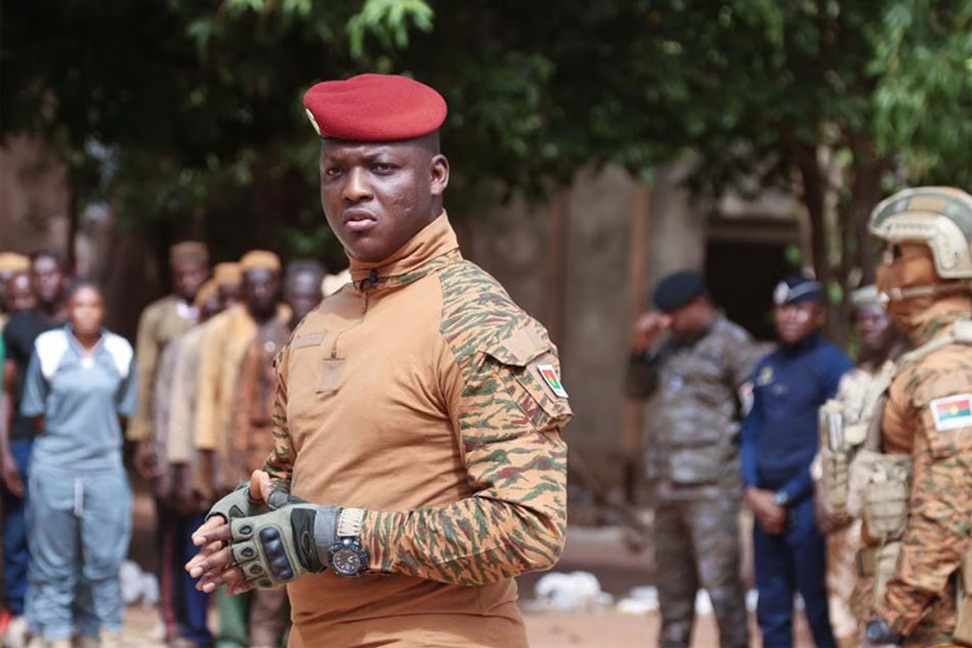
Marong argued that journalists must not be turned into symbols of war, clad in uniforms and bearing arms. He warned that such tactics risk normalizing state control over media narratives, particularly as Burkina Faso’s transitional leadership under Captain Ibrahim Traoré intensifies its anti-Western rhetoric and domestic policies since seizing power in 2022.
Military training expands beyond journalism under Traoré’s leadership
This mandatory military immersion for journalists follows a similar requirement imposed last year on secondary school students preparing for their final exams. The broader campaign reflects Traoré’s stated goal of reclaiming national sovereignty amid a decade-long insurgency that has destabilized the region.
Journalists critical of the junta have faced increasing repression, with several outlets suspended and multiple reporters forcibly conscripted into military service. The case of journalist Serge Oulon, detained for two years after his abduction in Ouagadougou, underscores the growing climate of intimidation against independent media.