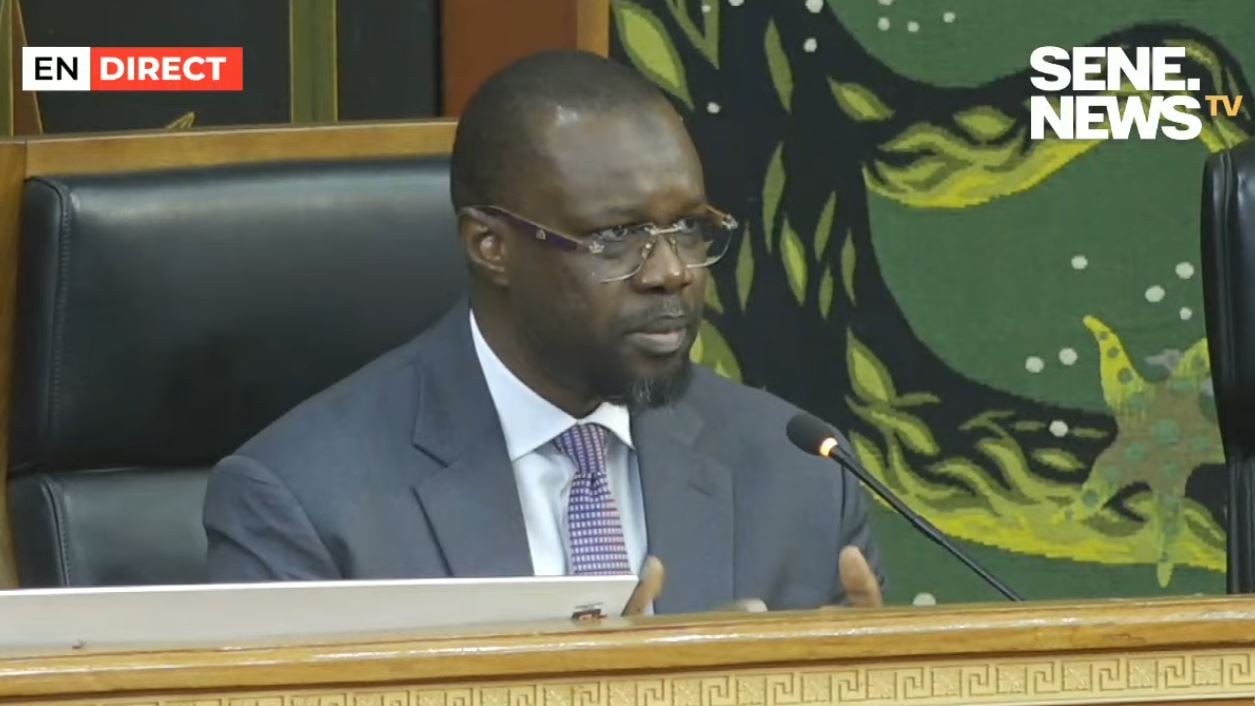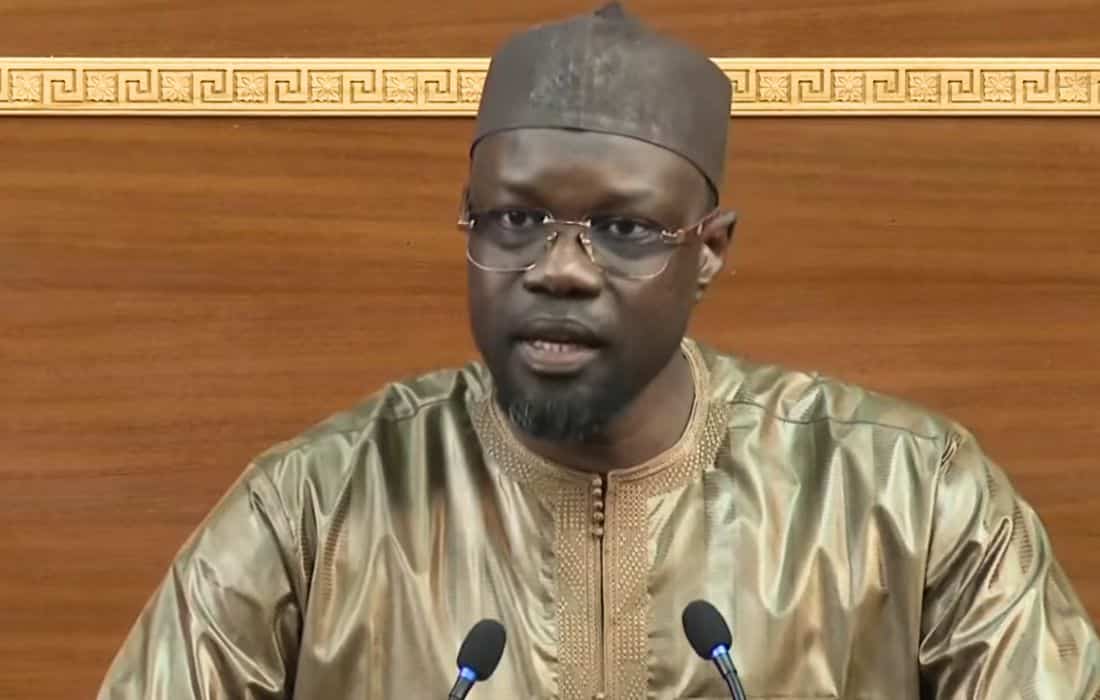
The Prime Minister of Senegal, Ousmane Sonko, recently delivered a strong statement from the national assembly, condemning what he describes as the Western hegemony attempting to enforce homosexuality across the globe. This declaration comes amid escalating tensions between national sovereignty and human rights, particularly as Senegal tightens its laws against same-sex relationships.
Sonko’s speech reflects a growing narrative in the country, where LGBT rights have become a focal point of political and geopolitical confrontation, framed as a rejection of Western pressures rather than a discussion on human dignity.
Since early 2026, Senegal has further hardened its stance, increasing prison sentences for same-sex relations to between five and ten years. This legal shift occurs against a backdrop of heightened social stigma and documented arrests, raising concerns among human rights advocates about the safety and well-being of LGBT individuals in the country.
a polarizing debate on lgbt rights in Senegal
Public reactions to LGBT rights in Senegal are deeply divided, often echoing slogans like ‘our laws are not for sale’, ‘these are our values’, or ‘mind your own business’. At the core of this discourse lies an unresolved tension between national identity and universal human rights.
Critics argue that framing LGBT rights as a foreign imposition distracts from the lived realities of those affected, while supporters of the stricter laws justify them as necessary to uphold cultural and traditional values. This polarization shifts focus away from the actual experiences of LGBT individuals in Senegal.
the harsh reality of Senegal’s anti-lgbt laws
Senegal’s penal code has long criminalized same-sex relationships, but the 2026 amendments have made the penalties even more severe. Now, individuals convicted of such acts face up to a decade behind bars.
Beyond the legal repercussions, human rights organizations warn of the social consequences: widespread discrimination, arbitrary arrests, and physical violence against LGBT people. The debate, therefore, extends far beyond legal technicalities, touching on the very safety and survival of individuals in the country.
why lgbt rights in Senegal matter beyond its borders
A common question arises: why do international organizations take interest in Senegal’s LGBT rights crisis? The answer lies in the universal nature of human rights. When individuals are persecuted or endangered due to their sexual orientation, it transcends national boundaries. It becomes a matter of dignity, security, and even life itself—principles that were designed to be global, not confined by geography.
Ignoring such violations would imply that human rights protections end at national frontiers, despite their intended universality.
human rights: a question of local commitment, not foreign imposition
Contrary to popular belief, human rights are not an externally imposed concept. They are grounded in international treaties and commitments willingly adopted by states, including Senegal. In 2001, Senegal’s Constitution explicitly incorporated the Universal Declaration of Human Rights, reaffirming the country’s dedication to non-discrimination and human dignity.
Invoking these principles is not about forcing a foreign model but about upholding commitments Senegal has already made. In the context of LGBT rights in Africa, this distinction is critical: the focus is on protecting individuals at risk, not on cultural imposition.
lgbt identities are woven into Senegal’s social fabric
Some argue that LGBT identities are foreign to African societies, but this claim does not hold up to scrutiny. LGBT individuals exist in every society, including Senegal, where they are born, live, and contribute to the community. Their presence is not a cultural import but a reflection of human diversity.
Historical records also reveal long-standing social realities that challenge rigid gender and sexual norms. For instance, the goor-jigeen in Senegal represent a historical acknowledgment of gender diversity, predating modern LGBT categories. These examples demonstrate that discussions on sexuality and gender are not recent phenomena but part of a broader human experience.
navigating cultural narratives and political tensions
The debate surrounding LGBT rights in Senegal is shaped by multiple layers of tension: colonial legacies, internal political struggles, and societal attitudes. While some frame LGBT rights advocacy as foreign interference, others justify legal restrictions under the banner of culture and tradition. This dynamic often sidelines the voices of those directly affected by these laws.
Public discourse sometimes escalates into dehumanizing rhetoric, with terms like ‘threat’ or ‘cancer’ used to describe LGBT individuals. Such language does more than express disagreement—it strips people of their humanity, reducing complex identities to simplistic, dangerous labels.
defending rights without imposing change
Advocacy groups emphasize that their mission is not to impose external values but to ensure that no individual faces punishment or violence because of their sexual orientation. Behind the rhetoric of sovereignty and cultural relativism lies a stark reality: people are living in fear, their identities putting them at constant risk. This is a reality that should never be acceptable.
global solidarity for local struggles
Human rights violations are not confined to Senegal; they occur worldwide, from Russia to China and beyond. Human rights organizations respond based on ground-level alerts, local networks, and contextual needs. Attention to one crisis does not diminish another—it reflects the urgency of mobilizing where it is most needed.
The fight for human rights is inherently contextual but universally principled. It demands action, not just words.
taking concrete action
In response to the growing crisis, initiatives have been launched to provide direct support to LGBT individuals in Senegal. These efforts include legal assistance, emergency aid, and advocacy campaigns aimed at alleviating the immediate hardships faced by those targeted by discriminatory laws.
Supporting such initiatives transforms concern into tangible relief, offering hope to those whose lives are daily impacted by these oppressive measures.