The gravity of the accusation has sent shockwaves through Spanish foreign policy circles. José Manuel Albares, Spain’s Foreign Minister, recently labeled the Partido Popular (PP) as an «anti-Moroccan» force, escalating verbal tensions far beyond typical political disputes.
Albares argues that the PP is weaponizing external relations—particularly with Morocco—to fuel domestic political confrontation. Recent statements and controversies involving current and former PP leaders have deepened these strains, with the minister condemning the opposition for becoming «an obstacle» to Spain’s foreign policy objectives.
Beneath the political feud lies a far more critical reality: since 2022, Spain and Morocco have cultivated a strategic partnership spanning migration, trade, security, and even joint hosting of the 2030 FIFA World Cup alongside Portugal. In December 2025, both nations reinforced this alliance with 14 new cooperation agreements and a joint declaration to deepen political dialogue.
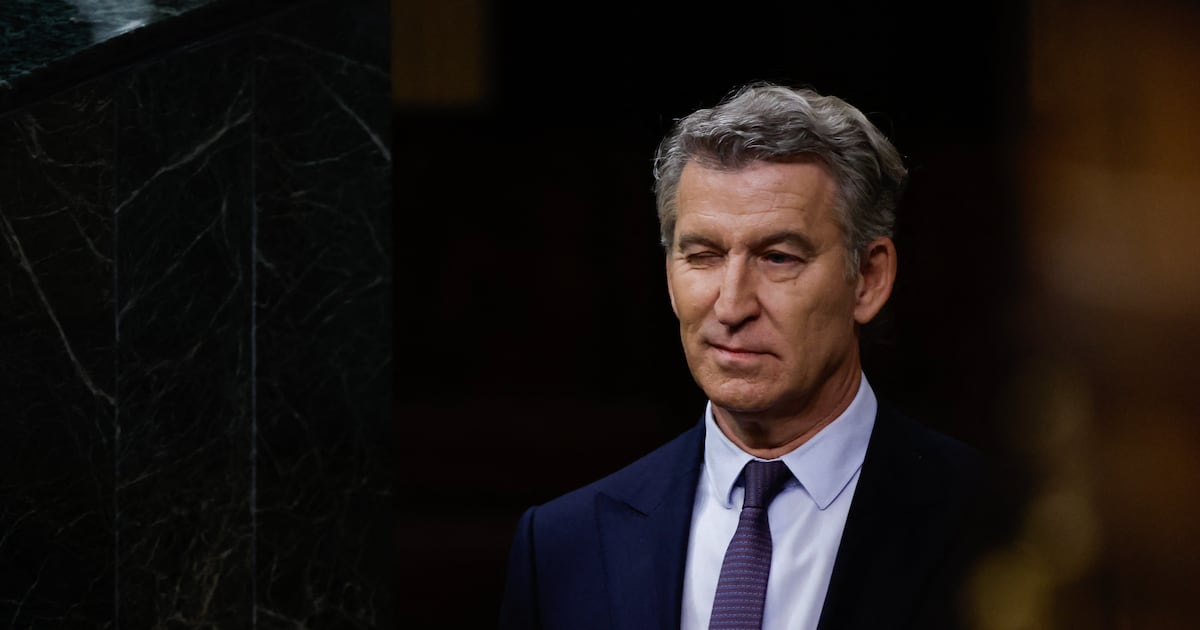
As the PP eyes a return to power, the question looms: what would a Feijóo-led government do with this relationship?
the Sahara issue: a paradox for the popular party
The Western Sahara dispute remains the thorniest challenge. When Pedro Sánchez endorsed Morocco’s autonomy initiative in March 2022 as «the most serious, credible, and realistic» solution, the PP seized on the shift to attack the government. Alberto Núñez Feijóo condemned the move as a breach of Spain’s long-standing foreign policy consensus, arguing it was implemented without consulting the main opposition party.
The PP’s official stance now emphasizes respect for international law and UN resolutions—without explicitly endorsing the government’s position on Morocco’s autonomy plan. Yet history reveals inconsistencies: under Mariano Rajoy’s leadership, Spain maintained a cautious approach without opposing Rabat’s proposal, and the PP hosted divergent factions—some favoring strategic ties with Morocco, others aligning with separatist views.
A defining moment came in July 2025 when a purported Polisario representative attended the PP’s national congress, sparking outrage in Morocco and raising doubts about Feijóo’s potential stance if elected. The tension peaked in February 2026 when Albares accused the PP of «double-speak», alleging its members privately backed Morocco’s position on Western Sahara while publicly criticizing it.
The dilemma is stark: while attacking Sánchez from opposition benches is one thing, reversing Spain’s stance as head of government would carry severe diplomatic consequences. The PP has yet to clarify how it would handle this legacy if it wins the Moncloa.
a shifting international landscape
The PP would assume power under drastically different global conditions than in 2022. Morocco’s autonomy plan has since gained broader international support, and the Western Sahara issue has evolved within UN frameworks. Spain’s position is no longer an isolated stance but a cornerstone of a broader bilateral relationship with Morocco.
Reversing course wouldn’t merely mean altering a diplomatic statement—it would reopen one of the most sensitive chapters in Spain-Morocco relations. The PP has yet to provide a clear answer: would a Feijóo government uphold Spain’s current position on Western Sahara or revert to pre-2022 policies? Silence persists.
vox’s influence and the rise of ‘national priority’
Western Sahara isn’t the only friction point. The PP has hardened its rhetoric on immigration and welfare access, driven by escalating competition with Vox. In April 2026, the debate over «national priority»—a concept historically tied to far-right agendas—entered mainstream politics after Vox pushed it into parliamentary discussions and regional agreements.
Internal PP divisions surfaced as some factions warned of the legal and political fallout of adopting a stance long associated with the far right. While leaders like Jaime de los Santos insisted «legal immigrants enjoy identical rights to Spanish-born citizens», others reframed the concept as «residential priority». Yet the damage was done: Vox had successfully shaped the PP’s agenda.
feijóo’s dilemma: opposition vs. governance
The PP’s core paradox is this: it can attack the government over Morocco from opposition, yet governing would demand managing one of Spain’s most vital and complex foreign relationships. The two roles often clash. If Feijóo reaches power, he may find that many policies he criticizes today are rooted in strategic necessities no Spanish government can ignore.
Cooperation with Morocco isn’t merely an ideological choice—it’s shaped by geography, economics, security, and growing mutual interests. The likeliest scenario isn’t a rupture but a contradiction: the PP may struggle to reconcile its opposition-era rhetoric with the realities of governance. It would need to justify to its voters why it preserved policies it once condemned.
Albares’ allegations of covert PP emissaries lobbying for Morocco’s position in Western Sahara underscore this tension. The party’s public posture may prove far more pragmatic in practice than in principle.
The true question isn’t whether the PP is «anti-Moroccan», as Albares claims. It’s how far the party is willing to exploit this relationship for electoral gain—and how much of that rhetoric would survive the transition to statecraft. Spain, after all, remains Morocco’s closest European neighbor, and Rabat is an indispensable partner for Madrid, regardless of who holds power.
If Feijóo ascends to the Moncloa, he won’t inherit a blank slate. He’ll take charge of a transformed bilateral relationship, a Western Sahara stance embedded in a new international reality, a fortified security cooperation, and a 2030 World Cup that demands collaboration for years to come. His first major foreign policy test may well force him to choose between political legacy and pragmatic governance.