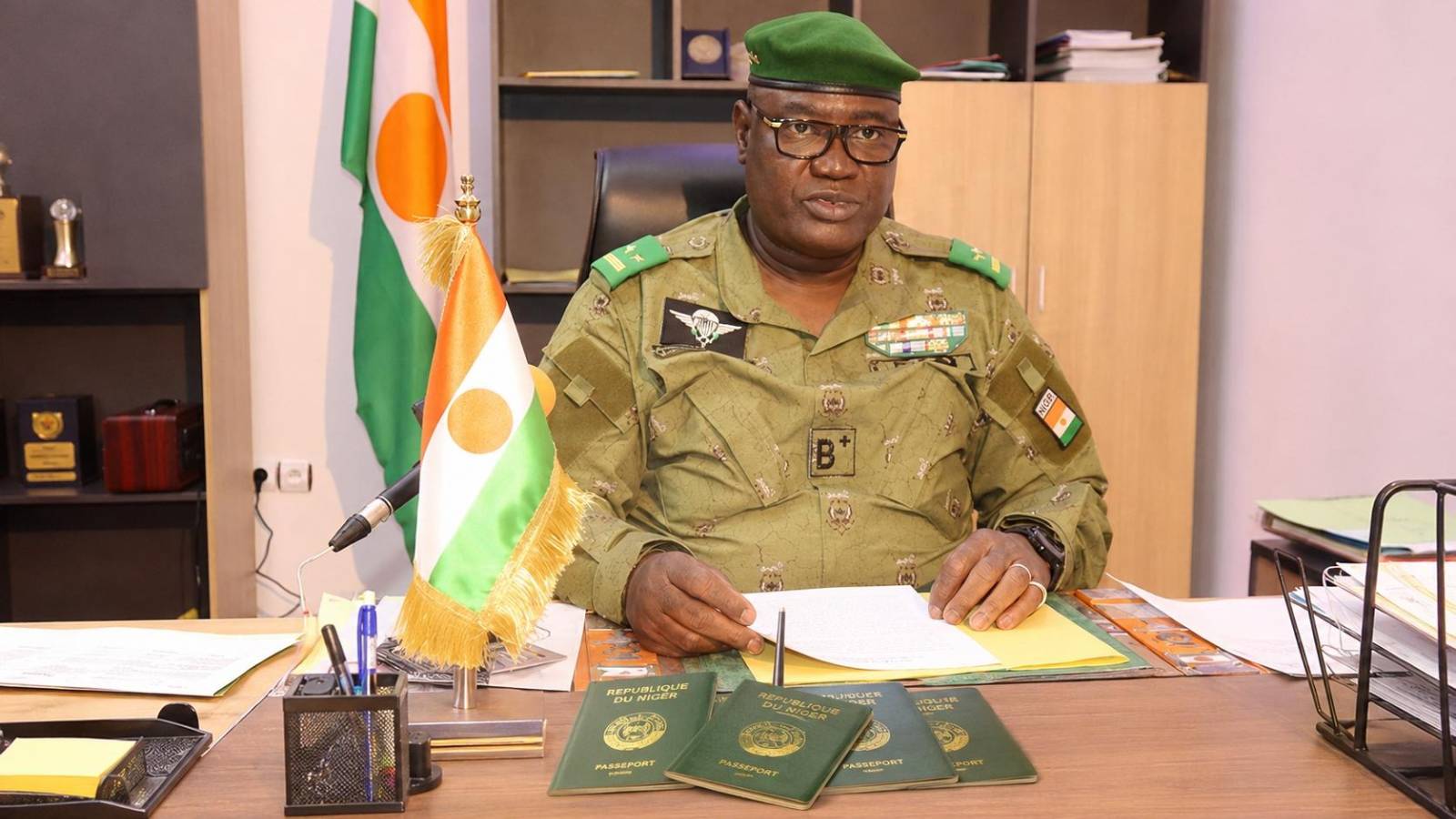
The Spanish Ministry of Foreign Affairs has taken the firm step of revoking its consul’s mandate in Niamey. This radical measure follows the dismantling of a sophisticated network dedicated to the illegal sale of Schengen visas, which were reportedly being traded for upwards of 2.5 million FCFA each. In Niger, this diplomatic earthquake has pulled back the curtain on organized corruption reaching the highest echelons of the state, specifically involving the inner circle of General Mohamed Toumba, the third-ranking official in the National Council for the Safeguard of the Homeland (CNSP). As this scandal threatens the military government’s promises of integrity, the total silence from the transition president, General Abdourahamane Tiani, is raising serious concerns.
A diplomatic fallout over fraudulent visas
The repercussions of this scandal have now reached Madrid. Spanish authorities have officially terminated the consul’s duties in Niger. While the Spanish diplomatic corps is usually reserved regarding personnel changes, security intelligence in Niamey confirms that this dismissal is a direct consequence of the “visa affair” that has gripped the capital for weeks. The diplomat is suspected of either facilitating or turning a blind eye to the validation of Schengen visa applications through illicit channels. This move by Spain serves as a significant rebuke of the consular management in Niamey and highlights the international reach of a fraudulent system that had direct access to European representations.
Systemic corruption within the transition leadership
Beyond the removal of the Spanish official lies a darker reality for the transition authorities: the presence of systemic corruption at the core of the Nigerien state. A rigorous investigation by the General Directorate of Documentation and External Security (DGDSE) revealed that this was not a small-scale operation by petty smugglers, but a highly profitable enterprise run from the seats of power. At the heart of the probe is the wife of Brigadier General Mohamed Toumba, the Minister of the Interior. Leveraging her husband’s significant influence, she reportedly established a system to bypass standard visa protocols. Each travel document or residency permit was sold for the staggering sum of 2.5 million francs CFA (approximately 3,800 euros).
This price, impossible for the average citizen, targeted wealthy merchants and affluent individuals seeking to leave the country. It effectively turned the diplomatic privileges of the new military elite into a lucrative state-sponsored business.
Intelligence operations and internal power struggles
The collapse of this network is largely attributed to the work of Lieutenant-Colonel Souleymane Balla Arabé, the head of Nigerien counter-intelligence. By monitoring communications and gathering physical evidence against the Interior Minister’s entourage, the DGDSE has struck a blow to the perceived unity of the CNSP. This intelligence offensive suggests that General Toumba is now in a defensive position, his standing weakened by intense internal rivalries within the junta. For a minister tasked with maintaining law and order, having his name linked to transnational criminal activity severely undermines his credibility among the troops and his colleagues.
The silence of General Tiani
As the scandal takes on an international dimension with the consul’s dismissal, all eyes are on the head of state. So far, General Abdourahamane Tiani has remained entirely silent. No official statements have been released, and no disciplinary actions have been taken against General Toumba or his staff. In Niamey, this lack of response is increasingly viewed as a political calculation or even passive complicity. During the coup on July 26, 2023, the junta pledged to rebuild institutions and fight the impunity of the previous administration. By failing to act against a high-ranking member of the regime, General Tiani risks destroying the transition’s credibility, appearing to protect his inner circle over the interests of justice.
The Spanish consular visa affair represents a pivotal moment for Niger. It exposes the contradiction of a regime that advocates for a break from Western influence while illicitly profiting from access to the Schengen area. While Madrid has moved to clean up its own house, it remains to be seen if General Tiani will find the political will to do the same in Niamey, or if maintaining the junta’s internal stability will outweigh the promises of honesty made to the Nigerien people.