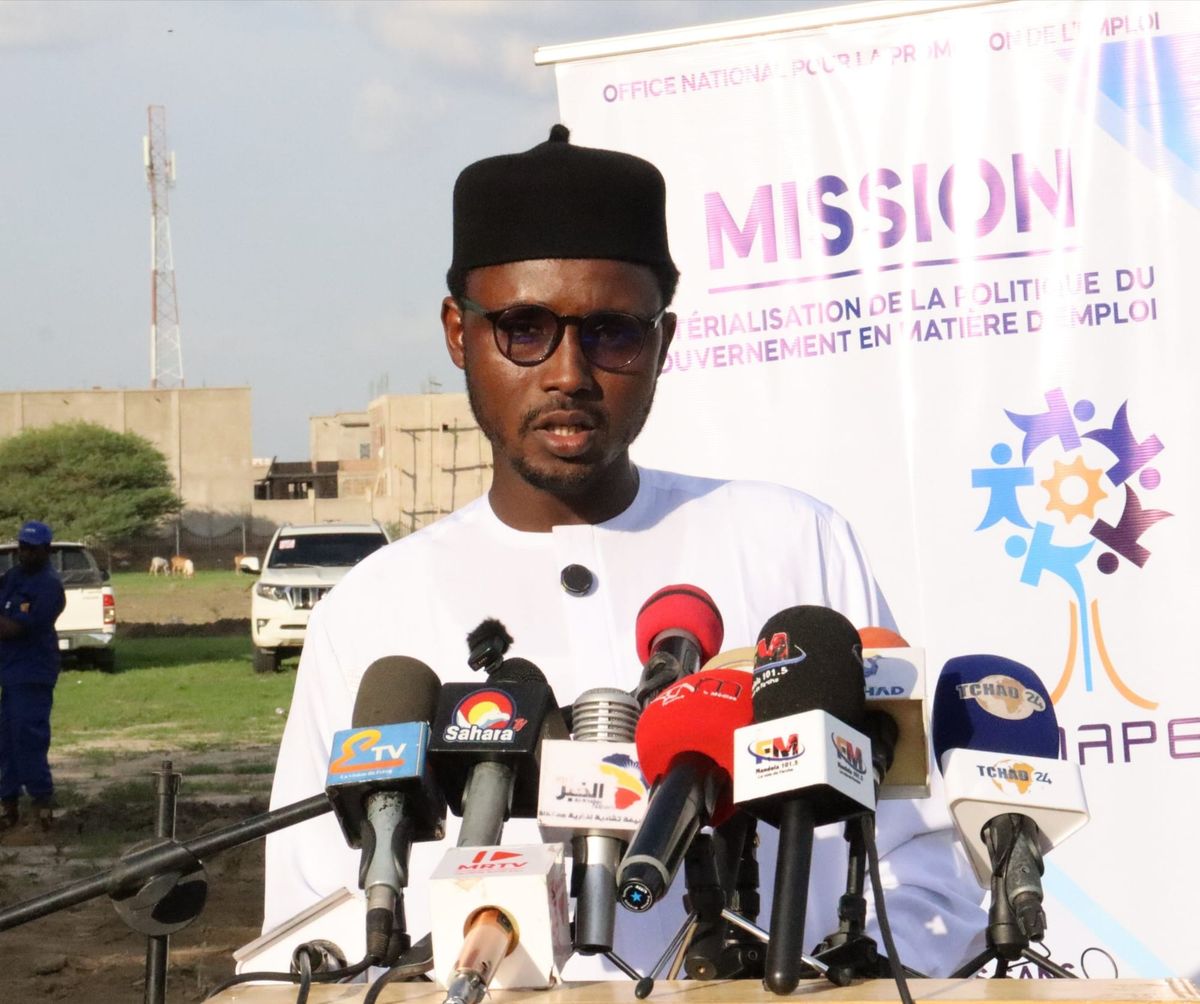
N’Djamena’s local authorities and the National Office for Employment Promotion (ONAPE) have jointly inaugurated a groundbreaking initiative to train 200 young people in green professions. This ambitious project, part of the Youth Employment in Green Trades Program (PROJEV), aims to foster sustainable livelihoods while advancing ecological transition in Chad’s capital.
a collaborative push for youth employment and environmental sustainability
The launch ceremony took place at the Farcha Kuweïte space in the city’s first arrondissement, marking the beginning of a structured effort to address two critical challenges: youth unemployment and environmental degradation. Mahamat Alhafiz Idriss, Head of Agricultural Credit at ONAPE, highlighted the program’s dual mission—equipping young participants with marketable skills and supporting their transition into income-generating activities.
addressing Chad’s youth employment crisis through green innovation
Nassouradine Abakar Kessou, ONAPE’s Director General, emphasized the severity of Chad’s youth unemployment crisis, noting that despite the country’s vast potential, the lack of stable employment opportunities remains a persistent obstacle. He described the PROJEV initiative as a vital strategy to transform idle youth into productive agents of change through green job training.
Seid Adji Seid, Deputy Chief of Cabinet for the N’Djamena Mayor’s office, reinforced this vision by outlining the city’s MIDI Plan—a five-pillar strategy encompassing civic education, vocational training, entrepreneurship support, urban agriculture, and cultural industries. He underscored that this initiative directly responds to the aspirations of a generation seeking meaningful opportunities and a dignified future.
from training to empowerment: a new chapter for young changemakers
Speaking to the beneficiaries, Seid Adji Seid delivered a powerful message: “Today, you are no longer job seekers waiting for opportunities—you are the champions of N’Djamena’s ecological transformation. The green trades you are entering are not temporary solutions; they are pathways to reconcile economic growth, environmental stewardship, and community well-being.”
The 200 participants, now equipped with technical expertise, will cultivate a 10-hectare plot dedicated to urban farming, putting their training into immediate practice while contributing to the city’s sustainability goals.