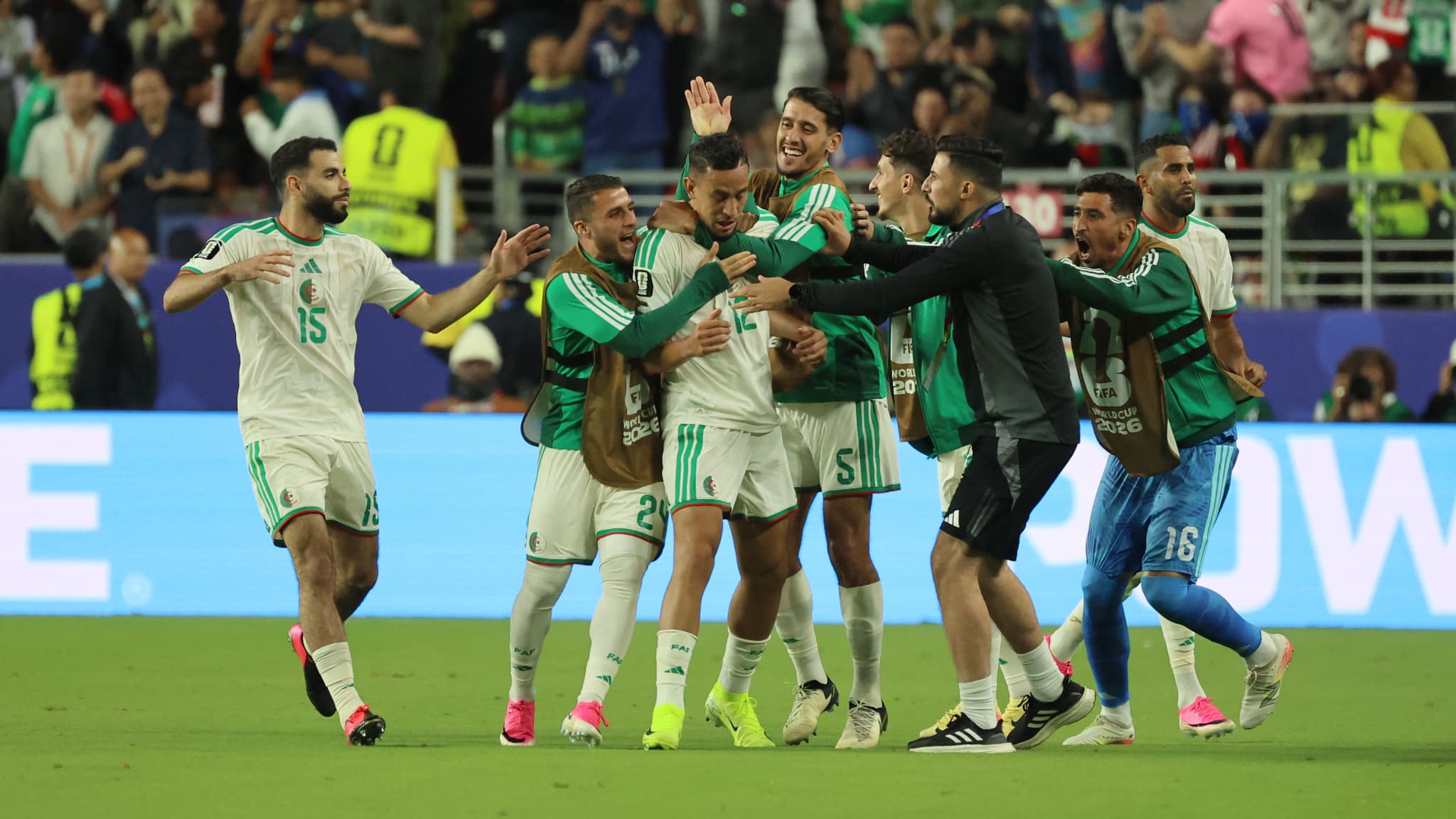

History often presents striking parallels, and the upcoming 2026 World Cup encounter between Algeria and Austria is no exception. Forty-four years removed from the infamous “match of shame” in Gijón during the 1982 World Cup, these two nations once again find themselves immersed in complex calculations regarding their tournament progression. Back in 1982, the final group stage matches were not played concurrently. This allowed Austria and West Germany to be fully aware that a narrow 1-0 victory for West Germany would secure qualification for both teams, effectively eliminating Algeria. The resulting game saw West Germany achieve precisely that scoreline in a contest largely devoid of genuine competitive spirit.
Fast forward 44 years, and the circumstances have evolved considerably. With the expansion to a 48-team format and the inclusion of the eight best third-placed teams from 12 groups, the qualification mathematics appear both intricate and, in some ways, straightforward. The match between Austria and Algeria will be the final group stage fixture with direct implications for the crucial ranking of these third-placed teams.
Currently, Austria holds the second position in their group with 3 points and an even goal difference. Algeria, meanwhile, sits in third place with a goal difference of -2.
To secure a spot as one of the best third-placed teams, a minimum of 3 points and a non-negative goal difference is generally required. Both the Algerian national team and Austria could achieve this threshold with a draw, a result that would guarantee neither team’s qualification if they suffer a loss. However, specific scenarios exist where Austria might still advance even with a narrow defeat, such as if Congo fails to win its match and Croatia is overcome by Ghana.
Rangnick: “We will see in the final minutes”
The notion of deliberately seeking a defeat seems counterintuitive for any team. Yet, a unique aspect of the 48-team World Cup knockout bracket suggests that finishing third in this group might, in fact, be strategically preferable to finishing second. The second-placed team is slated to face Spain, a formidable tournament favorite, while the third-placed team would potentially meet a group winner like Switzerland. Nevertheless, recent results indicate that this specific calculation might no longer hold true; for Austria, it will likely be a direct path to qualification via second place or an early exit. Crucially, the Austrian squad will be aware of all other group outcomes before their match kicks off.
The possibility of a draw remains, a result that would mutually benefit both squads. In such a scenario, both teams would accumulate 4 points and likely secure their berths in the next stage. This exact situation unfolded earlier in this World Cup, notably in the 0-0 draw between Paraguay and Australia, a point highlighted by Ralf Rangnick, the German head coach of Austria. During a press conference, Rangnick acknowledged the precedent, stating, “We saw what happened with Paraguay and Australia, where a draw was sufficient for both teams.” However, he quickly dismissed the idea of entering the match with a defensive mindset from the outset. “But we cannot go into this match saying: we are going to play for a draw. We are in the same situation as Algeria; we will see in the final minutes.”
A similar sentiment was echoed by Algeria’s coach, Vladimir Petkovic, who firmly stated, “We must give everything we have on the pitch and not think at all about the various hypotheses. We enter the field with a single objective: to win.”
Related Posts
Senegal’s prime minister slams lack of judicial action in accountability cases
Prime Minister Ousmane Sonko has sharply criticized the handling of judicial accountability cases in Senegal, questioning the integrity of the justice system during a high-level […]

Gabon: former prime minister detained amid political transition
Political tensions escalate in Gabon as ex-premier faces detention The political landscape in Gabon has grown increasingly volatile following the arrest of Alain-Claude Bilie-By-Nze, a […]

Chelsea secures second-most expensive Premier League signing with Rogers deal
Chelsea FC completes deal for rising English star Morgan Rogers Chelsea Football Club has finalized the acquisition of 23-year-old English international Morgan Rogers from Aston […]